
Top 8 Best-Selling Computers & Technology for November 2025

Price: $13.78

Key Features:

  • High Quality Materials
  • Fast Shipping
  • Customer Support
  • Money Back Guarantee

Top 8 Best-Selling Computers & Technology for November 2025

$13.78

Secure Purchase
Free Shipping
Easy Returns

Product Description

Danh sách Top 10 Computers & Technology bán chạy nhất tháng November 2025 được tổng hợp dựa trên dữ liệu thực tế từ Amazon.com. Các sản phẩm được đánh giá cao bởi hàng nghìn người dùng, với điểm rating trung bình từ 4.2 đến 4.7 sao. Hãy tham khảo danh sách dưới đây để chọn sản phẩm phù hợp với nhu cầu của bạn.

#1

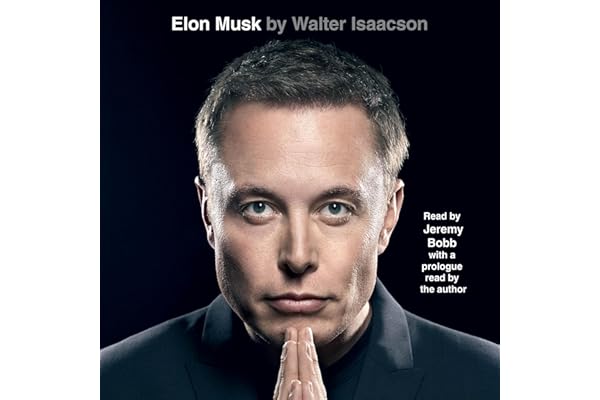
Elon Musk

Elon Musk


Price: $22.96
4.7/5

(22,349 reviews)

What Customers Say:

  • A Complex Man
    The author is well-respected for his ability to dig deeply, and spent two years shadowing Musk in order to write this book. Whether you like or dislike Musk, he is an intriguing figure, but for me, I wanted to better understand this man and his motives. I read this book before he took a role in Trump’s administration.Musk is on the autism spectrum—which often explains his rants of frustration, his moments of brilliance, and his many times of defeat. When I read this book, he was running six businesses—he often spent time flying from business to business. His drive was predicated on two beliefs: we needed to eventually be able to move to Mars as our planet collapses, and he felt humans were not repopulating enough to sustain human life.This is what created his space business. Once he was successful in sending flights to the space station to resupply the astronauts there, he developed a lucrative contract with the U.S. to be the primary resupplier. He also designed his own factory for designing and building space rockets. He tested many types of materials, and found that stainless steel seemed to handle the variances of temperatures. In any of his factories, he put the designers desks on the same floor as product being produced—-his thinking was that if a problem arose with manufacturing, the designers could experience the problem first hand, and make the needed adjustments.Musk often worked well late into the night and early mornings—when he was tired, he slept on the floor under his desk.His belief in repopulation meant that he aligned himself with many willing women, and at my last count, had 14 children.He is an intriguing, very complex person whose beliefs drive his actions. I keep wondering why, with all his resources, he does not assist with keeping this planet, Earth, in better health, and advocate for it instead of putting so much effort in trying to colonize Mars.If you want to better understand this man, I found the author did a wonderful job in researching Musk, shadowing him, and spending time with other people who play important roles in his life. Assimilating all this data had to be challenging for this writer, but I think he painted a picture for the reader that helps unravel some of Musk’s complexity.
  • Elon Musk: The perfect, imperfect man for our time
    As interesting a biography as I’ve ever read and by an author of so many great ones. Einstein, Jobs, Kissiniger, et al. But this one is about a man of our times — changing the world via leading-edge technology that will separate America from the rest of the world and fuel our economic and military superiority.Musk’s genius is unquestioned. His ability to set and achieve near imposible goals for himself, his companies and his team is mind-boggling. His personal life is constantly in shambles: an abusive father in South Africa; multiple marriages; children from several ladies; ever-increasing personal responsibilities while driving more and more corporations; to become today’s globe trotting ‘world’s richest man’ which opens every door with a simple phone call.He thrives on chaos. His surges and problem solving ideas are legendary. He doesn’t accept no — even if it turns out not to be right. Break it and build it back up (Kipling’s ‘IF’). Take 2500 engineers at Twitter and reduce that number to 150 in sixty days. Take a $1500 NASA spacecraft valve and replace it with one that cost $30. Eliminate ‘cost-plus’ sourcing by NASA and upend its entire cost structure. It’s focus on steroids, and when he is infrequently silent with a far-off stare that can sometimes last minutes — shut up and listen, because a decision is about to be communicated and then, (most importantly) executed. Risk is not an enemy, but a motivator to succeed or fail quickly.I cannot recommend this book too much. For although Steve Jobs (whom I knew) displayed similar product genius while sharing Elon’s few interpersonal skills, Steve had no idea how to actually produce the end result. Elon not only creates unbelievable ideas, he sleeps on the shop floors alongside his team as he makes it happen. Musk nightly roams the shop — workstation to workstation examining procedures and making changes on the fly to maximize efficiency and reduce costs. There’s little wonder that Trump selected Musk to initiate draining the swamp in Washington as he cannot tolerate waste and inefficiency. And little wonder why he was happy to escape that feckless group of status quo politicians and do-nothing bureaucrats after launching D.O.G.E. Stay tuned — I doubt it will be his last assignment.From rockets (SpaceX) to Satellites to Starlink, to Starship, to EVs, to Neualink, to Full Self-Driving (FSD), Elon Musk is the perfect technology genius for today’s America as we transition to a new world order. His imperfections as a human (Asperger’s, Bi-polar, mood swings, even destructive behaviors/tweets), along with his abrasive, crisis-driven managment style will clearly not appeal to everyone. Many could not work for the man. But those who can have already accomplished much for America and humankind. All Americans should thank him for his bold vision and ability to bring those dreams to reality. It’s an extremely rare talent. I wish him many more years of exceptional accomplishments.Now…On to Mars!

Elon Musk is one of the best-selling products with 22349 reviews and a 4.7/5 star rating on Amazon.

Current Price: $22.96

#2

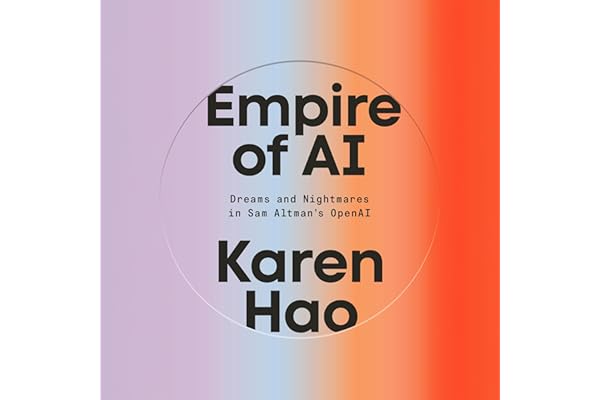
Empire of AI: Dreams and Nightmares in Sam Altman’s OpenAI

Empire of AI: Dreams and Nightmares in Sam Altman


Price: $21.26
4.4/5

(985 reviews)

What Customers Say:

  • Most Important Book of the Year
    Everyone who wants to talk about so-called “AI” needs to read this book.If someone is going to advocate for so-called “AI” they need to read this book first and then answer one question:Why do you trust Sam Altman about anything?
  • The author passionately hates Sam Altman
    Informative about OpenAI. It gives details beyond what the media has reported, re: about Altman’s firing/rehiring and other behind-the-scenes details. Fits well into the genre of Silicon Valley business books.However, the author is biased and clearly hates Sam Altman. She couches everything Altman did as sinister and dishonest. If the author’s reporting is accurate, then clearly Altman has done dishonest things. Altman shares this dishonesty with Musk and all of the other OpenAI founders (e.g. Brockman) who, disingenuously, started OpenAI as a non-profit. Hard to believe that Musk and the head of Y Combinator could not foresee OpenAI needing cash to produce AGI and would eventually thus recast OpenAI as a for-profit company. (of course they knew) But, after all that, Sam Altman comes across as similar to the other Silicon Valley founders (Uber, Amazon, Facebook, plus We Work, Theranos, etc.) who bent the rules to achieve their vision — it’s not good, but Sam Altman does not appear to be especially bad in that company. Moreover, Altman, probably to the author’s chagrin, has led OpenAI to produce one of the best tech products of the 21st Century.Minor note, but it is funny/strange that every time the author mentions the Polish OpenAI employees Pachocki and Zaremba, she makes sure to write that they are from Poland. They are mentioned about a dozen times, and almost each time, they are described as “Polish researchers.” Hao doesn’t do this for any other employee, no matter their nationality. Why? Who knows. The book needed editing.Worse and not funny is Hao’s gossip about the allegations made by Altman’s sister. The book goes into unsubstantiated (he-said, she-said) detail, and is clearly part of Hao’s hatred of Altman. The gossip says nothing about Altman, especially since their entire family acted the same way toward her, and it was Altman who actually gave his sister some financial support. That whole section was tabloid-gossipy and took away from the seriousness of the book.The “empire” theme is forced an unconvincing. The author is trying to make a bigger, longer splash by creating an “empire” narrative. It is enough to say that AI production incorporates low-paid labor in the Global South, along with the use of precious land, water, and other resources at a huge scale. But Meta and Google had been doing this well before AI, and Hao doesn’t cast it all as empire. This is all horrible, but describing AI as a new “empire” is wannbe-academic claptrap.So, if you want to know about OpenAI’s founding and the ups and downs of its thus-far short tenure, this is a decent book to read. If you want a broader perspective on the deleterious human and environmental toll of Silicon Valley companies, this provides it. If you hate Sam Altman with a furious passion, this is definitely your book.
  • Great book with great content
    Great book with great content
  • An Inside View Into the Questionable People and Practices Driving LLMs
    An incredibly well written and thoroughly well researched book by Hao. The density of facts, references, interviews and quotes to create a riveting narrative is remarkable. I was able to finish the +400 pages in 5 sittings, while taking notes. It was a page turner, but one I intend to reference going forward. And the notes section is a great guide for further reading.Some will say the book is Doomer’ism. Sure. If you say so.I guess telling people not to smoke, to eat healthy and treat each other with kindness could be a form of Doomer’ism too. Yet, we know smoking, processed foods and being mean isn’t good for you and others. But, if you’re hooked on the nicotine rush of smoking, the cravings of processed foods, or the dopamine rush of dunking on someone on Twitter… well. When people tell you those things are bad, you may just say, “Stop being such a Doomer! Live a little!”Likewise, when someone points out that AI has a lot of bad outcomes, some of which are not in plain sight or immediately felt, that may not sit well with folks who are addicted, get a rush from it or will benefit from it. More, importantly, these companies are driven by VC firms whose goal is power, profit and consolidating control through every more obfuscation at the expense of the consumer.Is the book good? YES. Should you buy it, read it? YES.I have worked in the field directly since 2018, indirectly for several years prior. I have done enterprise business directly with OpenAI, Anthropic and other GenAI vendors, as well as the consultancies pushing said solutions. I deeply familiar with their solutions and businesses. Hao’s book does a spectacular job of uncovering the behind the scenes details of these companies, from how the models are trained, where the data comes from, the utter lack of transparency; to the questionable ethos and actions of Altman, Dario and others.More, Hao’s conclusions and recommendations about how to responsibly us AI are spot on. She is NOT saying there is no use for AI. Rather, there is a better way. And the better way is not what is being done by OpenAI, Anthropic, Meta, Google, Microsoft or any of the other major tech vendors.I highly recommend the book.
  • Great capture of OpenAI history!
    The book basically tells us the origin story of OpenAI and how it has became an empire.Key insights- Interesting stories about Sam Altman and Elon Musk.- Altman behavior to control power and influence with people.- How large language model was invented- Why data centers consume so much power and waterCons- book has lot filler and I felt everything was not worth reading- The word and narrative felt complex, it could have been written in a simple language so that normal people could understand- I felt the book adopted a non linear narrative like in the movies but as an average reader who reads occasionally you feel lost. Finally after reading the book you can’t remember most of the details because of this.
  • Author has an agenda, sloppy work
    Some good information on formation of company, but gets bogged down in the author’s agenda. She keeps wanting answers to questions no one can answer, so she just wants to stop everything. She brings up race anytime she can, its tiring.

Empire of AI: Dreams and Nightmares in Sam Altman’s OpenAI is one of the best-selling products with 985 reviews and a 4.4/5 star rating on Amazon.

Current Price: $21.26

#3

Co-Intelligence: Living and Working with AI

Co-Intelligence: Living and Working with AI


Price: $13.78
4.5/5

(3,520 reviews)

What Customers Say:

  • Must-read for any worker concerned about AI – and any worker not concerned, should be
    The first half is more destined to those who have yet to use generative AI on a regular basis – in all probability a shrinking crowd. Anyone who interacted with ChatGPT 3.5 and then 4 will have similar anecdotes. And while certainly useful, I found Ethan’s four principles to mix rules of thumb with prompting techniques and more general observations.Part two I personally found of much greater interest, as Ethan delves into the implications for workers, demonstrating how they can learn to use AI to great effect, e.g. in creative work. Ethan dives deep into how gen-AI can produce efficiencies and superior results, but also lead to disaster if users get too comfy and “fall asleep at the wheel”. While several studies and research papers exist on these topics, it’s one of the first books that explains these concepts to laymen. It’s also enjoying to see him, rather than trying to dissect office jobs he may not be familiar with, instead humbly take himself as a guinea pig to explain in great minutiae how he wields this revolutionary tool in his work, at times using the very paragraphs we read as examples.I found in several occasions echoes of my own book, e.g. when Ethan insists on how technology cannot be treated in a vat but goes hand in hand with frameworks and trends, thus how the way corporations have work organized is likely to change in serious ways, as it did in previous industrial revolutions. He too does not fall for the fallacy that because certain tasks in a job cannot be automated, the job is immune to disruption. He too notes the risks associated with a greater deployment of metrics and the diktat of data, what others have called “Digital Taylorism”, and alludes to what I termed being “pushed off of the sumo ring of cognition” by an AI that calls the shots.He also takes a lucid and pragmatic approach to how such disruptive technology will be deployed in the workforce, detailing how employees use it covertly out of fear that their managers find out, though less convincing are his recommendations to leaders on how to instill a pro Gen-AI culture in the company – a pity given how this is fast becoming a concern for managers. A few other considerations also went neglected, like how those companies that fail to adapt will quickly fall behind those that do. But I feel this is also because he is primarily addressing employees, and that is nice to see in contrast to all the books guiding managers.My favorite is his insistence that AI is proving most beneficial to juniors, who can boost their performance level to the vicinity of veterans; rather than concluding in the lines that “See, this is a great enhancement tool, not something that will eliminate jobs – so don’t be afraid!”, or “it’s not AI that will displace workers, but the workers who master AI that will displace those who don’t” as the majority of so-called experts yell and parrot from every hilltop, he questions what implications this might have for seasoned workers, for those whose expertise becomes somewhat eroded and may no longer justify their wages. Following what I called the commoditization effect, AI could become a great equalizer, but (Duh!!) overall this will drag wages down. He notes how now some companies hire fresh graduates for jobs there where they used to hire people with at least five years of experience, because they can do practically just as well now with the help of AI.Alas he also rightly note that expertise will still play a role, with solid arguments. But he dares not venture say how much of this expertise will still be required and how this will reshape companies – indeed, only time will tell. We could end up with a split of say 80% of juniors – or rather people paid with junior salaries – and only 20% of experts there where we had a more balanced split before, and such junior talent could be outsourced instead of employed, etc.I pass on the final chapters on education and the future of AI, not for lack of interest but to avoid too long a commentary. Also great observations, for instance on how a future AI-mentor would be superior both for providing more constant feedback but also in its ability to take on several different roles (as opposed to the subjectivity of a single human coach, teacher or mentor). And here again there is the risk of overdependence, for instance (with his example of architect) consulting the AI on every single stroke.All in all, a very good read that remains concise and echoes some of my concerns which I believe will only balloon with time as organizations reshape work.
  • Primer for understanding AI
    Just finished reading Co-Intelligence by Ethan Mollick. In many ways it is an introductory ‘primer’ on AI (artificial intelligence).Written by Ethan Mollick, a professor at Wharton, it explores what AI is, how we can utilize is as a ‘co-intelligence’ and what the future might look like with AI.As someone who has used ChatGPT and other tools, but did not have much understanding of how they work, the book provided that background. On the other hand, I found it lacking in the depth and creativity I hoped for in exploring what a future world with AI might look like.Some insights from the book:- AI is built on Large-Language Models (LLM’s). These models have huge datasets at their core. By using this information, it can generate responses by predicting (and displaying) the word that is most likely to come next as a response to a prompt (and as a response to what it has already generated. The association between words are called ‘weights’ and these are adjusted based on the frequency and association between terms (if I have understood this correctly.)- Because of the way that LLM’s are built, the biases that we have as humans will get translated into AI. AI tools have a stage called Reinforced Learning from Human Feedback (RLHF) which is a process by which humans look to remove the bias. (Of course, this introduces another source of bias, but is important in ensuring that AI does not become a mirror of the uglier parts of ourselves which often manifest online and in other places which may be sources of data for AI.)- This process means that unlike other areas of technological development, AI finds it harder to be consistent and structured and instead seems to be actively creative. An analogy which is not found in a book, but which seems apropos was the shift in computer graphics from Euclidian Geometry to Fractal Geometry as the basis of graphics.- Mollick notes that the nature of AI makes it extremely difficult to predict exactly what it will be great at and what it will not. It also means that AI will include mistakes and fabrications without any self-awareness that it is doing so.- Mollick believes we are better for ‘inviting AI to the table’ while maintaining human involvement (you can get great results by working with AI, and poorer results [at least today] from handing over tasks to AI without oversight. He recommends viewing AI as a person in the sense that AI will be quirky and unpredictable. He also notes that whatever AI you are using today will likely be the worse than any version you ever use in the future as the technology continues to develop.- In the book Mollick shows how to use AI (engage with it, provide it with specific instructions “Give me a Mexican recipe that takes under 20 minutes to make using ingredients X, Y and Z [items in my fridge] and can be done by a 12 year-old without any instruments that would potentially be dangerous [like blender’s etc].” He recommends breaking down problems into steps (a process you can ask AI to assist etc.)- Mollick is generally pretty optimistic about AI. He points to studies that show that it helps people who struggle in areas to elevate themselves and believes it may help resolve income inequality etc.- Mollick mentions, but in my opinion does not give enough attention to potential issues. He notes that people often hand off tasks to AI without engaging mentally and we are in real trouble if we take another step back in critical thinking (in my opinion). He does not focus on the ways that AI could easily exacerbate income inequality as those with money put guardrails around the best tools etc. He also does give almost any focus on the way that AI can spit out endless content in little time and in the hands of bad actors, can take our current issues with fakenews, and make it 1000x worse very quickly.- Mollick notes that practical changes occur within systems and the changes we are talking about need to contend with the structures (economic, social, political etc) which currently exist. This reminds me of Kuhn’s descriptions of changes and the slow pace of the Copernican Revolution, in part because it bumped into theological systems.- As I noted above, I felt like Mollick did not spend nearly enough time exploring the issues that could easily arise from AI. What happens in a world where there is endless content being generated and no clarity on the legitimacy of it? Does it lead to additional conflict? How does it play a role in elections, campaigns etc.? Is additional government regulation generated to crack down? A social media platform exclusive to non-AI where you have to validate everything you are writing (somehow)? Influencers with “Real Human – no AI content” badges? What about Human-Reviewed AI Content? Is there a reason that is a bad thing?All in all, I think that AI is likely to have a dramatic impact on the world of the future. This book is a good intro. In all likelihood large aspects of it will become outdated rather quickly. And I wish it had done some more deep thinking about the future. It feels like just a shallow exploration.
  • interesting book!
    The book feels like a sci-fi fantasy and there are a lot of interesting perspective on AI. Ethan Mollick paints a picture of AI as a fellow human being. This provides an interesting perspective where you can use AI as a tutor, coach, assistant and many other roles.He also suggests to give specific role to AI as a prompting technique. For example, act as a marketing expert or act as an editor. This way of defining a role helps produce better results. He also mentioned about another technique, which is fascinating where you tell the AI to take a deep breath and answer step-by-step. Even though AI is not a human and doesn’t know how to breathe it surprisingly produced a superior result.The book just gives you some perspective on how to use the AI, but it does not give you the exact prompts. You would have to do your own research and play around with different prompts. Ethan Mollick heavily emphasizes on experimentation and suggests us to play with AI then figure out its capabilities. At least I have figured out some capabilities, which surprised me. Now I have started using ChatGPT more frequently than before, after reading this book.
  • A must read
    This should be your first read about AI. Clearly written with insights that only an educator can provide. As an example, I would offer the following quote from Chapter 6 : AI as a coworker. “ AI’s ability to act as a a friendly advisor could sand down algorithmic control, covering the Skinner box in bright wrapping paper.”Unusual for a nonfiction, I found this book a real page turner. The author is clearly well informed but constrained enough to acknowledge his limits in this quote for Chaper 9:AI as our future “And we do not know if Artificial General Intelligence would help or hurt us, or how it would do either.”

Co-Intelligence: Living and Working with AI is one of the best-selling products with 3520 reviews and a 4.5/5 star rating on Amazon.

Current Price: $13.78

#4

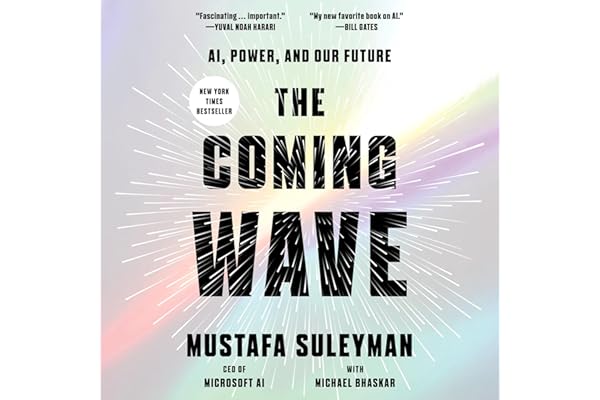
The Coming Wave: AI, Power, and Our Future

The Coming Wave: AI, Power, and Our Future


Price: $17.72
4.3/5

(4,515 reviews)

What Customers Say:

  • A Master’s Class in AI, Amazingly Insightful
    This book is an amazing read with a narrative that moves in a logical and thoughtful progression. The author’s expertise in the field of artificial intelligence (AI) is on vivid display. He has clearly given a great deal of thought to both the benefits and hazards AI. For a topic that can be both complex and cluttered with technical jargon, the author writes in a style that is easily understood by non-technical readers.Although I bought this book for a better understanding of just AI, the author outlined the much larger technical wave that is quickly approaching. This includes advances in biotechnology. In order to make specific points, the author uses historical examples of previous technological waves, such as the inventions of the mechanical loom and the steam engine. The loom story is especially interesting in that it describes acts of terrorism by the Luddites who tried to stop this wave and preserve their jobs. The author is able to describe the ways in which these new technologies can have global implications. Unlike nuclear weapons, which are expensive and hard to build, new technologies are inexpensive and available to everyone.Although the author highlights the many hazards of AI, he also offers some reasonable solutions to both mitigate the risk and preserve its benefits. These solutions focus on areas such as building in safety, conducting audits, and being transparent. The author describes how “safety” is baked into the culture of aviation. Safety is paramount as no one wants to see their aircraft involved in tragic or fatal accidents. A culture of “safety” now needs to be nurtured and embraced by the AI community.Whether the reader is someone involved in AI or just curious, this book will certainly open their eyes and cause them to think about the future.
  • Excellent Research and Analysis but a Laborious Read
    We’re all a part of the AI wave, but since our personal view is limited to the AI technology we can access directly, such as Microsoft’s Co-Pilot, we don’t see how transformative this wave will be. Reading this book will broaden your understanding of how AI may benefit humanity and how it may, if not contained, erode humanity.Thoroughly researched, (there are 29 pages of notes), it is an avalanche of information. I found myself understanding the information presented, but not able to retain the many key points. This is a book where you’ll want to take notes as you read it. It would be helpful if there was a bullet-point list of the key points at the end of each chapter.The book would also benefit from some serious editing. Some sections read like a stream of consciousness. Points are repeated several times, with unnecessary detail and words. Ironically, an AI editor could have been used to reduce the book length by 20% and without reducing its value. At least that is my purely human estimate.All in all however, this is a book you should read, just so you’re more aware of the wave we’re in.
  • Brilliantly Written Overview of AI’s Current Challenges
    In “The Coming Wave: Technology, Power, and the Twenty-first Century’s Greatest Dilemma,” Mustafa Suleyman delivers a compelling narrative that resonates deeply with those inclined towards future thinking. The book is not just a read; it’s an intellectual journey through the impending transformations in our world.Suleyman masterfully outlines a near future where AI isn’t just a tool but a ubiquitous companion, redefining our lives, businesses, and governance. The advent of DNA printers, quantum computers, and autonomous weapons paints a picture of a world teetering on the brink of profound change. This isn’t science fiction; it’s a meticulously researched forecast of our near future.The author doesn’t shy away from the monumental challenges ahead. He warns of the existential dilemma posed by these advancements: on one side, unprecedented prosperity and on the other, the risk of catastrophic harms and invasive surveillance. The core of Suleyman’s argument revolves around the ‘containment problem’ – the Herculean task of controlling such powerful technologies.What makes Suleyman’s work stand out is his ability to draw parallels with historical inventions and their unintended consequences. He invokes the stories of Edison, Nobel, and Gutenberg to illustrate that the impact of technology often diverges wildly from its intended purpose. This historical perspective enriches the book, grounding futuristic concepts in familiar narratives.The book’s greatest strength lies in its balanced examination of emerging technologies. Suleyman doesn’t just celebrate the promise of AI and synthetic biology; he soberly evaluates their potential perils. This balanced approach makes “The Coming Wave” a must-read for decision-makers and leaders.Suleyman’s call for immediate attention to the containment of these technologies is both timely and urgent. He argues for a multi-faceted strategy encompassing regulation, technical safety, new governance models, and transparency. This is not just about managing technology; it’s about preserving our societal values and structures in the face of transformative change.The author’s expertise shines through in his ability to distill complex concepts into accessible insights. His treatment of AI and synthetic biology is particularly noteworthy, making these daunting fields approachable for the lay reader.Overall, “The Coming Wave” is more than just a book; it’s a roadmap for navigating the technological transformations of the 21st century. It’s a work that demands not just reading but referencing, especially for those deeply immersed in AI and related fields. Suleyman’s book is a clarion call to those poised to shape our future: understand these technologies, contain their risks, and harness their potential for the greater good. A highly recommended read for anyone seeking to grasp the full spectrum of AI’s implications in our lives.

The Coming Wave: AI, Power, and Our Future is one of the best-selling products with 4515 reviews and a 4.3/5 star rating on Amazon.

Current Price: $17.72

#5

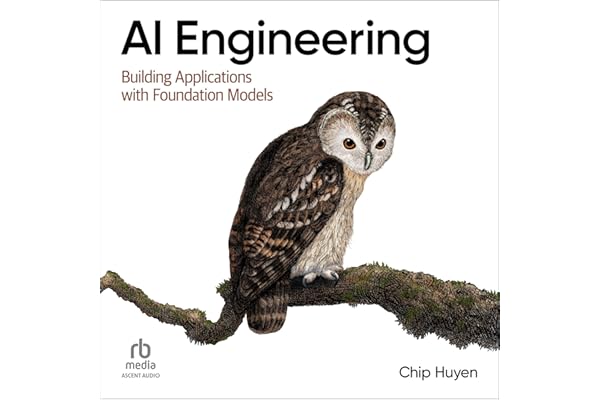
AI Engineering: Building Applications with Foundation Models

AI Engineering: Building Applications with Foundation Models


Price: $22.57
4.6/5

(457 reviews)

What Customers Say:

  • Excellent Book.
    I don’t normally have the time for reviews anymore but I had to do one for this book. This book is excellent. The level of detail and range of topics was just right. With some books I’ve had to force myself to finish. This one kept me interested throughout the entire book and provided everything clearly. I’m more interested in usage of foundation models (LLM’s, RAG, etc.) but the chapters on model pre-training/training/evaluation provided great detail. I’m looking forward to more works from Chip.
  • The best intro to AI engineering I’ve encountered
    It’s always daunting to pick up a technical book that’s over 500 pages long or 21 hours long. However, this book did not disappoint. Not every section, of course, addressed my particular needs. However, the entire treatise was clearly communicated with a broader technical audience in mind. That should be no surprise because Chip Huyen, besides being an AI expert, taught graduate school classes in AI at Stanford and writes science fiction as a side hobby. This book is simply the best technical introduction I’ve encountered to date.The book starts with high-level concepts about AI, which would be accessible to all sorts of scientific folks. Then it focuses on technical topics that are of most interest to engineers. It does an excellent job of centering around concepts first and not being wedded to particular technologies which will soon change. I valued the insights so much that, after listening to the audiobook, I even bought a paper copy to have for a reference.I plan to continue to read about AI engineering, but given that I haven’t taken formal coursework in the topic, this book served as an equivalent to a graduate school class to give me confidence to dive deeper. Although some math were presented, the audiobook was incredibly accessible, unlike with some technical books. For those who spend time commuting in cars, I recommend listening to the text if you don’t have time to flip through a paper book.Overall, this book raised my game significantly about AI. Where other books obscure with technical jargon, this book enlightens with clear concepts. I still need to brush up on a few focused topics to ready myself for a project, but I’m much more fluent about the ideas than before. I highly recommend this in-depth introduction, at least for the next few years until the field outpaces our knowledge once again.
  • Great breadth and depth of topics; covers theory, prod, and biz.
    Fantastic book, very useful skills to apply to my job as an MLE immediately! Each chapter goes super in-depth and covers different approaches, weighing the pros and cons of each. Chapters discuss theory, production, and business, with a ton of citations and visuals throughout.
  • Your new best friend in AI engineering.
    Chip Huyen has done it again—delivering a smart, thorough guide that takes readers step by step through complex material with remarkable clarity. Through simple, accessible examples, she empowers readers to achieve their goals. The modular structure allows experienced readers to navigate at their own pace, while her unmatched coverage of practical applications sets this work apart.Her approachable tone builds reader confidence, ensuring full comprehension of the material. Well-documented and diverse sources provide a robust foundation, while her presentation style—concise, clear, and thoughtfully structured with short, easy to digest paragraphs—creates an ideal learning experience. Important points and deeper insights are segregated and clearly marked for easy reference.This resource will undoubtedly become a valued reference, likely to evolve alongside the field itself. Thank you, Chip! A worthy successor to your first volume — and we eagerly await your next contribution to the field. ~ Denise Shekerjian, author Uncommon Genius (Viking, Penguin)
  • Fantastic resource to really understand Artificial Intelligence
    A must have for ANYONE willing to understand the models, applications, and how everything works inside with a view on how it can be applied outside.Really great job, Chip Huyen!
  • Great comprehensive book on the subject
    Great comprehensive book on AI engineering. This book simplifies the concepts and techniques of advanced AI development with practical applications across Generative AI
  • Well-written, comprehensive, and authoritative
    In academia, there is the concept of a “review article” — it summarizes and organizes the major research findings into a framework that makes it easy to come up to speed on a topic. Frequently, the review articles themselves end up defining the area, and this is what Chip Huyen manages to achieve in this comprehensive book. The quality of the writing and diagams are uniformly high — Chip uses simple language to great effect.I think of myself as being somewhat up to date, but I have learned something new every chapter and not just minor details. For example, I had missed the Deep Mind paper pointing to “self-delusion” as the reason for hallucinations. Chip provides a clear explanation and shows an example. This fundamentally affects my intuitive understanding of model errors.Of course, there’s a danger with writing a review of a fast moving field. Just today, DeepSeek published an article showing that they can avoid SFT altogether and do just train a model on preferences, alphago-style. If this takes off, Chapter 7 will need a second edition.Strongly recommend this book. It’s invaluable for anyone building applications using GenAI models.
  • Excellent material. Very useful for real scenarios.
    I enjoyed the full book. It is detailed enough to understand the fundamentals but recommend you other materials that go even deeply.The narrative is excellent as well.I really like the contrast with real applications, so it’s not only theoretical but also practical.

AI Engineering: Building Applications with Foundation Models is one of the best-selling products with 457 reviews and a 4.6/5 star rating on Amazon.

Current Price: $22.57

#6

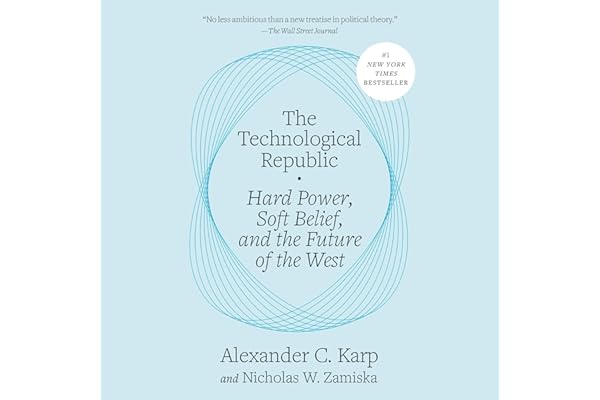
The Technological Republic: Hard Power, Soft Belief, and the Future of the West

The Technological Republic: Hard Power, Soft Belief, and the Future of the West


Price: $15.75
4.2/5

(841 reviews)

What Customers Say:

  • MOST THOUGHT PROVOKING BOOK I’VE READ IN YEARS
    One of the most thought provoking books I’ve read. Karp does a great job articulating the malaise the US currently finds itself in and asks pointed questions that we all need to ask and answer if the United States is going to remain true to the ideas and culture on which it was founded. Through numerous citations, Karp takes on the journey of how the US has lost its way and become, in many important respects, a shell of its once great self. How did we loose our National identity? Why is it so important that the technology sector re-engages with public/private partnerships to create the most dominant versions of Artificial Intelligence in the world? Why have we waisted the talents of bright engineers on making the next ‘App’ instead of building something truly revolutionary? The iPhone is a great example of this. Updated but hardly ‘innovated’ since its beginning. Apple Corp. has gone from making the sides angular to rounded, to angular, to rounded over and over. The side buttons have gone from round to elongated. So? Where’s the functionality besides being a ‘library, mailbox, and home shopping device’? There are hundreds of Apps to choose from to take your hard earned dollar every month, but use Peter Thiel’s comment about current technology as a summary example; “We wanted flying cars, instead we got 140 characters”.Karp recommends The United States needs to find a collective purpose. A purpose that President Kennedy described in his famous Moon Speech in 1962 “…(a) goal that will serve to organize and measure the best of our energies and skills.” Karp advocates for this. He doesn’t provided a checklist on how to accomplish it, but in todays age where the thought police are seemingly everywhere, just writing this book is daring enough and should provide the necessary shove we need to get a discussion started.If you’re frustrated about the current state of the US and want something better, then I don’t think you can find a more articulate book to describe the situation we find ourselves in and explore ideas of what we can do to get ourselves on a better path forward.
  • Ok read but not what I expected
    This book addresses the myopic vision of many in silicon valley. And points out that the USA will fall from graces if we stay on our present course of copying the EU or world global elites that avoid war and pay off adversaries. I was hoping to gain more insight into( PLTR) Palantir company. Instead it is an essay format on the USA fall from a high position of being technologically advanced.
  • Persuasive Case for Government and Tech community to work on defense – external and internal
    This is a cultivated and persuasive book about putting our best private tech minds and government funding to work on defending the West in general and the US in particular. It’s also a pitching exercise for Palantir as the company which does this the best. Protection would be both external by protecting troops and winning wars, and internally reducing crime and making rough neighborhoods safe. This, for example by using AI to analyze and preempt enemy/gangs movements or use intelligence software to coordinate drones amidst other tools. The book is dense in quotations and examples of past achievements of the West and its figures to argue that we are privileged to live in this area and time and should honor its past to protect its future. It preempts also tech AI community objections to work on defense as saying its about time bright minds from silicon valley stop designing better apps for shopping or socialize and engage in something with higher a purpose. Its very persuasive for both external and internal purposes, saying those who shy away from using high tech in dangerous community show moral disregard for all the victims of crime who live in those communities. An interesting quote regarding this is that “a tolerance for everything to devolve in support of nothing”. It is very pragmatic with several on target criticisms of those who just say pompous things because they sound good but leave serious problems unresolved. Overall is an ambitious complex book which hammers the message above in multiple aways without going to deep in the science of how this would be accomplished but it does provides an overview of how Palantir’s AI intelligence software would mimic decentralized coordination of bees and starlings, adapting to different circumstances.
  • Broaden your horizons, Dr. Karp
    I am a little disappointed in Dr. Karp. There were many good insights, which I wish the book explored further. But this book lacked refinements in its analysis and opinions.Fundamental questions about the West, and what exactly the authors are advocating for on a systemic level (not technological), were not answered. Its call to action was more limited and narrow than I hoped.The historical examples put a superficial gloss on figures like Oppenheimer. The book seemed tailored to advocate to a certain kind of person, but lost something along the way.Finally, we are indeed a lawyerly society. It’s true we are not China. Red tape and litigation slows things down. But if the USA’s identity hinges on anything, it is the law – our Constitution. So what are they advocating for? We must protect the West (to me, law and science) by putting aside those values and systems for faster engineering and tech? I wasn’t sure.That said, I agree we are a great country and the West has uplifted many people. We would benefit from a renewed sense of shared purpose. Social media and consumer product software is shallow and has hollowed out our country’s internal moral fiber. Duty, mission, responsible government, and generational-thinking are virtues.But making killer drones and Palantir being the next big defense company is not nearly ambitious enough. Climate change and pollution are destroying our planet. I’d like to see AI and big tech focus on solving generational problems that impact us all. Freshwater resource depletion, food security, microplastics, nuclear waste and energy, environmental remediation, and man-made climate change and adaptation. These are what must be the Manhattan Projects of the 21st century.

The Technological Republic: Hard Power, Soft Belief, and the Future of the West is one of the best-selling products with 841 reviews and a 4.2/5 star rating on Amazon.

Current Price: $15.75

#7

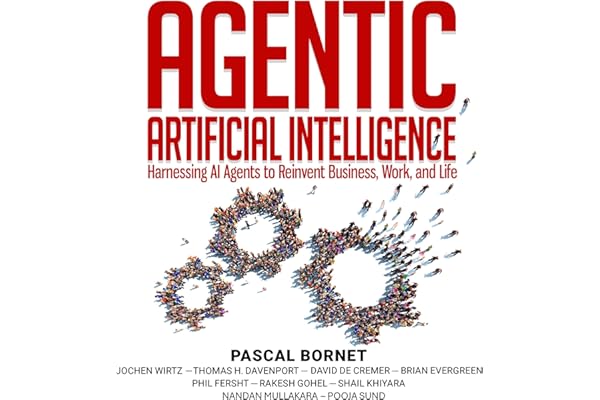
Agentic Artificial Intelligence: Harnessing AI Agents to Reinvent Business, Work and Life

Agentic Artificial Intelligence: Harnessing AI Agents to Reinvent Business, Work and Life


Price: $21.83
4.4/5

(314 reviews)

What Customers Say:

  • A Pragmatic Framework for Agentic Competitive Advantage
    A very well written and timely book in one of the most dynamic fields of our times. This volume transcends foundational LLM utility, diving into the strategic implementation of Agentic AI systems. The authors, grounded in Intelligent Automation, deliver a structured framework encompassing maturity models and phased roadmaps. It rigorously defines the shift toward autonomous execution engines that utilize LLMs for complex, goal-driven orchestration across enterprise architecture. The text clarifies the critical gap between content generation and actionable intelligence, asserting that agents build compounding competitive advantage through persistent learning loops. For CTOs and engineering leadership, this is a mandatory, timely primer on architecting the next era of intelligent systems.
  • A Powerful Roadmap for the Agentic Era
    “Agentic Artificial Intelligence” is a must-read for leaders and innovators who want more than AI buzzwords. It clearly explains how agentic systems, intelligent AI agents that act and collaborate and also how they are reshaping business and daily life. The authors combine real-world transparency with deep insight, showing both how to harness these tools and the mindset needed to lead in this new era. The case studies and frameworks are realistic and very actionable. Great book!This book doesn’t just predict the future—it shows how to build it responsibly. A timely, empowering guide for anyone serious about leveraging AI for meaningful impact.
  • This book ties AI theory and practice with real world effects
    Agentic Artificial Intelligence is serious reading. The book resembles a novel at about 530 pages. That said, it is 100% approachable by non-technical and technical readers alike. Examples of prompts and use cases abound, however, most code is placed in the appendix to the book.A broad array of expertise is found in the assembly of co-authors to this book. Like any responsible AI book, there is a discussion of the development of AI in the BC era (before ChatGPT) which lends needed context and understanding. Broken into parts which encompass two to several chapters each, the book shines its light on “what can AI do?”, “how does it do it?”, “how can one monetize AI and develop entrepreneurial offerings, many of which are just beginning to be imagined?”, and “what does the future of AI and work look like?”.Most significantly, the co-authors are practitioners in the field. AI will fail, drain resources, and weaken organizations unless the organization’s culture and team members are part of a positive change management process. Tales of failures and skinned knees are frequently encountered in this book as well.What I appreciate about this book is the ability to hear the authors genuine voices and appreciation for each other. They frequently “hand off” the story to another author who has specific expertise in a related area. While not a play or a script, the tone of the authors together is cordial, uplifting, and encouraging.I recommend Agentic Artificial Intelligence to any executive and manager with a need to successfully lead their business into the next age of human-artificial intelligence collaboration. This guide will be helpful to AI entrepreneurs and software developers as well.
  • Must have, especially if you are just venturing into AI agents.
    I am listening to this on audio book and realized there was just too much I would highlight if I had the book so I went ahead and scooped it up for a pretty reasonable price compared to a lot of new books on this subject matter.The cons:1. There is a ton of historical content and examples which may be great for some, but I personally like to focus on the actionable stuff more. I’d say at least 1/5 of this book could have been cut.2. The authors DEFINITELY used AI to help write this – it shows in a few too many ways. Particularly amusing in the audio format. Not a deal killer at all but it does lack that human feel most of the time.The pros:1. Mostly agnostic to specific technologies so this could be useful to you regardless if you are going all code or nearly like CrewAI or using low-code/nocode tools for creating agents.2. Structured well and easy to understand3. Not overly opinionated but highly optimistic of what is currently happening and what is to come in AI4. Large pool of authors and expertise with excellent relevant experience makes this feel current and reliable.
  • Excellent read
    Pascal and team demystify a lot of the concepts about Agentic AI, and address the topic head-on with not only a comprehensive technology assessment and roadmap for success, but also with the human elements related to the future impacts and opportunities that this technology presents. Wonderful read and I would put it at the top of the list for anyone interested in AI Agents and their potential. I would also highly-recommend the book Intelligent Automation, also be Pascal and others. It will enlighten you as much as this book will.

Agentic Artificial Intelligence: Harnessing AI Agents to Reinvent Business, Work and Life is one of the best-selling products with 314 reviews and a 4.4/5 star rating on Amazon.

Current Price: $21.83

#8

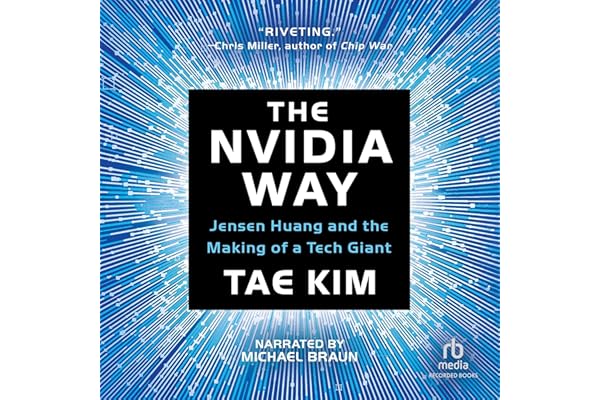
The Nvidia Way: Jensen Huang and the Making of a Tech Giant

The Nvidia Way: Jensen Huang and the Making of a Tech Giant


Price: $15.04
4.6/5

(1,105 reviews)

What Customers Say:

  • Great book about management and technical practices
    One should not stop at learning technical processes but always be open to how technical change impacts society. “The NVIDIA Way” (Norton, 2025) by Tae Kim explores NVIDIA and how they turned technological success into societal change. Jensen Huang, NVIDIA’s CEO, and the longest active serving technical CEO, plays a key part in that success. The book divides into a chronological approach: before 1993, 1993-2003, 2002-2013, and from 2013 to the present. This should be essential reading for anyone managing a startup, working on product issues, and desiring a better look at the marketplace.The chronological approach is unusual as it focuses on Jensen first and then moves to the technological change. The early NVIDIA processes had setbacks and potential fails, but it is the company’s structure and culture moving them forward. I do not know if all the NVIDIA successes are paths for me, but it highlights multiple paths to success. One could skip directly to NVIDIA current successes but would lose how those decisions became the organic culture.Employees often describe NVIDIA as not a 24×7 approach but a 25×8 approach, never ceasing, never stopping, and eliminating opponents by sheer hard work. There is a quote from Jensen, “Don’t worry about the score, it’s how you play the game” that resonates strongly with me. As a martial arts coach, I always tell students to seek technical perfection, and the wins will arrive in time. In boarding school, ping pong, and his undergraduate studies, Jensen’s early years show this as he excels not only at the task but earns the money to support those achievements with multiple janitorial jobs Think about character strength and resilience needed to work as a janitor in the same location one attends school. This constant resilience enabled success as NVIDA launched in later years.The company’s first success was the founders departing LSI Logic to focus on graphics cards for PCs and the gaming industry. When NVIDIA first launched, the goal was for the first card NV1, to do everything from graphics to audio to processing. The computer game DOOM proved this was impossible as even excelling at graphics, it fell behind audio standards. Succeeding from the early failures required purchasing testing equipment and speeding up software development so drivers were ready at the same time as the chip. This was drastically different than other chip manufacturing companies and more in tune with a modern DevOps approach. The end result was the RIVA 128 chip.Essential NVIDIA growth depended on the “ship the whole cow” concept. This meant that chips failing high-level testing were sold at a reduced price.. Many vendors gradually reduced selling prices, but NVIDIA always believed in their value, keeping prices high. Despite selling lower quality parts at lower cost, the parts were still market leaders. This applies years later in selling advanced GPUs when linking cheaper graphics cards could perform similar functions. An example of this appears in a meeting with Steve Jobs about laptop NVIDIA chips. Steve believed the chips were overpowered for the laptops but NVIDIA engineers explained simply lowering the clock speed made the chips perform, leading to their inclusion in all systems.NVIDIA’s market growth is best tied to the GPU market. This was when research scientists realized the same technical specifications creating success for graphics could be engineered to address extremely large matrix math, with up to millions of parameters. Matrix math is a key to current machine learning and AI algorithms, even if those were not the immediate answers at the time. The first major use was life sciences, measuring protein folding and biological interaction. One key disagreement with NVIDIA strategy happened whan a scientist, Ross Walker, first using the proprietary CUDA code, wanted to purchase only commercial GEFORCE graphics cards instead of the higher-end GPUS. Despite NVIDIA introducing technical controls, Ross continued his approach even with a later career at GlaxoSmithKline. NVIDIA continued to advocate always purchasing the highest quality and, consequently, expensive models.The success continued into the modern era as NVIDIA supplies top-end solutions, emphasizing engineering first over profit-taking incentives. Jensen emphasized several approaches to focus on technical success. Even during expansion, he introduced a flat organization with all employees, sending a top five concerns to the CEO weekly. One might see this from recent news about DOGE, requesting government employees to take a similar approach. Another emphasis was all employees had to respond to any email within two hours, again hitting the 25×8 structure. A third approach was all employees were accountable for all ideas with Jensen frequently calling out individuals to defend ideas in public meetings. I do not necessarily agree with public shaming, but Jensen followed it up with the concept that no one should fail alone, encouraging others to ask for help frequently.One area where I found fault with Kim’s writing was the book becomes very disjointed in later sections. Maintaining a chronological approach creates challenges as the company expands and more areas grow rapidly. The later section might have benefited more from a functional approach from 2018 to current, highlighting marketing, product, CUDA, GPUs, and other developments separately. The chronological approach fails as these items are difficult to follow in later chapters.Overall, “The NVIDIA Way” should be a must-read for tech professionals. The essential learning points are demonstrating resilience, leading innovation, and maintaining a consistent strategic vision. Along the way, the book demonstrates how companies like Google, Silicon Graphics, and many graphics companies failed by concentrating on profit rather than technology. Jensen shows up as a unique individual, and a key behind NVIDIA’s success. I don’t think the model can be duplicated but there are several good industry lessons. The book reads quickly and I recommend it for CPOs, CTOs, and CEOs looking to grow their knowledge.
  • Great inside baseball and story telling
    I’ve gifted this several times since I read because it’s such a unique look at Jensen’s 30y+ tenure and how many times NVDA has faced existential threats and changed the business. Author got some incredible inside baseball from founders (ex. Jensen wouldn’t join until he had high conviction to pathway to $50m+ of sales, meetings are open and meant to help people understand decision making even if tense, Jensen can give anyone RSU grant on spot). Even the history of TSMC which isn’t the focal point of the book provides unique looks at the semi industry. I loved this book and unlike a lot of other non-fiction, it felt like a chronological story with real character development that wasn’t weighed down by overly dense explanations. Tae Kim has a talent for story-telling and simple explanations of complex ideas.
  • Good Summary
    This is a good summary of rise of Nvidia. Although a bit technical, it is a good book to know this successful company.
  • A great read with a level of detail that other books miss
    I have been reading a lot of books about the recent history of AI and this has been the most mind-blowing.It is a book about Nvidia and its CEO Jensen Huang. That aspect is very well covered, but the author goes a lot further.Most books on the subject cover the evolution of the GPT model, but in this book Mr. Witt provides much greater detail about the critical-path advances and the serendipity involved.This is the part of the history that surprised me:In 2002, Ian Buck, then a Stanford PhD student, was working on BrookGPU, an academic project to make GPUs programmable for scientific tasks. Buck’s work caught the attention of Nvidia co-founder Chris Malachowsky and CTO David Kirk. They quietly invited him to join Nvidia to see if GPUs could be programmed with a C-like language.This effort evolved into the powerhouse parallel computing platform named CUDA, released in 2006.This was a risky bet. Parallel computing had proved a dead end for decades. No one had made it work, and it was considered career self-immolation.The project was a money pit for years, and Nvidia’s board was not happy, but Huang persisted – he knew this was important. He went all in and bet the farm.Meanwhile, in 2010, Geoffrey Hinton’s lab at the University of Toronto had been experimenting with deep convolutional neural networks for image recognition – another subject area that had seen decades of failure and was a major career-ender.Hinton’s team – Alex Krizhevsky and Ilya Sutskever – noticed that the parallel nature of CUDA was ideal for training neural networks. They reached out to Nvidia but – crickets.Research grants for neural networks were nonexistent, so Krizhevsky and Sutskever emptied their own pockets to purchase two Nvidia cards and set them up in Krizhevsky’s basement apartment – at his parents’ house. The electric bills from the 24/7 training runs were enormous, and his parents were kind enough to cover those costs. Thus, the first modern convolutional neural network, AlexNet, was born.That is how it all started – two groups of people persisting in pursuing what were considered technological dead ends.There are other major milestones and pivots in the story, but that one I found the most inspiring.Back to the book review: a great tech and business book, probably the best I have read this year.

The Nvidia Way: Jensen Huang and the Making of a Tech Giant is one of the best-selling products with 1105 reviews and a 4.6/5 star rating on Amazon.

Current Price: $15.04

Updated: Nov 26, 2025
Data from Amazon.com
8 products

Customer Reviews

5 star
70%
4 star
20%
3 star
7%
2 star
2%
1 star
1%
John D.
★★★★★
March 15, 2024
"Great product! Exactly as described. Fast shipping and excellent quality."

Product Specifications

Brand Amazon Brand
Material High Quality
Dimensions See product details
Weight See product details