Top 8 Best-Selling Children’s Audiobooks for November 2025

Price: $14.57

Key Features:

  • High Quality Materials
  • Fast Shipping
  • Customer Support
  • Money Back Guarantee

Top 8 Best-Selling Children’s Audiobooks for November 2025

$14.57

Secure Purchase
Free Shipping
Easy Returns

Product Description

Danh sách Top 10 Children's Audiobooks bán chạy nhất tháng November 2025 được tổng hợp dựa trên dữ liệu thực tế từ Amazon.com. Các sản phẩm được đánh giá cao bởi hàng nghìn người dùng, với điểm rating trung bình từ 4.4 đến 4.9 sao. Hãy tham khảo danh sách dưới đây để chọn sản phẩm phù hợp với nhu cầu của bạn.

#1

Harry Potter and the Order of the Phoenix (Full-Cast Edition)
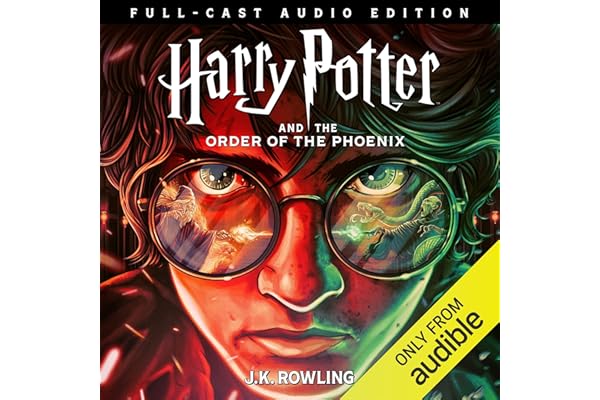
Harry Potter and the Order of the Phoenix (Full-Cast Edition)


Price: $44.99
4.8/5

(97,069 reviews)

What Customers Say:

  • Love it
    Gave as a girt
  • The wizarding world will never be the same again
    Harry Potter and The Order of the Phoenix is the fifth book in J.K. Rowling’s Harry Potter series of children’s books.Several weeks ago I eagerly anticipated the arrival of Harry Potter #5 and had preordered it. When I woke up this morning, I found the book right at my doorstep. Elated, I quickly opened the package and started reading.I just finished the book, and I am not one bit disappointed. J.K. Rowling’s writing style is still ever-present in this book, vivid and wondrous as it had been in the previous four books. There are many surprises in the book (like Ron getting to be prefect while Harry doesn’t), but I also think that a lot of the details in the book were extraneous. The book was also a bit on the dark/moody side. When I read it, I was constantly disturbed and worried, and the book no longer had the flippant and jovial tone that the first book had, the original reason why I enjoyed it so much.However, that doesn’t stop this book from being so great. Again, the magic of Hogwarts accompanies Harry, Hermione, and Ron throughout the book, but some developments in the book are disturbing, such as Percy’s separation from the family, Dumbledore’s aloofness in the beginning of the book, and the somber tone on which the book ends. The only characters I felt were unmarred by the morose theme stretched throughout the book were Fred and George Weasley (they operate a joke shop throughout the book).One of my complaints about the book was the length. This installment of the Harry Potter series is the longest at 870 pages. There are only two reasons I can think why J.K. Rowling would do this:1) She gets paid by the word so the more she writes, the more money she makes.2) She is afraid that once she writes all seven books, then she will have nothing more to write about, so therefore, she has to write as much as she can before the momentum of her series is over.Both of those are bad reasons why the book should be long. While the writing isn’t Joyce (concise and perfect in all ways, but slightly unhumanistic), I think that a lot of it is overly verbose. However, I don’t feel that the length of the book is something to complain about. Other people disagree though: in fact, upon hearing that HP5 was 870 pages, he responded, “HOLY….”That doesn’t mean the book is bad though. I would still highly recommend this book and would agree that it is _on par_ with the previous writing of JK Rowling. Even though it is slightly depressing at times, it’s still an excellent read.Now, for a brief summary – don’t read ahead if you don’t want the book spoiled.Harry is first caught fighting two dementors near Privet Drive. As a result of his breaching of the Underage Misuse of Magic, he has to go to a trial, where he defends himself so he won’t get expelled from Hogwarts or get his wand snapped in half. Wizards from the Order of the Phoenix, an underground anti-Voldemort society, come to rescue Harry and take him to a hideout.Once Harry is acquitted of all charges, he finds out that Albus Dumbledore is extremely aloof and that Cornelius Fudge and Percy Weasley do not believe that Voldemort has come back to power. Percy is cold and disattached to the Weasleys because he “betrayed” the family when he went to work for Fudge. Harry also finds out that Ron and Hermione are prefects for Gryffindor, and he is not.Once Harry makes it back to Hogwarts, there are plenty of things to worry about. Aside from the new Defense from the Dark Arts Professor, Umbridge, who is working as a “spy” for the Ministry of Magic, Harry has to contend with O.W.L.’s and people who don’t believe him when he tells them that Voldemort is back.Ron is made Keeper for the Quidditch Team in addition to being a prefect. Fred and George are selling pranks and pills for their joke shop. Tons of homework plague Harry and Ron, causing them many sleepless nights. Also, Umbridge inspects all the teachers as Head Inquisitor and she also disbands all clubs and teams (including the Gryffindor Quidditch Team), so they must reapply for reforming. This happens just as Hermione, Ron, and Harry decide that they are going to create a Defense Against the Dark Arts “study group” themselves. Later on, Harry and the Weasley twins are banned from Quidditch for life by Umbridge.In the middle of the book, Mr. Weasley is attacked. Harry has an out-of-body experience where he is actually a snake and attacks Mr. Weasley. It is even suggested that Harry is being possessed by Lord Voldemort. Harry eventually takes Occlumency (anti-mind reading) lessons from Snape.Right after the first Occlumency lesson with Snape, Harry realizes that the door at the end of the long, dark corridor in his dreams is the entrance to the Department of Mysteries. The next day, Hermione, Ron, and Harry find out from the Daily Prophet that ten Death Eaters escaped from Azkaban. Dumbledore eventually leaves the post as headmaster of Hogwarts and Umbridge takes over. It seems worse and worse everyday and that Voldemort is getting closer and closer to victory.Eventually the book climaxes and as you might suspect, Harry and the rest of the D.A. (Dumbledore’s army) find themselves on a rescue mission to the Department of Mysteries. There is a showoff with Voldemort.There is a main character who dies. I won’t tell you who it is, but it is a main character (not someone minor like Cedric).The book ends on a somewhat sad note, with the Ministry admitting their wrongdoing and that Voldemort is back, aka the start of the “second war.” Let’s hope that Harry can withstand two more years at Hogwarts with Voldemort around…
  • Not quite Twain or Dickens, But …
    J.K. Rowling has produced a great adolescent novel. While coming of age stories are staples of both quality and popular literature, modern “quality” ones tend to be painfully self-indulgent. A century or so ago, Mark Twain’s Huck Finn had the sense to decide that freeing his friend Jim was more important than going to heaven and Dickens’ Pip (_Great Expectations_) learned just how foolish had been his self-indulgent adolescence. The writers understood that purpose resides beyond the self. Then, around fifty years ago, critics became enamored with the likes of Holden Caulfield, and the self-indulgent study of adolescent ennui came into fashion.Granted, the readers receive a far deeper exploration of Holden Caulfield’s psychological makeup than Twain or Dickens ever offered a reader, but we have paid a terrible price for this exploration. Authors and critics stepped forward to claim that solipsistic self-exploration was “what it’s about,” and few seemed ready to say, “Yes, this is what adolescence is like, but you’ve got to step out and take on the world even though the entirety of William James’s ‘blooming buzzing confusion’ seems to be doing its blooming and its buzzing within the confines of your emotions.”Can one experience the confusion of Holden Caulfield and yet set forth boldly as Huck Finn? Harry Potter tries, as the many of us who have not grown up to be self-indulgent agoraphobics have done exactly that. We’ve sorted through the world, discovered the faults and flaws of the outside world, come to terms with our own weaknesses, and occasionally saved the world (or some tiny little piece of it) in the process.Harry Potter is a real adolescent, writ large. He is a wizard; he has a Destiny; he is the hero of childhood fantasy. He is confused, impulsive, traumatized, and full of both anger at the world and self-doubt. In Harry Potter and the Order of the Phoenix, Harry suffers all the deep pangs that are the fodder of modern literature yet manages to stand true to himself at the end. Harry has heart, and, as Dumbledore notes, that is what matters.In the Harry Potter books, Harry tends to create or force the final confrontations. Harry unintentionally cooperates with Voldemort again in this piece, propelled, as always by selflessness rather than malice. Harry may need Voldemort in order to discover what is within himself; Harry also feeds Voldemort as he presses ever greater challenges onto himself, leaving us to ask: is Harry responsible for Voldemort’s increasing power and the consequences of these ever more violent confrontations? It is dangerous to act in a world where we posses only incomplete knowledge, but part of Harry�s appeal is that he does act, rather than retreating Hamlet-like into indecision.Harry also must discover that his finest role models are not perfect; this is another element of the adolescent rite of passage. Harry, always the underdog in the Muggle world and always the defender of the underdog in the world of wizardry, discovers something unsettling in the form of one of Snape’s memories. The revelation explains much of Snape’s animosity toward the Potters and Black, and offers Rowling’s readers an uncomfortable window into the adolescent world. The more rambunctious behavior of Harry and his friends, throughout the books, has consistently appeared as either benign or justified. In our real world, the behavior of “good kids” is all too often neither. Rowling reminds us of the adolescent play that is scarring to all involved: victims, victimizers, and even those who would object but were powerless to do so. And she leaves Harry with the choices of justifying (improperly) his heroes’ actions, rejecting his heroes, or accepting that even the best wizards have flaws.The new Defense Against the Dark Arts teacher epitomizes the Dark Art of the Twentieth Century. Those of us who have lived through 1984 may see her as a figure of ultimate evil, one far more depraved than the merely malicious Voldemort. She is the bureaucrat, the agent of societal convenience and unquestioning obedience to authority. All who would argue with her are not merely wrong, they are misguided or deceitful obstacles to the Truth. Order is all, and Order derives only from unquestioned obedience to the rules as delineated by the State. Her methods of punishment are Kafkaesque; her aims include the destruction of independent thought. Question Nothing! It is basic nature for an adolescent to rebel against such a figure; what is difficult is efficacious rebellion, rather than pointless or self-destructive opposition. Can an adolescent learn when to fight and when to pretend acquiescence?Yes, this book is dark in tone, raw with the emotions of adolescence and with its external actions a perfect mirror to Harry’s confused, angry young mind. In the world of childhood, tomorrow always dawns fresh and new; for an adult, tomorrow’s dawn carries the consequences, for good or bad, of the night before. For an adolescent, the dawn is always painful as consequences are a fresh addition to the world, and last night’s experiments in living were sure to have produced at least some undesired results. The lessons are intense, the learning rapid, but understanding may be long years away. The brightest thought, and Rowling lets us end with this thought, is that there are others who have felt the pain of adolescence, who have confronted the great human questions, and who have not only survived but have grown into strong, effective adults.Harry Potter may be letting a generation of kids know that one’s life matters, even in its harshest, most confused periods. It should be letting a generation of critics know that there is more to adolescent self-discovery than simpering self-indulgence. This book suggests that Huck Finn can feel like Holden Caulfield on the inside, yet still behave as Huck Finn. It also suggests that there is no excuse for behaving like Holden Caulfield — and I like that suggestion.

Harry Potter and the Order of the Phoenix (Full-Cast Edition) is one of the best-selling products with 97069 reviews and a 4.8/5 star rating on Amazon.

Current Price: $44.99
#2

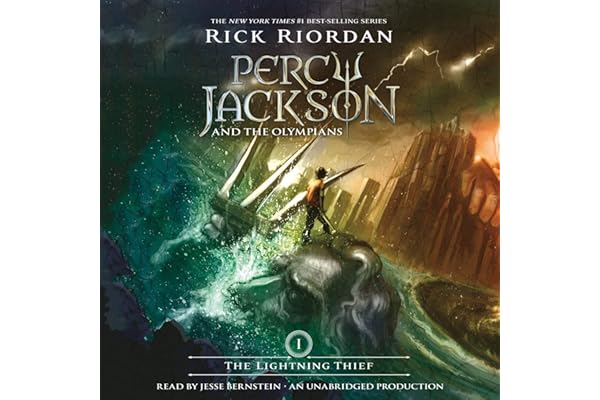
The Lightning Thief: Percy Jackson and the Olympians, Book 1

The Lightning Thief: Percy Jackson and the Olympians, Book 1


Price: $15.75
4.7/5

(61,999 reviews)

What Customers Say:

  • Richie’s Picks: THE LIGHTNING THIEF
    ” ‘Like it or not — and believe me, plenty of people weren’t very fond of Rome, either — America is now the heart of the flame. It is the great power of the West. And so Olympus is here. And we are here.'”It was all too much, especially the fact that I seemed to be included in Chiron’s we, as if I were part of some club.” ‘Who are you, Chiron? Who…who am I?’Chiron smiled. He shifted his weight as if he were going to get up and out of his wheelchair, but I knew that was impossible. He was paralyzed from the waist down.” ‘Who are you,’ he mused. ‘Well, that’s the question we all want answered, isn’t it? But for now, we should get you a bunk in cabin eleven. There will be new friends to meet. And plenty of time for lessons tomorrow. Besides, there will be s’mores at the campfire tonight, and I simply adore chocolate.’ “If I were to discuss the Boy Scouts of America, there would certainly be some harsh sentiments that I’d have to express, both in regard to the national organization and, also, in regard to my own recollections of having been an adolescent member. But among the Scouting experiences about which I have only positive memories are the couple of weeks each summer during the late Sixties that I spent at Woodworth Lake Scout Reservation in upstate New York.Woodworth Lake was encountered at the end of the five-hour bus trip that would always commence at the crack of dawn from the Long Island suburb where I was growing up. Mornings at Woodworth Lake would begin with our trekking from our respective lakeside campgrounds to the dining hall where one member of each assigned table had arrived even earlier in order to set the table and serve as that day’s waiter. The days would end after dark, with all of the groups in attendance at the camp coming together in a natural amphitheater location to perform skits for one another and to join together in song. (Thirty years later at circle time, I’d think back warmly to those campfire evenings as I taught preschoolers to sing such camp memories as “Waltzing Matilda,” “Yellow Submarine,” and “There’s a Hole in the Bucket, Dear Liza.”)In between the morning and evening festivities, I’d get to tackle projects of my choosing that would lead to merit badges, swim in the bracing cold lake, hike for miles with my buddies, and swat mosquitoes. Woodworth Lake was where I learned to row well enough to be able to subsequently conquer the substantial winds and tides of Northport Bay and Huntington Harbor. It was the location of contests where a Crisco-covered watermelon would be tossed into the lake between two competing camp groups, or where late-night scavenger hunts were occasionally conducted, with success leading to coupons that were redeemed for tasty midnight snacks. And then there was that night in 1969 when we all sat together inside the canteen and stared in awe as Neil Armstrong walked on the moon.Sure, there were plenty of guys with whom I became friendly over those years, as a result of attending patrol and troop meetings back at home. But there was a whole different bonding that developed between those of us who spent afternoons together, developing skits for the evening campfire, and mornings together, waking up hours away from our families and familiar living patterns.I’m currently sitting up in bed, hours from home, the only light coming from the laptop in my lap. It’s an hour before sunrise, and there’s a freight train whistle in the distance — something we stopped hearing in our part of the world decades ago. Sunrise will lead me and Shari back out to the gorgeous Sierra lakes, trails, and vistas that we’re experiencing this week. Traveling hours away from home in order to wander through and over mountains is clearly one of those learned behaviors resulting from my summer camp experiences.Although Percy Jackson’s summer camp experience clearly shares some similarities with mine, as well as with those of most adolescents venturing away from home and habit, it would be safe to say that Percy’s summer camp experience at Half-Blood Hill (beginning shortly after the incident in which he unwittingly vaporizes his pre-algebra teacher) also involves quite a few dissimilarities from the summer camp norm:”We must have been on the north shore of Long Island, because on this side of the house, the valley marched all the way up to the ocean, which glittered about a mile in the distance. Between here and there, I simply couldn’t process everything I was seeing. The landscape was dotted with buildings that looked like ancient Greek architecture — an open-air pavilion, an amphitheater, a circular arena — except that they all looked brand new, their white marble columns sparkling in the sun. In a nearby sandpit, a dozen high school-age kids and satyrs played volleyball. Canoes glided across a small lake. Kids in bright orange T-shirts like Grover’s were chasing each other around a cluster of cabins nestled in the woods. Some shot targets at an archery range. Others rode horses down a wooded trail, and unless I was hallucinating, some of their horses had wings.”In the wake of a horrifying series of experiences at the end of the school year, Percy Jackson, a self-described “troubled” kid, finds himself at Half-Blood Hill. And he comes to find out that his dyslexia, his attention deficit disorder, his mediocrity in school, his knack for inevitably causing disaster on school field trips, all stems from his being the product of a relationship between a mortal and a Greek god.”Being a half-blood is dangerous. It’s scary. Most of the time, it gets you killed in painful, nasty ways.”Teaming up with a satyr named Grover and a bright girl named Annabeth (The author repeatedly teases readers with subtle allusions to HP.), Percy Jackson sets out with his new-found powers on a quest to…” ‘So let me get this straight,’ I said. ‘I’m supposed to go to the Underworld and confront the Lord of the Dead.'” ‘Check,’ Chiron said.” ‘Find the most powerful weapon in the universe.'” ‘Check.'” ‘And get it back to Olympus before the Summer Solstice, in ten days.'” ‘That’s about right.'”I looked at Grover, who gulped down the ace of hearts.” ‘Did I mention that Maine is very nice this time of year?’ he asked weakly.’ “Filled with out-of-this-world adventures, and chapter titles like, “I Play Pinochle with a Horse,” “I Become Supreme Lord of the Bathroom,” and “I Ruin a Perfectly Good Bus,” Percy Jackson’s search for himself is the ultimate summer camp experience.
  • Perfect, amazing and captivating
    I LOVED this book. ABSOLUTLY recomend!!!! I would give way more than 5 stars if I could.
  • Greek mythology based tweenager fiction
    Percy Jackson and the Olympians, The Lightning Theif is an interesting work of fiction by Rick Riordan. From Yancy Academy to half blood summer camp to their adventures all the way to LA and eventually to the underworld and back is indeed interesting. Luke was not a surprise thought I could not understand the connection and may be there should have been a better persuasion and elaboration for Luke, than the one in story unless there is something better in the next book or books. Overall, it was an enjoyable read though there are some grammar errors in a few places.
  • Buena compra
    Perfecto estado y buen tiempo de entrega.
  • Showed up decently well
    The book showed up with a few scratches on the back and a few tiny dents in it. I’m not picky so it’s fine, but if you’re wanting to collect with mint condition books, this may not be for you.
  • love it
    i love this book and forever will!
  • Super Bueno
    Según la descripción
  • The Lightning Thief deserves its reputation as one of the best books for middle grades.
    I resisted reading the Percy Jackson and the Olympians series when it first came out (2005) because I don’t like Greek mythology. And when the first movie came out (2010) I still resisted it, because of the mythology thing. I assumed it would be boring.I never opened The Lightning Thief until recently, when I decided to find out why this is a best seller among middle grades children’s books. If I had read the first three sentences years ago, I would have been hooked:“Look, I didn’t want to be a half-blood.“If you’re reading this because you think you might be one, my advice is: close the book right now. Believe whatever lie your mom or dad told you about your birth, and try to lead a normal life.”That might be the best opening in the history of literature.Percy Jackson is twelve years old. He’s been expelled from every boarding school he’s ever attended (roughly, every year), because strange things happen around him, things he always gets blamed for. At the end of sixth grade, his current school informs him that he’s not invited back for the next term. He has a tough time getting home, and when he does, his mother senses that he is in danger, and insists on taking him to a special summer camp for his own safety. Sorry if this sounds sketchy. I am skipping over a lot of details because I don’t want to spoil them for you.While at summer camp, he learns his true parentage, finds out he’s been falsely accused of a crime, and is sent on a quest to find Zeus’s missing master lightning bolt and return it to Mount Olympus. In ten days. Otherwise, war will break out among the gods.This book has it all. Weird encounters that don’t get explained until later. People who are not what they seem to be. Strange creatures. Mythological history. Danger and suspense. Friendships and betrayals. And through it all, humor.I can see most kids really enjoying The Lightning Thief. Reading it as an adult, I was on the edge of my seat. Rick Riordan keeps this novel moving along at a fast pace. His characters are multi-faceted and likeable (except for the villains, understandably), seemingly ordinary (or seemingly handicapped) kids who accomplish things that adults would find challenging and life-threatening. The Lightning Thief deserves its reputation as one of the best books for middle grades. That’s high praise from someone who does not like mythology.

The Lightning Thief: Percy Jackson and the Olympians, Book 1 is one of the best-selling products with 61999 reviews and a 4.7/5 star rating on Amazon.

Current Price: $15.75

#3

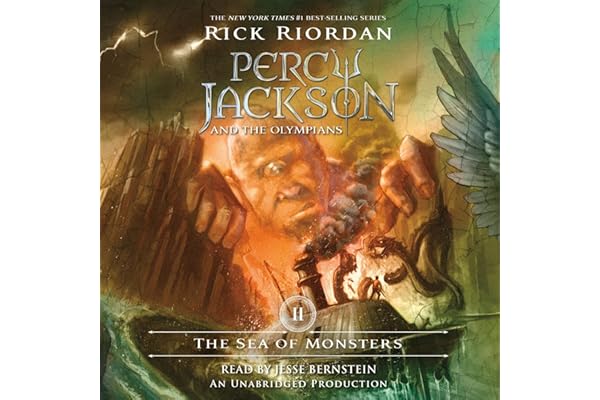
The Sea of Monsters: Percy Jackson and the Olympians, Book 2

The Sea of Monsters: Percy Jackson and the Olympians, Book 2


Price: $14.57
4.7/5

(40,039 reviews)

What Customers Say:

  • Percy’s Gotta Stop Grover’s Wedding!
    Although Rick Riordan’s young fans don’t know it, they’re getting something of a classical education while they’re reading his Percy Jackson and the Olympians series. The stories are set in today’s world, with side trips into pure fantasy, but they’re told in a simple, down-to-earth way that has won Riordan readers throughout the world.Greek gods walk through the pages of Riordan’s novels for juvenile readers, and they bring with them all the old stories from Greek mythology. I read the first volume of the projected five-book series to my nine year old and we had a blast with it. He was amazed at how I always knew the stories behind the stories and knew so much about the gods themselves.I explained to him that I read a lot of Greek mythology when I was in third grade. Since getting his interest piqued, he had me buy him a compendium of Greek myths and has been reading constantly. His knowledge has surpassed mine at this point. That’s the power of Riordan’s storytelling.Percy Jackson is a great hero for the series. He’s an average kid for the most part – ADHD, video game junkie, pop culture freak – except that he has extra problems: he never gets to stay in the same school because some weird thing happens, he gets blamed for it, and then he’s expelled. The weird thing that happens is usually some god or monster tries to kill him. Thanks to the Mist, the mystical spell that keeps mere mortals from seeing the gods or their creatures, everyone believes Percy did something.In the first book, THE LIGHTNING THIEF, Percy finds out he’s the son of Poseidon, the god of the seas. He also finds out he has a lot of cool powers while in the water – like being able to breathe underwater and swim superfast. Percy’s character, and his pals Annabeth and Grover, are true highlights of the series. I also enjoy the adults as well, Percy’s mom, Chiron, the centaur mentor, and Mr. Dionysius, the camp director. Every summer, Percy goes to Camp Half-Blood, where the half-gods go hang out to learn how to fight and be champions, and where they learn their powers and go on quests.I also like how Riordan is incorporating his own world-building into the myths of the Greek gods. He borrows a lot from the original mythology, but he changes it and warps it to fit the modern world as well. That’s important because his young readers get to see how dysfunctional the Greek gods were and how their problems might apply to their own families. That’s just one of the lessons that become apparent throughout the books.THE SEA OF MONSTERS starts out with Percy getting in trouble at school again. He’s become friends with a new kid, Tyson, that no one likes, and he’s become a target for school bullies that turn out to be monsters in disguise. Their grudge dodgeball match literally destroys the school and it isn’t long before it’s just a memory and a burning ruin. And the battle will leave most readers laughing their heads off, even though they might be worried about Percy at the same time. Tyson ends up having secrets of his own.Pursued by the monsters, Percy beats a fast retreat to Camp Half-Blood with Annabeth and Tyson in tow. As soon as he gets there, though, he knows trouble has broken out all over. Thalia’s tree, the one that protects Camp Half-Blood, has been poisoned and is dying. The blame has been placed squarely on Chiron.The tree is important, not only because it protects the camp, but because Zeus turned his daughter Thalia into it as she lay dying. So a lot of bad things are about to start happening. This whole plot point shows how good Riordan’s storytelling and world-building is. I knew about the tree and the history from the first book, and now all of that is menaced. You can’t help but be drawn in.Furthermore, to see Chiron take the fall for someone else’s evil is just wrong. I couldn’t wait for Percy to undertake a quest to figure out exactly what was going on.But Riordan had some surprises to unveil first. The biggest one is that Percy has a half-brother, and it’s a person that Percy would never have guessed. Not only that, but his half-brother is someone no one else at the camp likes. So Percy is shunned by everyone at camp and is more mad at Poseidon than ever.The second surprise is that Grover, the satyr that has been Percy’s friend the longest, is in BIG trouble. He’s masqueraded himself as a girl by stealing a wedding dress and has been taken by a Cyclops that plans on marrying him. And if Grover lets the monster find out that he’s a satyr and not female, the Cyclops will eat him.Just as Percy’s getting ready to go to Grover’s rescue, he also finds out that the Cyclops has the Golden Fleece, and that it can be used to heal Thalia’s tree. From that point on, my son and I were swept up in a whirlwind of adventures that placed us on the sea in a ship, shanghaied by zombie pirates, trapped between Scylla and Charybdis (monsters that Jason and the Argonauts and Odysseus had to face in their respective adventures), aboard Blackbeard’s pirate ship, and face-to-face with Luke, Percy’s archenemy from the first book.Riordan’s Percy Jackson novels are great reads. They’re filled with incredible adventures, lots of dialogue and jokes, magic and monsters, and real-life stories that kids (and adults!) can enjoy. We’ve got the third book in hand, THE TITAN’S CURSE, and are anxiously awaiting Book 4: THE BATTLE IN THE LABYRINTH.I recommend reading the series in order, but there’s enough explanation that you can jump on anywhere. Kids who love fantasy novels and haven’t yet found these will thank you forever.
  • Adventure, Mythology, and Friendship: The Sea of Monsters Delivers an Unforgettable Journey!
    “The Sea of Monsters” is an absolute masterpiece that captivates from the first page to the last. Rick Riordan’s storytelling prowess shines through in this thrilling adventure, seamlessly blending Greek mythology with modern-day twists.The protagonist, Percy Jackson, continues to be a relatable and endearing character whose growth and development are a joy to witness. His journey alongside friends like Annabeth and Grover is filled with heart-pounding action, witty humor, and unexpected plot twists that keep you on the edge of your seat.Riordan’s world-building is exceptional, vividly bringing to life the dangers and wonders of the mythical realm. From the treacherous Sea of Monsters to the unpredictable antics of gods and monsters, every chapter is a delightfully immersive experience.What truly sets this book apart is its themes of friendship, bravery, and self-discovery. Through Percy’s adventures, readers are reminded of the power of loyalty, courage, and embracing one’s strengths and weaknesses.”The Sea of Monsters” is not just a book; it’s an enchanting journey that sparks imagination and leaves a lasting impact. Whether you’re a fan of mythology, adventure, or simply a great story, this book is a must-read that will leave you eagerly reaching for the next installment in the series.
  • Sea of Goodness
    JUST A DISCLAIMER: The following comes from someone who has only read the series up to this book. Any reference to the Percy Jackson series represents this book, the past one, and my personal predictions for the next books. I cannot rate and am not rating the books after this one.You’re a modern-day kid, just growing up in New York City with your mom. You have some trouble in school, but other than that, you’re just like any other kid. Then, one day, you find out your dad is the Greek god Poseidon. Thanks to this, your whole life changes. Now, you have to go on a huge adventure to save the world. This explains the Percy Jackson series. Percy Jackson and the Sea of Monsters (which I’ll be calling simply Sea of Monsters from now on) is the second book in the series and it’s still pretty good. The book maintains a fairly decent pace while still keeping what made the first book good.(Aye, this be a summary, so there be spoilers ahead! If ye don’ like em’, skip this entire paragraph.) Our story starts roughly one year after the events of the first book. The book opens with Percy’s dream one morning. In the dream, his satyr friend, Grover, is in some sort of danger. Percy then wakes up and quickly shrugs it off as a dream and prepares for his last school day of the year. He meets up with his new friend Tyson, a really tall, messed up, and somewhat stupid homeless kid who goes to Percy’s school. Everything is fine until gym class, when some monsters show up and everything goes straight down from there. The gym is blown up, with Percy, now running with Annabeth and Tyson to Camp Half-Blood, being blamed for everything. Upon arriving at camp, our group of protagonists find that it is under attack from two brass bulls! They team up with the forces already fighting the bulls and Percy sees that Tyson is a cyclops. Weeks pass with Tyson being claimed by Poseidon, Percy having some more dreams about Grover to find out that Grover is being held prisoner by Polyphemus in the Bermuda Triangle, and eventually Hermes appears and helps Percy, Tyson, and Annabeth escape from camp. The trio go on their journey to the Bermuda Triangle, finding out about Luke’s plot to revive Kronos and fighting some monsters along the way. They finally make it to Polyphemus’ island and escape back to Florida. A few more things that I won’t spoil happen down in Florida, and then the book ends with our protagonists getting back to and saving camp.Sea of Monsters and the Percy Jackson series picks right up where the Greek myths left off, and I think that’s good. They make regular references to Greek mythology, bringing characters or places out of it. In fact, our main character is based Perseus from mythology. The story is even told a bit like a myth told from the first person. With all of these elements combined, I consider this series to be an extension on the ancient Greek myths. They contain the same type of epic legend and quest that the Greek myths do. The only difference? The Percy Jackson series updates the idea to modern times, having the characters act in ways a modern audience can relate to much more easily. Part of how he does this is in humor, using lines like “‘Powdered donuts,’ Tyson said earnestly. ‘I will look for powdered donuts in the wilderness.’ He headed outside and started calling, ‘Here, donuts!’” Despite seeming like a sort of simple idea, this book is great because of it.The only real complaint I have with Sea of Monsters is that the book, like my summary above, seems to move remarkably fast at some points, while going very slow at others. Over the same amount of pages it takes for Percy to figure out one idea in his head, he can build an entire chariot. Over the same amount of pages it takes for him to fight Polyphemus, he can wind up back at Camp Half-Blood. Other than this rather erratic movement, I feel that this book holds up well.What if the Greek myths were brought into modern times? Sea of Monsters and the Percy Jackson series are spawned from that very interesting idea. And Sea of Monsters executes it well. This book captures the essence of the ancient Greek myths and does its job by updating the language and format into one more modern. Other than this book seeming to move very fast or very slow sometimes, I have no problems with it. A good read that I recommend.

The Sea of Monsters: Percy Jackson and the Olympians, Book 2 is one of the best-selling products with 40039 reviews and a 4.7/5 star rating on Amazon.

Current Price: $14.57

#4

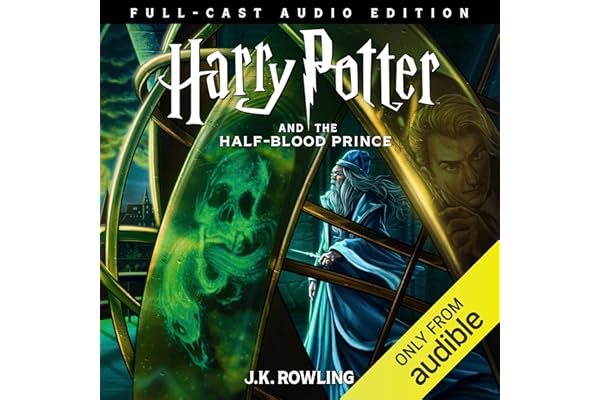
Harry Potter and the Half-Blood Prince (Full-Cast Edition)

Harry Potter and the Half-Blood Prince (Full-Cast Edition)


Price: $44.99
4.8/5

(91,388 reviews)

What Customers Say:

  • Spoilers Galore; My Review.
    Half-Blood Prince is easily one of the better books in the Harry Potter series, though each is a masterpiece. But the 6th installment of a 7-part series is bound to be full of great moments in the story. There remains a great deal unanswered in this book, however, and the 7th will surely need to be no smaller than an average encyclopedia. Somehow as I was reading this book, I felt that I was learning more and at a quicker rate than in Order of the Phoenix, but so many of Harry’s problems and questions took so long to reach any sort of answer or resolution that I still ended up not knowing many of the secrets I expected to be revealed in this book. It must be that Rowling, in her grand scheme, is saving much for the last book. One thing seems to be for certain, though, and that is that Rowling will never lose that special touch, that supreme and genuine interest in the story and its characters that makes the writing so engrossing. After completing this book, I was in a state of total shock and to this moment I wish only to read the seventh book.Half-Blood Prince is dark; I mean far darker than the last. This is the time I have always known was inevitable in the Harry Potter world, at last we are seeing chaos and war and battles break out within the walls of Hogwarts itself. Several of the chapters are particularly well-written, with great suspense and imagery; an example would be the time Harry and Dumbledore spent in the cave. Relationships blossom in this book at last, including Harry suddenly falling in `love’ with Ginny Weasley, Ron dating Lavender Brown, Pansy and Draco clearly going out, and some serious hinting at a possible romance between Ron and Hermione when he gets rid of Lavender. Some of the focus on their teenage jealousies and squabbles, and their newfound interest in dating and `snogging,’ was a cute touch, but admittedly not what I was exactly looking for. After all, it was more fluff than anything else, and certainly none of it was real love. Then, the useless couple of Tonks and Lupin was introduced in the end; all well and good, I suppose, but again not something that overjoyed me. The end of the book is very sad indeed, yet, I was not crying–I was merely shocked, flabbergasted at the circumstances. A Snapeless, Dumbledoreless Hogwarts that Harry Potter is not intending to return to next year? Yes, you heard right. Harry wants to go off and find all of Voldemort’s remaining Horcruxes and face the final battle on his own.Much of the book is devoted to Harry witnessing important memories in the Pensieve with Dumbledore so that he can gain a greater understanding of his enemy, the Dark Lord. Now, I have long been a fan of Severus Snape. I admit I love him. Most of my reasons for loving Harry Potter center on him. And while much was learned about him in this book, much is still unknown, and what we do now know is shocking. To begin with, we learn the names of his parents, muggle Tobias Snape and witch Eileen Prince (yes, Snape is the Half-Blood Prince.) It is also known that Snape overheard the prophecy regarding Harry & Voldemort and told the Dark Lord about it; however, supposedly he showed enough remorse after Voldemort used the information to kill Harry’s parents that Dumbledore forgave and entrusted him. Many are accusing Dumbledore of naivety for this, but I believe that they are only looking at what is plainly on the surface of this book and forgetting many things. I will explain later why, amazing as it may seem, my love for and faith in Snape remain unshaken despite the fact that this book, from its beginning, seems to be saying that he is still on Voldemort’s side. I believe it’s too simple for Rowling to be writing that he is, after all, evil. To me it seems a set-up. Additionally, I was expecting a surprising reason for Dumbledore to trust Snape, not a simple apology. There must still be more to this than meets the eye.Before I explain my case about Snape, I’ll mention some of the things that remain a mystery after this book. Sev’s patronus and greatest fear don’t come up (in fact, while Tonks’ patronus is revealed, Boggarts don’t receive any mention.) Some interesting information is supposedly going to be divulged regarding both Lily and Petunia, but neither of them played much of a role in book 6.So on to my favorite character, who ends up being the Prince mentioned in the title. When I first finished this book, I was somewhat upset because while I still loved Snape, I was aware that what he’d just done was not steering in the direction of redemption, as I had hoped to see him going. I also knew that, at least until some point in Book 7, almost everyone (in the books and in real life) would turn against Snape and regard him as a treacherous dog. Yet, after composing myself and reviewing what I’d read, I realized that I just cannot accept him as truly evil, or Dumbledore as an old fool.Now, before reading this book, if I had to make a list of impossible things that could never happen…Snape killing the Headmaster and fleeing the school with a bunch of Death Eaters, would have been right at the top of the list. But, I’d have been wrong. I had a very strong feeling that Dumbledore would be the one to die in this book. But I never saw the way it happened coming. In the beginning of the story, Snape came in rather quickly. Once Harry was at school, Snape finally got the Defense Against the Dark Arts post he’d longed for. I was cheering. (Yes, he is no longer Potions Master.) But it turned out not to matter. In the second chapter, Narcissa Malfoy and her sister, Bellatrix Lestrange, visit the home of Sev and he makes with Narcissa (possibly out of love) an Unbreakable Vow–that Snape will help her son Draco carry out a task ordered of him by Voldemort, and will complete it himself should Draco prove unable. The task, it seems in the end, was to kill Dumbledore. Draco does prove unable, and Snape carries it out. Yet, it cannot be this simple. Dumbledore may have been aware of the task, and the Vow. From the moment Dumbledore returns from the cave, weakened, having drunk an unknown potion set by Voldemort to guard a Horcrux, he says he needs Severus. He never says what for, never asks to be healed. When Snape arrives Dumbledore calls his name and says ‘please’ (pleading for his life, as everyone assumes, or something else?) before Snape aims the curse at him that kills him.This seems twisted, monstrous, unforgivable, no? Exactly: No. Not in my opinion, at least. I do not think it was Snape’s choice to kill Dumbledore, but that the Headmaster had at least one reason for telling him that he must do this horrible deed. Of course from Harry’s perspective (Harry, who has inherited, as Lupin says, a prejudice against Sev) it was cold-blooded murder and betrayal and he now wants to destroy Snape as much as Voldemort. But this too is far too simple; clearly, as the book ends on this note, there are things Harry does not understand about what has happened.He has forgotten, for instance, about the argument overheard by Hagrid, between Snape and Dumbledore. This point never was addressed again, yet amidst all the turmoil, who can blame it for being overlooked? Consider it. Dumbledore telling Snape he must do something that Snape does not wish to do. For several reasons I can think of (mainly involving the Death Eaters and the Malfoys), this argument connects directly to the death of Albus. And what of the mysterious order given Snape at the end of “Goblet of Fire,” at which he turned pale? Clearly he is being asked to do things most difficult, to make great sacrifices; how can the most enigmatic person turn out to be clear-cut evil?Read carefully and you’ll see that Snape has hatred and revulsion etched into his face when he performs the fatal Avada Kedavra. I see these emotions not as directed at his target, which Harry naturally assumes, but stemming from the act he is about to commit. It never really occurs to Harry that Sev may have been feeling the same things he’d been feeling when he was bound by his promise to force-feed the convulsing Dumbledore, does it? Probably far worse.Snape acts rather outrageously for the remainder of his time in the story, not shockingly, yet he refuses to allow any harm to come to Harry (clearly Dumbledore would’ve wanted that). He seems to be in pain and becomes furious at the mere suggestion that he is a coward–because he has just done the most difficult and least cowardly thing ever asked of him. Dumbledore has repeatedly stated that Harry’s life is more important than his own, and that Harry understands less than he. And the facts remain that he has in the past done much good despite his suspicious nature, & that not everything he told Bellatrix about staying loyal to Voldemort can be true. My final point has to do with the words Dumbledore cried while drinking the potion in the cave. I don’t know why, but I feel these words are important, and that after the escapade Dumbledore may have known the end was near.Thus I rest my case. Avid Harry Potter readers will want to dive into this one, I’m certain, and those who haven’t yet discovered it should do so. Only possible complaints? 1) Too short; 2) Not enough anticipated answers given, yet new questions raised, 3) Disturbing ending leaves you frustrated waiting for the next book.
  • The magic grows darker…
    At the end of “Harry Potter and the Order of the Phoenix”, J. K. Rowling left so many plot threads dangling that there was endless speculation about the next book. Who would be Voldemort’s next victim? Would Harry get back together with Cho Chang or were they history? What about Ron and Hermione? Suspense enough to sustain interest at a fever pitch up to publication of the next book. Now that “Harry Potter and the Half-Blood Prince” has finally been released to hype unseen in this reviewer’s memory, we’ve found out that Rowling has not only tied up a lot of the dangling threads in OOP, but lets the reader know exactly where she’s taking us in the final book, which may or may not be Harry’s seventh year at Hogwarts.HPB opens on an unusually chill summer day which reflects the chill that has crept upon England’s usually green and pleasant land. People are disappearing, presumed murdered. Unlikely “hurricanes” have taken a toll on the landscape. And one cold night in July, after Harry has been only two weeks back with the Dursleys, Albus Dumbledore, Hogwart’s Headmaster, appears on the Dursley’s doorstep to spirit Harry away to The Burrow to spend the rest of the summer with the Weasley family. Dumbledore isn’t at all happy with the way the Dursleys have treated Harry all these years and he lets them know it in no uncertain terms. Just one more summer, he tells them, and Harry’s out of there for good. It’s hard to say who’s more delighted by this news, Harry or the Dursleys.The chill over Muggledom is also evident in the wizarding world, even in the Weasleys’ own home. Mrs. Weasley jumps at every strange noise in the night. The Weasleys’ clock, with its nine hands representing family members indicating their location, always seem to be pointing at “mortal peril”. And there have been changes in Diagon Alley as well. Florian Fortescue’s ice cream parlor is boarded up because Fortescue has disappeared, along with old Ollivander the wand-maker. But the Weasley twins’ joke shop is doing a booming business and the twins are raking in the Galleons by the bucketful. They even have their eye on expanding into Hogsmeade, right outside Hogwarts. And there’s a new Minister of Magic as well; the bumbling Cornelius Fudge has been sacked. But the new Minister isn’t much of an improvement; he’s arresting innocent wizards right and left and throwing them into Azkaban prison, just for the sake of appearing to be making headway against Voldemort’s followers. He also wants Harry to liaise with the ministry, but Harry isn’t having it; he remembers all too well how the Ministry tried to slander him the year before and he isn’t about to become their poster boy. He tells the Minister to his face to stuff it.Back at Hogwarts, there’s a new staff member in the person of Professor Slughorn, a former Head of Slytherin House who has spent the past year in retirement and on the run from Voldemort who wants to recruit him into the infernal ranks of the Death Eaters. To everyone’s shock, it’s announced that Slughorn will be the new Potions master, replacing Snape, who has finally landed the plum job he’s always coveted, the Defense Against the Dark Arts teacher. Is this Dumbledore’s way of rewarding Snape for his loyalty over the past few years? Harry doesn’t trust Snape around a glass corner and doesn’t think he deserves it. But wait up — the DADA appointment could be a very left-handed gift since no DADA professor has managed to keep the job for more than a year. Is this a set-up or what?Besides being immersed in classes, Harry is also meeting privately with Dumbledore, who tells him the entire history of Voldemort, his birth to a mother who is one of the last direct descendents of Salazar Slytherin now living in abject filth and poverty, and the handsome young local aristocrat who falls victim to her love potion; fatally, his mother, wanting his father to love her for herself alone, stopped giving him the potion and once his eyes and head cleared, he abandoned not only her but their unborn child as well. Recruited into Hogwarts by Dumbledore himself, honing his skills in magic and the dark arts, and feeding his propensities for cruelty, power and domination, Voldemort graduates from Hogwarts to seek revenge on the father who abandoned him by killing not only him but his paternal grandparents as well. And from there he becomes the Dark Lord, gathering adherents who are too fascinated or too terrified to resist his powers; among them, the Malfoy clan.Dumbledore tells Harry they must find the location of four of Voldemort’s Horcruxes, objects that have been infused with the soul of their possessor. Voldemort is so evil and so obsessed with gaining immortality that he has split his soul into seven pieces, transferring six of them to six different objects and retaining the seventh piece inside his own body. Two of the Horcruxes have already been destroyed: one by Harry in the second book (Tom Riddle’s diary), and another by Dumbledore, a black stone ring. Once they find and destroy the other four Horcruxes, they will be able to deal with Voldemort. But all kinds of things transpire in between.Harry is not only up to his ears in classes, he’s also been named Quidditch captain for Gryffindor House, and he’s fighting off hordes of girls who are fascinated by his hero status. The kids are growing up and flirtation and romance take up a significant part of this book. We always knew Ron and Hermione would finally become an item, but Hermione has to spend the better part of the year feeling jealous and shunted aside while Ron detours with a possessive airhead named Lavender Brown who has an infuriating habit of calling him “Won-Won” while sending him an outsize gold chain for Christmas that says “My Sweetheart”. The more Ron tries to dump her, the tighter she holds on (going out with her is like dating the Giant Squid, he muses to Harry). There’s a delightful interlude when Ron falls head over heels in love with one of Harry’s groupies after drinking a love potion meant for Harry, with hilarious results. And almost too late, Harry finally wakes up to the fact that Ron’s little sister Ginny has become a very desirable young lady, but not before Ginny has become entangled with Dean Thomas. Things get sorted out, and Harry and Ginny have a precious few weeks together until the darkness engulfs all of them and everything comes crashing down.It’s Harry and Dumbledore’s quest for the Horcruxes that triggers the tragedy that marks the last few chapters of the book. We know somebody very close to Harry is going to get killed but it’s like a kick in the stomach when it actually happens. There’s no safe place in the world for Harry any more, not even at Hogwarts. And there’s no parent or parent figure to protect him any longer. He’ll have to face Voldemort on his own. And he won’t endanger Ginny by continuing a relationship with her; Voldemort gets to his enemies through the people they love best. He’s completely alone. Well, maybe not completely; Ron and Hermione tell him they’ll be with him no matter what happens. Maybe that’s one of Harry’s advantages over Voldemort; whereas Voldemort only has followers, Harry has friends.Harry has not only grown older, he’s a lot more mature in this book. In OOP he was a querulous fifteen-year-old, touchy and irritable, resenting the bad hand life has dealt him; he didn’t ask to be any hero and he didn’t ask to have a homicidal wizard on his case. But in HBP he’s moved through resentment to resignation to acceptance, and finally to readiness to accept his destiny. He’s grown from boyhood to manhood and he’s ready to shoulder a man’s responsibility. He’s going to find and destroy the Horcruxes and Voldemort as well. And anybody who gets in his way, as he intimates about the Half-Blood Prince, better watch out.Just has Harry has gone through some significant character development, so has his opposite number, Draco Malfoy. We don’t see much of Draco in HBP; he’s disappearing from the scene for nefarious reasons of his own. At the start of the year he brags to his cohorts that he’s moving on to bigger and better things; who needs Hogwarts any more? But Draco has bitten off considerably more than he can chew in selling his soul to Voldemort; we almost feel sorry for this scared kid who realizes with growing terror that he is in Voldemort’s thrall for the rest of his life, immersed in evil he can’t control, and that refusing or inability to do Voldemort’s bidding will cost his parents their lives. And as we see Harry and Draco developing in different ways, we also see Dumbledore growing older and weaker, fatally undone by his own sense of goodness and decency and his misplaced trust in his nemesis, the Half-Blood Prince.So who is the Half-Blood Prince? Suffice to say it’s someone with Voldemort’s own background, hating and hiding his Muggle blood, biding his time for the ultimate act of betrayal. At the book’s end, he’s on the run, along with Draco Malfoy. But we have a feeling the Half-Blood Prince may be living on borrowed time; he’ll get what’s coming to him in Book 7.Unlike the end of OOP, where speculation about where the series was going abounded, by the end of HBP we pretty much know what’s in store in Book 7. Harry, possibly with the help of Ron and Hermione, will go on a quest for the Horcruxes, and once they are destroyed, it will be a fight to the finish between Harry and Voldemort. Neither can live, we’ve been told, while the other survives. We can’t know yet which will survive, or if Harry will realize his dream of becoming an Auror, or if he will finally settle down to find happiness with Ginny. All we know is that J. K. Rowling will wrap up one of the most fascinating and successful adventure series ever written.

Harry Potter and the Half-Blood Prince (Full-Cast Edition) is one of the best-selling products with 91388 reviews and a 4.8/5 star rating on Amazon.

Current Price: $44.99

#5

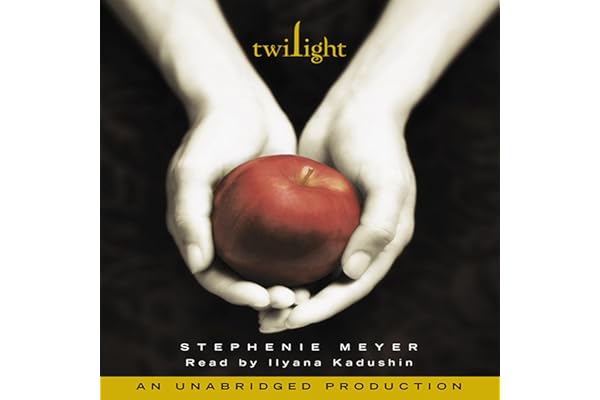
Twilight: The Twilight Saga, Book 1

Twilight: The Twilight Saga, Book 1


Price: $18.90
4.6/5

(44,622 reviews)

What Customers Say:

  • Light paranormal romance.
    This is a light romance between a ordinary 16 year old girl who falls for a vampire, who doesn’t want to be evil.Twilight starts a PG rated series that’s great for all ages. This is the series that started a vampire fascination that still hasn’t stopped. It’s great for those who have a weak stomach or those who don’t like vampires at all. It’s laid back and very relaxing for older adults, while still being aimed at teens. If you hate vampires and the paranormal, prepare to be swayed. Meyer opens a whole new world that we’d love to live in. Give this series a try and the next time you go to Walmart, you’ll find yourself searching the young adult section. It’s slow paced as Meyer paints a beautiful setting, with Bella being a daughter we’d all like to have. With romance, light comedy, and some ending nail biting tension the book is a must read.The negative.It’s very slow paced with a lot of detail. Probably too slow for young readers who need a lot of action. I don’t think there is any action until page fifty. Meyer might try to write too beautiful. She must use a record number of words to describe copper hair, and golden brown eyes. I had to go by her first description because I didn’t understand several of the words she used. There are many editing errors and a couple sections that should have been edited and copied to the paragraph before it. Most of them should be blamed on the editor IMO. The vampires are too powerful and too hard to kill. It seems to take a nuclear blast, or another vampire or paranormal creature.Characters.Edward, the vampire, might be considered too perfect, but he has his flaws. He could be considered a bit of a pervert, but I don’t think so. His weirdness actually adds comedy and more to the relationship. He’s actually very morally sound. He’s dedicated, mature, and very responsible. He’s also too pushy. Sometimes I thought he was going to be one of those guys who beats his wife, but later I saw I was wrong. He’s just over protective. Almost criminally so.As others have said, the side characters are one dimensional, but still very good. Most books don’t show us anything of the side characters. Well most of Meyers do. It might be one thing, but at least it’s something. They have very strong voices, and you’ll remember every one. Even what they look like. Some new books today don’t even describe the main character well. I honestly wish the books were longer to get more of them.Bella… The daughter everyone wants. Reading this story from her view makes you want to be a better person. Yes, she’s a great role model for every teenage girl out there. She’s very mature, responsible, long suffering, and loving. She does her homework and chores. She tries to always put her parents above herself and she isn’t whiny. She’s a normal ordinary looking girl with above average intelligence, and no athletic ability. She’s also brave. One of the great things of this series, is that a ordinary girl, surrounded by super powers, might end up being the hero.Her flaws. Well falling in love with a vampire. She’s a bit insecure, but who wouldn’t be with Edward? She also lets him boss her around too much, but she is in love.Some answers to other negative post with SPOILERS.People don’t like Bella…Why in the world not? Is she too perfect? I don’t think so, she’s perfect to me, but falls to temptations other teens do as well. She took cold medicine just to sleep. Just the once, but the attitude is there. In later books she shows a little of a criminal side by debaiting if love should make you overlook murder. She shows she can make mistakes too. I explained my other views above. Some say she whines too much. That’s not true. She mentally complains in her head about having to move to Forks. This is very believable. She came from sunny Phoenix, Arizona. When I was a teen, I had a friend move to Tennessee from Florida and he complained all the time. And it doesn’t even rain a lot in Tn. Bella didn’t even complain out loud! Edward picked the information from her and she admitted she hated it to him. We hear some complaints in her head over the first of the book, but it’s not too much. By the end of book one she even likes Forks. Trust me.Bella comes to small town and everyone likes her…This isn’t just believable, it’s highly likely. It’s also not completely true. First Loren hates Bella, and Jessica uses her. I’d say ninety-nine percent of new students get the same attention Bella did. They don’t always get negative attention. Espescially a average looking girl. Most guys like all girls anyway. She’s a novelty. Espescially transfering in the middle of the year. Plus it’s a small town. Bella is also introverted. That will keep the attention up.We don’t see what Edward see’s in Bella…No we don’t see enough. He likes her facial expressions. He’s intrigued by her smell, and by the fact she’s the only person ever who’s mind he can’t read. She calls his name in her sleep. She shows that she can be trusted. There is some little stuff, but not enough. Even so, haven’t you heard of love at first sight? We don’t get much, but we get a little more than that. I’ve read a lot of teen books and Twilight gives us a lot more in the romantic department. Romance is very hard to write and most authors do the love at first sight.The vampires are shiny…Ok it adds more PGness to the story, but I’ve read much worse. Some vampires can telaport to other countries, and control human minds. Some can even turn human again. How crazy is all of that? Sparkling seems minor too me, but Twilight got me started on vamps.These vampires aren’t killers…The Cullens aren’t. Most are. Remember this is a book best for people new to the vampire world, or who couldn’t get into the violent ones. This is the book that showed some vampires to be good.Reading this book, I started trying to read the evil vampire books too, but I can’t find them. I read The Vampire Lestat, and compared to this, it stinks. Lestat had character, but was also homosexual and wanted his mother. Rice put terrible details, and her story was boring a lot of the time. She had one comedy scene, and she did it wrong to where it wasn’t even funny. Rice goes into everything a vampire can possibly do, but in little detail. She dazzles us, but doesn’t tell us much of anything. I couldn’t find Interview with a Vampire, but heard it was in the same mold. Meyer explains everything slowly and in great detail. She gives us a great idea of how much vampires can see, and how far they can hear.Bella and Edward don’t progress…I’m rereading the series now for the tenth plus time, but I think that’s right. They progress on some small stuff, like finding Romance, Bella liking Forks now, sex, marriage but not much. We do see huge progression in book four, and a lot of bestselling books don’t have progression at all.Twilight won’t win awards from the critics, but look at what it’s done. Twilight has changed our world. Many adults are now looking in the YA sections when they never considered it before. Vampires are popular again. Meyer has opened the door the other authors with series like Morganville Vampires, Vampire Academy. Just about every new book about vampires is on the shelves because of Twilight. Vampire Academy is my second favorite and in some ways it’s better than Twilight, but if it hadn’t been for Twilight, I would have never bothered. Some authors are writing a vampire novel just to get interest in their own material. Like VC Andrews.And don’t overlook that Twilight is PG rated. That is a miracle. How many authors can write a book anyone from eight to ninety can read and enjoy? It’s hard to write a book, and even harder to write one while keeping the violence and romance clean, yet still enjoyable. In book three I wasn’t even sure if Bella cut herself or not until I saw the movie! A little blood wouldn’t have hurt this books rating anyway.Meyer also keeps this paranormal fiction slightly possible. I don’t believe in Vamps, but it’s impossible to prove they don’t exist. So there is a one percent chance Twilight could really happen. That makes the book easier to loose yourself in. Twilight feels real. Harry Potter on the other hand has time travel, magical everything, and every paranormal creature you can think off. I’m not bashing Harry Potter, I just mean that series would be easier to write and keep everyones attention. The more action, magic, and sex you use, the easier the book is to write. Meyer is outstanding keeping the pages turning without having to throw action or magic at us every few pages.
  • Vampirism as a metaphor for sex
    When was the Golden Age of Science Fiction? The late 1930s to the 1950s, when science fiction became widely popular and many classic science fiction stories were published. The joke answer is that the Golden age of Science Fiction is 14, the age when many science fiction readers become fans. I know I read my first scifi when I was 13 or 14 so maybe they are right.Lately scifi fandom, in which I include not just the fans but writers, podcasters and publishers, want to catch the next generation of fans and have been pushing Young Adult Science Fiction, scifi for kids in their teens and maybe early twenties. I’m not immune to this campaign so I’ve been reading some of it myself. First, I got Scott Westerfeld’s Uglies trilogy. It was light but okay. Then I got Twilight, the first of Meyers’ books about a clumsy girl and the vampire who loves her.My first impression of the book was that it was BIG. It was a thick book. Once I opened it I realized it was big inside. Big font. Big line spacing. It reminded me that what publishers are basically selling is a paper product. The more paper they sell, the thicker the book, the more they can charge. The actual arrangement of ink on the page is usually the cheapest part of their product. Twilight is a big book. It might be classified as Young Adult Speculative Fiction but it was great as Old People Going Blind Fiction as well. As an old person going blind I found the font and the line spacing made it a lot easier for me to read than the tiny fonts in real books. I didn’t have to put on my special adjustable glasses and put it down a lot because my eyes were freaking. BIG FONTS. It was easy to read.It was a little slow to start. I didn’t really find the girl, Bella, interesting. She seemed rather ordinary. There’s a vagueness to her that reminds me of superhero comic books. They leave the faces of the superheroes sketchy so the reader can imagine themselves in that role. In the same way Bella is vague so the reader can imagine herself as Bella. It’s not even clear if Bella is particularly pretty (except to Edward) but when the vampires appear, going to high school to give themselves a paper trail and a backstory that will allow them to live among humans, there are pages devoted to their beauty. Beautiful, beautiful, beautiful vampires. Beautiful and irresistible so their prey cannot resist them. But this family of vampires is vegetarian. They don’t eat people but Bella’s vampire Edward can barely restrain himself from taking her. The descriptions of the teen vampires are very much how girls, how I, viewed many boys when I was that age. They did seem just as beautiful to me as Edward seems to Bella. I used to sit in class and covertly watch them. Edward’s hard flesh was like the hardness of young male flesh as their hormones turned them, almost overnight, into something different, something alien. I hit my teenaged brother a couple of times (he deserved it) and it was like hitting a log. I hurt my hands more than I hurt him. And teenaged boys, beautiful as many are, are often monsters. So the entire metaphor of vampire = teenaged boy = monster = object-of-desire works.Like Shakespeare has multiple layers and can be read for the plots, for the characterizations, for the sex and violence, for the dirty jokes, for the philosophy, for the language, Twilight, as simple as it is, has several layers. The entire Bella/Edward relationship is a metaphor for the relationship between teenaged girls and boys as they fight their instinct to have sex, sex that might destroy them. Maybe it’s not like that today with birth control and abortion but when I grew up the struggle between guys and girls was to not have sex. The girl was supposed to be in charge of that but the better guys shared it, fought against their desire to have sex and maybe ruin the life of the girl who gave in. In the same way Edward fights against giving into this instincts and taking Bella, consuming her. As much as he is driven he fights against his desire. He also fights against her desire to become like him, to become a vampire, to lead her into damnation. He believes that he lost his soul when he was transformed and he doesn’t want to be the weapon that deprives Bella of hers. The whole thing is a metaphor for sex, at least sex in the life of a Mormon housewife, which was what Meyers was 5 years ago.Meyers has linked various works to each book in the series. Pride and Prejudice to Twilight. Romeo and Juliet to New Moon. Wuthering Heights to Eclipse. Midsummer’s Night’s Dream to Breaking Dawn. This adds another layer to each of the stories. In Twilight Edward, at first, seems cold and withdrawn, like Mr. Darcy, but that is because, like Mr. Darcy, he is trying to control and conceal his growing desire for an unsuitable girl. I think telling the Romeo and Juliet elements in New Moon would be too spoilery. In Eclipse, there are two guys in love with the same girl, in a relationship very much like Cathy, Heathcliff, and Edgar Linton. And in the final book, Breaking Dawn, first you have two men magically in love with the same girl then two immortal families struggling over a magical child like in A Midsummer’s Night Dream. All of the connections are pretty weak but it adds a nice additional layer to the books and that lets you run the similarities and differences over in your mind.The Twilight Saga, like Austen’s novels, the Bronte sisters’ works and even Romeo and Juliet, are pretty much girl books, the text version of chick flicks. Meyers is writing about love and romance at its most melodramatic extreme. I don’t know that a male could tolerate them. Well, unless he got off on the idea of being the superhero protecting an accident-prone, trouble-magnet girlfriend from all the dangers of the world or secretly hanging out in her bedroom, watching her as she sleeps. (Edward takes stalking to a whole other level.) Like Austen’s novels, the Twilight novels, especially the first one, have a strong Cinderella element. Most of Austen’s heroines are ordinary girls, usually without much money, who get the best, richest, most good-looking guy in the novel. Like Cinderella they get the prince. Just so Twilight is the story of how Bella, the ordinary girl, gets the superhero vampire.So there are at least three layers to the Twilight Saga. It makes it all a little better. Gives you something else to read into it no matter how preposterous the story is.Of course, I loved them, though I am kinda disgusted about that. Teenaged love, the vampire and the virgin. God, how ridiculous is that? Yet as soon as I finish one of Meyers’ books I start rereading the parts I like best then reread the whole thing. After six days I’m almost through my third reading of Breaking Dawn. I don’t know why her books ring my bells. They make me feel kinda manipulated but still I find them addictive.This summer Meyers also released the scifi book Host which I recommend. It is pretty straight forward scifi about an alien parasite living in the brain of a human and changed by it. The parasite finds herself loving the people that her host loved and driven to be with them. In a sense it’s a rewrite of I Married a Monster From Outer Space but without the sex. No sex before marriage in books by Mormon housewives! I’ve already read it three times too. I try to blame that on the nice big font!Well, at least it’s over. It will be a while before Meyers can get another book out and until then I can pretend I have better taste than this. Though I’m not embarrassed about liking Host. That one was okay.

Twilight: The Twilight Saga, Book 1 is one of the best-selling products with 44622 reviews and a 4.6/5 star rating on Amazon.

Current Price: $18.9

#6

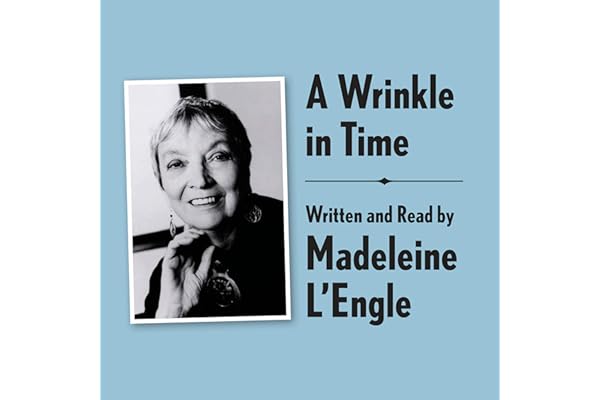
A Wrinkle in Time Archival Edition: Read by the Author

A Wrinkle in Time Archival Edition: Read by the Author


Price: $17.33
4.4/5

(28,680 reviews)

What Customers Say:

  • Fascinating Mix of Myth, Fantasy, and Science Fiction
    *A Wrinkle of Time* is a sci-fi fantasy novel by Madeleine L’Engle. The story is in many respects similar to the type of fiction that one would expect of CS Lewis’ *The Chronicles of Narnia*, in that much religious mythology and symbolism are used. In some ways, this is more blatant, and in other ways, less blatant, than the *Narnia* books.The story is about a teenage girl named Meg Murry, whose father has been missing for several years. Originally on a research mission for the US government, the brilliant scientist (both Meg’s parents are brilliant scientists) vanished. While the government says that he is “serving his country”, the family is worried, and most of the small town where they live has assumed the worst. Despite their worry, the family insists that the father is coming back someday.This seems to be a point of contention between the Murrys and the rest of the town. The rest of the town wants the Murrys to see the truth, as they think it is, and they also are put off by the Meg and her behavior. You see, while all of the Murry children are quite brilliant, Meg and her youngest brother Charles Wallace, are brilliant but troubled in that their quirkiness gets them weird reactions from folks.Into this situation come three strange older women, who look like typical, though extremely eccentric in their own right, senior citizens. But they are not. They know things no one else should. Things about the Murry family, Dr. Murry’s (the vanished husband) research, and about everyone in general.These three women, Mrs. Whatsit, Mrs. Which, and Mrs. Who, take Meg, Charles Wallace, and their new friend Calvin, on a trip through realms of magic and science to another world, one where there father is trapped and held captive by an insidiously evil force. This force has turned many planets toward it’s ends, and while it didn’t seek out Mr. Murry, it now is unwilling to release him, or anyone else, it can get in it’s grasp.The question for Meg, Calvin, and Charles Wallace is whether they can save Dr. Murry. For that matter, can they even save themselves? Because while their new friends in the form of the entities called Mrs. Who, Which, and Whatsit are powerful, even they have limits and such, for what they can and can’t do.I said at the beginning that this is both more, and less, blatant in it’s religious imagery than the *Narnia* books. That is because while Lewis was writing as a (what he liked to call) “supposal” or a “what if” scenario, he largely stayed away from the actual words of the Bible. L’Engle, on the other hand, actually had the Scripture verses quoted quite often, and they seem to be words with power. Both authors stopped just shy of stating outright the biblical nature of the characters, though Lewis would quite quickly become more blatant, whereas L’Engle had the Scriptures quoted and other hints, but didn’t outright state anything.It’s quite a contrast of approaches to story-telling with a theological and religious mythical framework. In the case of the Narnia books, the actions are done largely by God, and the characters,while important, are just there to perform actions until God saves the day. In L’Engle’s books, or at least *Wrinkle*, God (through his angels obviously) still saves the day, but He and they leave the actions up to the characters to do what is necessary to save the day. I would probably liken this book to *The Silver Chair*, which is the most protagonist-centered and least Aslan-centered of the *Narnia* books.It’s interesting, because both approaches (God doing everything and the characters doing less, and the characters doing everything with God’s help) are actually Scriptural in a way. In the end, God *does* do everything, because it is in His strength that we act, but *we* are supposed to take actions as well as God expects us to freely do good and avoid evil, with his help.Don’t get the wrong idea. This is not a religious book, and one can avoid the religious overtones and easily still enjoy the premise. There’s a lot of fun stuff. Friendships, interplanetary travels, fighting a totalitarian menace, so on. The religious themes are there, but are not “in your face”, in other words. My reason for exploring the religious concepts is that a) such philosophical stuff interests me, and b) they are there so getting that discussion out of the way is necessary. It’s necessary to both understanding some of the deeper meanings of the book if one wishes to do so, and to understanding the cosmology of the series as a whole, even if one doesn’t want to focus on any real-life connections to Scripture. It’s like how in *The Dresden Files*, Christianity has a role (as do many myths), but one needn’t be a believer to understand and cheer, because those books are NOT Christian fic, but understanding these myths or the Christian cosmology used by the author helps understand the books better.Though brief, the authoress managed to give us some good characterization and sense of the cast, or the ones we spend much time with, at least. Meg is socially clumsy, self-conscious, and seems to not be bright via the school’s standards. But she is, in fact, *brilliant*, and she is also loving, loyal, and kind, though also stubborn and prone to anger and other emotional extremes at times. These are part of who she is and not a bad thing (except the various emotional extremes bit), if they are channeled to good uses.Charles Wallace seems to be on a different wave length than everyone else and closer to the land of the beings like the entities known as Mrs. Who, Which, and Whatsit. He is also, especially for his age, surprisingly mature, kind, and thoughtful, not to mention brave and quick on his feet. His main fault though is his pride. He is more brilliant than most people, his family included, as shown by his insights into many areas. And he *knows* this. While he never acts arrogant and condescending to anyone else, his knowledge of his own extraordinariness causes him to be unduly confident in his own abilities, which causes a LOT of problems.Calvin is the most well-rounded character in that he is quite smart, though not nearly so much as the Murrys are, and very athletic for his age. He also is brave and empathetic to others, which given his very dysfunctional, and heartbreakingly so, home life is almost a small miracle. He doesn’t have Charles amazing abilities, or any of the Murry’s intelligence, but he has rhetorical skills, leadership qualities, is dependable, and has a strong will. He also is surprisingly insightful in ways that the uber-intelligent but quirky Murrys are not.Mrs. Murry is sweet and kind, a good mother and a faithful wife who never gives up on her husband’s return and holds the family together by her sheer force of will, personality and love. She doesn’t have much of a presence, but she is impressive when we do see her. On top of all of this, she is a brilliant scientist herself who does experiments in her home laboratory while raising her children. She’s pretty much super-Mom and super-scientist.Mr. Murry I won’t get into much because that is very spoilery about his appearances and what he does, who he is, so on. Suffice it to say that he is a good man whose families love and praise are realized mostly, but can never be as perfect as they have made him out to be in the years of his disappearance.Before I close, as this review is getting rather longish, the system of a meld of science fiction and fantasy that L’Engle sets up here was impressive and fun. It’s not hard sci-fi, by any means, but neither is it soft like *Star Wars* or *Star Trek*. It has some science fiction concepts and speculative ideas, but goes it’s own way to engage the imagination and sense of awe of the reader, even where creative liberties occur. It’s a fun and careful balance that L’Engle expertly maintained.For such a thin volume, the authoress had a great deal of characterization, of carefully, though briefly explored, cosmology, and a fun adventure. I really did enjoy, and highly recommend, this story. I can’t wait to read the future volumes in this series.Rating: 5/5 Stars.
  • Rekindle Your Childhood Belief in Possibility
    If I had read Madeleine L’Engle’s book, A Wrinkle in Time when I was young, there’s a good chance I would have pursued a career in science. First published in 1962 before the concept of Science, Technology, Engineering and Math (STEM) became a colloquialism for young women — a rallying cry, really — L’Engle’s book reads like a STEM Sisters manifesto, a how-to on being a girl and not being afraid to shine, even if it means being better than a boy in math or science. Today, a measly 12% of female bachelor students go into STEM careers, yet, I posit, that had more girls read A Wrinkle in Time as children, I’m pretty sure that number would be substantially higher. Did I mention that A Wrinkle in Time was rejected 26 times by different publishers until it was picked up by Farrar, Strauss and Giroux, because, as L’Engle has commented, it was “too different,” and she didn’t think anyone would publish it. It went on to win the distinguished Newberry Medal in 1963, http://www.ala.org/alsc/awardsgrants/bookmedia/newberymedal/newberymedal, proving that people will embrace “different” if it comes in the right package.Given the groundbreaking nature of the story, it’s wonder the book was even published: a female protagonist, the concept of evil which wasn’t kid’s book fodder in 1962, and so much science talk, that there was no precedent for any of it. Would we have Dr. Who (first aired in November 1963) or Star Trek (first aired in 1966) without A Wrinkle in Time? Is it possible that L’Engle’s little book kickstarted the sci-fi craze that the modern-day public clings to like a free climber in Acadia National Park?We earthlings need to stretch our imaginations beyond this little blue orb and our activities of daily living in order to experience fulfilling lives. Music, art, philosophy and books, books, books help us answer the darn eternal questions that plague us such as who am I? and where the heck am I going? L’Engle planted the sci-fi seed in a generation of kids who grew up to be Star Wars fans and believe in the power of possibility. No small feat there. Yeah, Madeleine. You go, girl. While Scientists have yet to figure out the time travel thing, you can bet that books like A Wrinkle in Time sparked the imagination like no physics class ever could.L’Engle’s main character, Meg Murray, is a feisty firebrand of a girl who knows her way around a mathematical equation, but shrinks from the more traditional subjects that girls generally excel in. Meg’s brother, Charles Wallace, is a big genius hidden in the body of a small boy. When Meg’s dad goes missing while on a secret, scientific assignment for the government, Meg is distraught while Charles Wallace is busy gaining assistance from his secret contacts. When Mr. Murray doesn’t come back for almost a year, neighbors, teachers and friends all assume Meg’s dad ran off with another woman. Only Meg’s mom believes her husband is in danger; she works diligently in her lab — she’s a scientist, too — devising a way to bring him back.Meg loves her father and knows that the man who taught her so much about math and science would never willingly leave his family so she and Charles Wallace and their friend, Calvin set off with Charles Wallace’s friends — Mrs Whatsit, who drapes herself in layers of colorful clothes and is the primary intermediary for the kids, Mrs Who, who speaks in only quotations, and Mrs Which, the wisest of the three and usually appearing as a shimmering light because 3-D is just too darn dense — on a quest to find Mr. Murray and bring him back. Meg and company travel the galaxy, encountering many bizarre creatures, including the inimitable Aunt Beast, all of whom assist the young travelers on their journey.Thanks to the assistance of Mrs Whatsit, Mrs Who and Mrs Which, the crew finds Mr. Murray on the planet Chazmatazz, a dark foreboding place where independent thought is prohibited, where they are introduced to the Tesseract, a fifth-dimensional machine that allows you to jump through time, hence the wrinkle. The Tesseract is one amazing scientific advancement that the kids would love to learn more about, but with Meg’s dad being held in a bar-less prison, and Charles Wallace’s mind being taken over by It, there’s so little time to learn about all of the ramifications of time travel before they have to jump time again to make things right.A Wrinkle in Time has all the best components of a sci-fi novel — other worlds, a special relationship rooted in earth, making it impossible to leave for good; crazy characters who, although foreign to us, endear us with their actions; a lovable, flawed protagonist possessed of true grit, heart, and purpose, and at her core, a mind for science and math — which, despite what the current elected officials of the American political system have to say, is the reason modern man has effloresced and is still thriving today in the 21st century. (Recall that the ruling elite of the 17th century imprisoned Galileo Galilei, the father of physics and modern astronomy and arguably one of the greatest thinkers of all time for being too science-y and, hence, heretical. Plus it has one of the best (read: corny) opening lines of any mystery novel although the Washington Post Style Invitational attributes it firstly to English author Paul Clifford, circa 1830. And of course, we can’t forget Snoopy. (https://en.wikipedia.org/wiki/Galileo_Galilei) Just sayin’.Want to get down with your hidden science side? Want to read a YA novel with big adult themes? Then read A Wrinkle in Time to see how it all got started and rekindle your childhood belief in worlds of possibility.
  • wrinkle in time
    not to bad of a read
  • Magical and enchanting!
    It’s my first time reading this enchanting and beautiful book. I’d recommend to any young adult reader and adults who want a good story of adventure, being different and unique. I plan on reading more in the series.

A Wrinkle in Time Archival Edition: Read by the Author is one of the best-selling products with 28680 reviews and a 4.4/5 star rating on Amazon.

Current Price: $17.33

#7

Harry Potter and the Deathly Hallows (Full-Cast Edition)

Harry Potter and the Deathly Hallows (Full-Cast Edition)


Price: $44.99
4.9/5

(106,659 reviews)

What Customers Say:

  • Harry Potter: The Good and the Not So Good
    Harry Potter Part II: The Good and the Not So GoodA good way to evaluate Harry Potter is to compare it to Tolkien’s Lord of the Rings trilogy. Taking into account the facts that Tolkien’s masterpiece is the standard for fantasy literature and that Rowling is writing a slightly different genre and for a different audience, Harry Potter holds up fairly well. Nevertheless, Rowling falls short at a crucial point. That shortcoming, however, is one that much Christian thinking about God and evil shares. We desperately need to hear Tolkien in order to avoid the errors of moralism and a simplistic faith that cannot withstand the tidal waves of disappointment in the face of the hiddenness of God.The similarities between Tolkien’s and Rowling’s works are obvious. They are both fantasy literature, have a deep concern with the dangers of power, and share a typically British appreciation for normal life.The differences are just as important. Harry Potter is also a coming of age story and shows a marked preoccupation with death. The Lord of the Rings is an epic tale and so more in tune with the tragic dimension of life.As a coming of age story, Harry Potter is necessarily geared to a younger audience than Tolkien, and, at least in the earlier volumes, is at the level of intelligent older children. As Harry, Ron, and Hermione grow up, the story becomes more appropriate for adolescents and young adults. I think this is why Rowling has so much more humor than does Tolkien. Her marvelous gift for invention is used to entertain children and teens. Howlers, disgusting jelly bean flavors, and quidditch are great fun. She also includes a wonderful collection of queer beasts and odd ball characters.Tolkien is the better stylist. As an epic author his prose has a gravitas that is lacking in Rowling, and his landscape descriptions carry the reader into a world of sweeping grandeur. At times Rowling’s writing contains some painful lapses.Rowling does avoid the trap of simplistic characterization, a failing of many children’s and cosmic conflict stories. Her characters are not mere cartoon figures of pure good and evil. There is internal conflict and failure by the good. Hermione can be a prig. In addition to Ron’s adolescent addiction to snogging (which is Rowling’s fault not his), he is subject to juvenile jealousy, and Harry can feel real hatred. Harry also has to come to grips with the fact that his father had mistreated Snape, and, as a young wizard, even Dumbledore had lusted for power.Also, some of the bad characters are not purely evil. The Malfoy family is a case in point. Lucius Malfoy, a nasty bigoted man, in the end is a weak person. His wife Narcissa is too, but at the same time she is strongly devoted to her son Draco, a devotion that leads her to lie to Voldemort and save Harry Potter. Draco, the bad boy bully in all the earlier stories, still has enough decency not to want to kill Dumbledore and in the end, if not reconciled to Harry, at least has become a husband and a father who is no longer actively hostile to Potter.Both Rowling and Tolkien finish their tales in the typically British fashion in which the great cosmic battle for evil results in the reestablishment of normal life. In Tolkien the Shire is restored, and Sam becomes happily married. In Harry Potter the main characters are married and send their children to Hogwarts.Yet this return to the normal points to the most serious shortcoming of Harry Potter. Rowling’s portrayal of evil lacks the depth of Tolkien’s. Harry’s loss of his parents and friends poignantly portrays the human desire to escape the tragic consequences of death. Voldemort’s quest for immortality shows how that desire can be perverted to very evil ends. In the end, however, Harry can go on to live a normal life, having matured from his combat with evil but not being permanently marred by it. He can live a normal life even though he has a scar.The effect of evil upon Frodo is lasting, symbolized by his loss of a finger and the injury received on Weathertop that never completely heals. Frodo does not just have battle wounds. He is a wounded person. He cannot return to a normal life in the Shire and is granted passage to Valinor where he will find peace.As I watched Harry snap the Elder Wand and cast it into an abyss in the movie version of The Deathly Hallows (in the book he returns it to Dumbledore’s grave) so that it could never be used for evil purposes again, I couldn’t help but think of the contrast with Frodo and the ring of power. Harry, the true hero, resists the temptation to abuse power. In The Lord of the Rings Frodo fails. He cannot resist the temptation to keep the ring and use its power for himself. The ring is only destroyed because Gollum wants it for himself, takes it from Frodo, and then falls into the fires of Mount Doom.In Tolkien evil is not defeated by the heroic efforts of an individual. Evil defeats itself in what he calls a “eucatastrophe” (See his “On Fairy-Stories” in Essays Presented to Charles Williams edited by C. S. Lewis.). Tolkien’s eucatastrophe is undoubtedly derived from the biblical notion of evil defeating itself, especially in the cross of Christ where the forces of evil do their worst and unwittingly trigger the means of saving the world.The theme of evil defeating itself is present in Harry Potter. The killing curse that Voldemort uses upon Harry is his own undoing, but in the final analysis it is Harry’s heroic action that saves the day.We Christians often present the Bible as a collection of tales about heroes from whom we can learn moral lessons and ways to live victoriously. We look for evident victories. Sadly our quest for evident victories means that we will seek power to win them. In so doing we walk by sight and thus succumb to power’s hidden capacity for evil.We forget that God has chosen to reveal the biblical characters as sinners and frequently as failures. The hero of the biblical narrative is God, and his ways are not only higher than ours they are often hidden from us. In the darkest hour, at the moment of testing, the Christian will often fail. Yet even then the unseen hand of God’s providence is working to overcome evil. Indeed, the very victories of evil, such as the cross, are the moments of its greatest downfalls. By trusting in the hidden God, we learn to walk by faith and not by sight and overcome the temptations of power. As the Lord told Paul, “My grace is sufficient for you, for my power is made perfect in weakness” (2 Corinthians 12:9).
  • An exceptionally satisfying bookend to an exceptional series that will live on long past the final Hollywood interpretations
    I MUST NOT TELL LIES….I rarely find that final books, movies, etc. live up to expectations, especially ones generating such a mainstream buzz. But after nearly a decade of devotion, as a reader introduced to the series early, I am content with Harry Potter and the Deathly Hallows. This is also exceptional because of the sheer enormity of the body count on this one, like the 2 books before it, most of the fallen turned out to be my favorite characters. The author had released before the release that two major characters who die. This is an understatement. Of course, plenty of death happen “off screen,” TEN deaths are “major” players in the sense that they appear in 4-7 books!While J.K.Rowling avoids making this the largest novel in order to answer all the questions and plot requirements, she does do the finale staple in the referencing or return of many, many, many concepts, characters and catch-phases of the past 6 books. Settings, spells and special guest appearances are all welcome additions to HP VII. Things big and small appear with parts to play: For example Dedalus Diggle, a very minor player, was the first wizard to appear in Book 1, and he is the first to do so here in the final story. Other characters returning in person or as a passing reference include the likes of: Mr. Ollivander, the surviving members of the Order and the D.A., the Malfoys, the Weasley’s Ghoul, Stan Shunpike, Grindelvald, Nearly-Headless-Nick, Norbert, Bathilda Bagshot, R.A.B., Gregorovitch, Viktor Krum, the Lovegoods, house elves, Wormtail just to name a few. Watch out for cameos or references to inanimate and animate objects like, Harry’s first snitch, his invisibility cloak (which plays a major role ), the Monster Book of Monsters, the Whomping Willow, the Marauder’s Map, pensieves, Polyjuice Potion, and even Sirius’ flying motorcycle as referenced early in Sorcerers’ Stone.Book SIX focused on tracking down the Horcruxes or magical objects into which the Dark Lord Voldemort a.k.a Tom Riddle has divided his soul to be virtually immortal. Horcruxes we’ve seen the Diary, the Ring, the great snake Nagini and Voldemort himself. We get some insight into his history and plans, but by the end of Half-Blood Prince we have as more questions than answers.Questions ultimately answered in Book Seven:Is HARRY himself one of the remaining Horcruxes?How to destroy them? How did Dumbledore destroy the ring?Where is real locket Horcrux? Who is R.A.B.?What becomes of Hogwarts?Is Snape evil? Why did Dumbledore trust him?Did Dumbledore have a plan?What are the Deathly Hallows? What is Voldemort’s ultimate goal?Must HARRY die to stop Voldemort?What did Dumbledore really see in the Mirror of Erised, back in Book 1?BOOK 7… Careful some plot spoilers below…….This one opens with scenes behind enemy lines, revealing Harry’s 17th birthday and the end of his protection from the Dark Lord is fast approaching. The Death Eaters are ready for the Order’s plan to move Harry to a safe house. Following a down-rite heart warming good-bye to the Dursleys, the action-packed escape ends with the loss of more than just Harry’s broom, but two friends fall as his childhood innocence is symbolically stripped from him. Things slow-down just long enough for The Wedding, before the chill is off the drinks all hell breaks lose and Harry’s quest begins again for the “you know whats” and this time Harry’s archetype takes on literal interpretation as his searches for a sword, “the Sword of Gryffindor” possibly the only way to finish his assignment for Dumbledore.The Sword is at Hogwarts and Hogwarts is again controlled by the Ministry, but a corrupt or controlled government which has placed Snape as Headmaster. He has the Sword in Dumbledore’s office, or does he? This quest and the search for the Horcruxes lead Harry back to the ex-headquarters of the Order, Grimmauld Place where he makes things right with Kreacher, the house elf willed to Harry along with the family estate itself.Harry visits his own family’s home which has become a memorial of sorts like GRACELAND. I think Hermione would disapprove of the graffiti there as well. Before this there is a daring visit to the “Muggle-Born Registration Commission. Forced further into hiding the trio learn more of Dumbledore’s early history, the tale of the 3 Brothers and possible revelations about Harry’s cloak.The Sword is recovered by a Gryffindor other than Harry, but pulled from a lake like the Arthur archetype. Harry learns the hard way that there is power and fear in a name as the taboo on the Dark Lords name leads to the trio’s capture and imprisonment at Malfoy Manor where Voldemort himself is a house-guest. Wormtail makes good on his debit to Harry. Ultimately they escape at the cost of a friend’s LIFE along with fellow prisoners: Griphook the Goblin, Luna Lovegood and wandmaker Ollivander. They learn lots of wand lore that will be Harry’s key weapon in his “final” battle with the Dark Lord, the “Elder Wand” will be the deciding force. Griphook will lead Harry and friends as they break into the best protected place in the wizarding world Gringotts Bank in order to claim a Horcrux. Are there really Dragons and traps protecting the place? Griphooks price for this good deed?During return to HOGWARTS, new secret entrance to the school is revealed, along with a character previously only referenced Aberforth Dumbledore, who reveals his late brother’s motivating guilt. Also the D.A. are summoned, among others to help Harry in his final quest. Harry up to this point has walked a fine line, between falling into the traps that both Tom Riddle and Dumbledore fell. The desire for the “Greater Good” costing a lot of lives. For all of his trust in people Dumbledore’s greatest weakness was his secretiveness, and it cost both him and Harry plenty. Meanwhile, Harry risks his life turning away from killing whenever possible, Lupin even calls him on this early in this story. Harry here makes a choice to include the D.A., his friends & students from Hogwarts in his last mission for Dumbledore. This final battle at the school sees the return of many magical forces from the Forest and more. What begins as a play for time becomes the end of the war. The cast of characters and tied up plot lines is enormous here, Ron proves his worth and cleverness in “now or never” moments while Neville Longbottom proves himself a true Gryffindor as well.Fear not there is an epilogue that is a satisfying bookend for the series as is the entire novel, “An exceptionally satisfying bookend to an exceptional series” that will live on long past the final Hollywood interpretations, as surely as THE CHUDLEY CANNONS will rank bottom of this years LEAGUE!!”Thanks J.K.Long live Gryffindor, where dwell the Brave at Heart!

Harry Potter and the Deathly Hallows (Full-Cast Edition) is one of the best-selling products with 106659 reviews and a 4.9/5 star rating on Amazon.

Current Price: $44.99
#8

The Titan’s Curse: Percy Jackson and the Olympians, Book 3

The Titan


Price: $14.57
4.7/5

(36,913 reviews)

What Customers Say:

  • Percy Jackson and Rick Riordan Finally Hit Their Groove
    When I first read the *Percy Jackson* series, I was a bit underwhelmed. I mean, I had heard so much about how awesome it was, and it seemed just such a let-down. It appeared to me to be, quite frankly put, a weaker version of *Harry Potter*. Now, I know that isn’t fair or accurate, but that was my first impression. While the second book in the series, *The Sea of Monsters*, helped to change my mind on this, it was still a bit underwhelming. Yes, this is not just a takeoff of *HP*, it is it’s own unique series. Not only are there many differences beyond the surface-only similarities, but I learned recently (as of the writing of this review) that Riordan started writing this series before *HP* was published, so, yah, not based on *HP*. So critics who use this argument, including *myself* at first, are just silly. I’m admitting I was an idiot, yes.As I said, though, the second book still didn’t quite wow me. The whole narrative felt like basically an endless series of cliff-hangers with little to no character development and not enough plot. The cliff-hangers seemed to be far more numerous than most quest books in fantasy settings. Now, this isn’t to say that I didn’t enjoy the first two volumes, but just that they didn’t quite (other than some interesting stuff such as likable characters and references to myths) *do* it for me, so to speak. This third book, however, really did make me a major *Percy Jackson* fan, and was absolutely a great read. The rest of the review will show why.The plot is simple. In a rescue mission to save two fellow demi-gods, Percy, Annabeth, Grover, and their new friend Thalia, encounter trouble. Though they save the twin half-bloods, Annabeth goes missing, and to make matters worse, so does a powerful goddess ally, Artemis.Of course, a quest is in order. But the questions are rather more complicated than one might think in this case. Normally, these quests are, of course, quite dangerous. But in this case, the sense of danger, really the *fact* of danger, is more persistent. Because a prophecy from the Oracle is that at least two of the members of the quest will not make it back alive…While the plot is relatively straight-forward at first, the narrative and plot developments this time were quite a bit more complicated. Not only did Riordan expand on the mythology of the series, and the connections to Classical Greek myths, but the structure was different. Gone was the nearly every chapter cliff-hanger, with the accompanying desperate rushes from one danger to the next, one clue to the next. In it’s place was a slower and more long-term story progression.Don’t get me wrong. The sense of excitement and adventure was just as strong, but the story was a better one in this way. This is because there was more time taken to spend more time exploring the characters and their thoughts and the world-building, as well as both delving into the past of this world and laying down groundwork for future plots. This all was a net plus for the book and made it far, *far* better than the predecessors.Included in this are tidbits that answer the big questions that some might have, including, why, oh why, do the Olympians not *do* anything to remedy these problems themselves. Well, the answer is that they are a) kinda personality-driven, and this interferes with some proactiveness, as they have their own stuff to attend to and their personalities dictate this, and b) related, they are *busy*. Not only do they have the duties they have always had, but they are also dealing with the fact that the coming hostilities with the forces of Kronos are causing other supernatural gods and god-like beings to cause problems that make their jobs harder. For that matter, there is a delicate power balance that too much action on the part of *anyone* will upset.The reason I liked this one as well is that the characters are kinda coming into their own and beginning to grow up. Annabeth is becoming more mature and able to forgive and see others’ points of view more. Meanwhile, Percy is faster on his feet where he can handle things without constant directions. Though he still isn’t the strategist that Annabeth is, and thus doesn’t do as well as when he’s teamed up with her, he still acquits himself admirably.Grover, though, is a disappointment here. He’s reduced to little more than comic relief. That annoys me in that while he was the weakest member of the quest, he’s still a knowledgeable and capable guy. Or should be. I hope that he gets more impressive again in coming books.I can’t say much about other characters so as to not give away their roles, but just to say that Riordan does a good job with fleshing out their characters and arcs in a way that really makes them vivid to the reader and gets you to care about them.I can honestly say now that I really enjoy this series and that it has become one of my favorites.Highly Recommended.Rating: 5/5 Stars.
  • Good
    Great book
  • Easy to read
    I love this series so much! All of the books are unique and it feels like a puzzle while reading. I recommend this series to anyone who is stuck on which topic of books they like best, or doesn’t read very well.
  • Another fun modern Greek gods story
    MY RATING SYSTEM5 stars–WOW4 stars–would read again3 stars–was good, won’t read again2 stars–read it, but didn’t enjoy it1 star–didn’t finish, it was so awfulDo I need to read books before this one: yesCliffhanger: a littleSUMMARYGrover sends a distress call just before winter break; he’s found 2 demigods, Bianca and Nico, and smells a monster. Percy, Annabeth, and Thalia go to Bar Harbor to help. Artemis and her Hunters join the half-bloods to fight the manticore and its human mercenaries. It falls off a cliff with Annabeth on his back. Artemis accepts Bianca as a Hunter, then orders her Hunters to Camp Half-Blood and calls Apollo to give them a ride. Artemis leaves to hunt the monster sought by the manticore, leaving Zoë in charge.At Camp, Percy and Thalia can’t convince Mr D to send them in a quest to get Annabeth. Clarisse is already on a sneaky one.Both Percy and Zoë have nightmares, demand to go on quests, denied. After a game of Capture the Flag, the Oracle comes to the river to deliver the quest:Five shall go west to the goddess in chains,One shall be lost in the land without rain,The bane of Olympus shows the trail,Campers and Hunters combined prevail,The Titan’s curse must one withstand,And one shall perish by a parent’s hand.Percy isn’t chosen to go.EVALUATIONAnother fun telling of Greek myths! Percy’s 14 now, aware of and awkward around girls, especially Annabeth. Thalia is old enough to drive. Nico plays a Greek gods card game with miniatures; is that Pokémon or Magic the Gathering? Apollo’s explanation of the astrological sun and the philosophical sun is spot on.RECOMMENDATIONEveryone who’s read books 1 and 2. If you haven’t read those yet, get on it!FAVORITE QUOTES“One of thy parents was mortal. The other was an Olympian.” “An Olympian…athlete?” “No. One of the gods.” “Cool!” said Nico. “No!” Bianca’s voice quavered. “This is not cool!” Nico danced around like he needed to use the restroom. “Does Zeus really have lightning bolts that do six hundred damage? Does he get extra movement points for—”“That boy in Colorado,” Zoë said. “You turned him into a jackalope.” “Ah, yes.” Artemis nodded, satisfied. “I enjoy making jackalopes.”The least the Oracle could’ve done was walk back to the attic by herself.If there were ever any half-bloods who needed to worry about [being killed by a parent], it was Thalia and me. I wondered if maybe I should’ve sent Poseidon that seashell pattern tie for Father’s Day after all.“It’s cool. No sword. See? No sword. Calm thoughts. Sea grass. Mama cows. Vegetarianism.” [to a sea cow]It took forever—I mean, it was worse than the time I’d had to untangle all my video game controller wires.The clerk looked so lonely, I bought a rubber rat.Zoë got bored and started shooting arrows at random billboards as we flew by. Every time she saw a Target department store—and we passed dozens of them—she would peg the store’s sign with a few bulls-eyes at a hundred miles an hour.Apollo’s haikus, Blackjack’s Jersey accentPOSSIBLE TRIGGERS (SPOILERS)Sex: noneLanguage: 0 F words, 12 Lord’s name in vain, 0 S wordsViolence: fights with myths
  • Wonderful Series for Kids and Adults
    I got this for my 10 year old son who is an avid reader. It took some convincing for him to get into a new series after he plowed through Harry Potter. He read the first one and was Hooked! Thanks for supplying book two. As a side note…have your kids read the books first then as a treat let them watch the movies!

The Titan’s Curse: Percy Jackson and the Olympians, Book 3 is one of the best-selling products with 36913 reviews and a 4.7/5 star rating on Amazon.

Current Price: $14.57

Updated: Nov 26, 2025
Data from Amazon.com
8 products

Customer Reviews

5 star
70%
4 star
20%
3 star
7%
2 star
2%
1 star
1%
John D.
★★★★★
March 15, 2024
"Great product! Exactly as described. Fast shipping and excellent quality."

Product Specifications

Brand Amazon Brand
Material High Quality
Dimensions See product details
Weight See product details