Allen M Werner
The Love A Son Has For His Mother – WONDERFUL
This is a delightful book everyone should take the time to read. If you have heard of Trevor Noah or seen him on tv, this book will leave you even more amazed when you learn about his upbringing and background.Trevor’s father is white, and his mother is black. Trevor was born in South Africa when apartheid was just coming to an end, but black and white people weren’t supposed to have children together. Trevor was, as the title says, born a crime.Trevor does a remarkable job retelling his personal history without any of it sounding cliché or boring. He jokes with us about traditions and foods and living arrangements, while casually leading us through some dark roads that are private and troubling. He even details some of his awkward attempts to date girls. But always he is teaching us about South African history in quick powerful jabs that directly correlate with specific events in his life.One of his favorite subjects throughout, because of his mother’s deeply religious stance on everything, is the curious nuances people had concerning faith in Christ and old superstitious habits. He often tested these boundaries with his mother and the older women who helped raise him. There are barely any men involved in his upbringing because of several factors, which he also discusses in the book.The first book he learned to read was the Bible. He read it in English. His mother wanted to make sure his first language was English. And unlike most people in South Africa, by attending different church services and events in so many different places, he learned to speak quite a few other languages.Because of the lighter color of his skin and his ability to speak many languages, he found he could blend into many groups without really becoming a member of any of them.The government, as a means of control, wanted everyone in groups. They continually forced people to register as white, black, colored, or Indian. And keeping people divided into groups by language was even more detrimental to change. And if you didn’t choose a group when in some government office, a clerk would look at you and decide which box you belonged in.At first his parents couldn’t even be seen in most public venues with him because of the color of his skin, even as a baby and small child. They hired others to walk with him as a caregiver and his parents couldn’t walk together or near him. If they went to cousins’ houses, even his grandparents, he’d have to stay indoors. They couldn’t let the authorities know he was mixed. In fact, his mother didn’t tell the hospital who his father was when he was born.The chief strength of this book, I believe, is how open and honest Trevor is about his relationship with his mother. They endured a great many things together. And although they never had much money or reliable transportation, she was determined to keep traveling to all these different churches. It was dangerous. There was a lot of violence on the road, but for his mother, all obstacles were the devil’s doing and Jesus would make a way.Trevor says in the book that “apartheid is sometimes called the Bloodless Revolution. It is called that because very little white blood was spilled. Black blood ran in the streets.”Trevor says his mother was hard on him, strict and disciplined. And he admits to being naughty and unruly, a real troublemaker. He talks openly about how he started pirating CDs and how he and his crew would hustle people in the streets with small loans paid with interest. His mother didn’t want him growing up believing there were any boundaries, despite all the obvious boundaries, so he used his creative energy to do things we would consider to be highly illegal. But as he says in the book, “crime succeeds because crime does the one thing the government doesn’t do: crime cares. Crime is grassroots. Crime looks for the young kids who need support and a lifting hand.” And he follows this up by saying “It’s easy to be judgmental about crime when you live in a world wealthy enough to be removed from it. But the hood taught me that everyone has different notions of right and wrong, different definitions of what constitutes a crime, and what level of crime they are willing to participate in.”In the streets, he spent time with teachers, clerks, business owners, bus drivers, gangsters, and crack addicts. There wasn’t a lot of difference between them. They all seemed to need each other as part of a simple ecosystem that operated under its own rules. He went to jail and he learned some valuable lessons from the people he grew up with in various cities and schools. He even gives us a sense of culture shock by talking about their perspective of history. For those in South Africa, names like Hitler and Mussolini didn’t carry the same ominous overtones they do to us, and so it wasn’t unusual to have acquaintances with these names, even friends. And there is one particular story about this in the book that will leave the reader’s mouth hanging open.For those raised in South Africa, they had other names they associated with genocide, like Cecil Rhodes.They weren’t taught history like the west. In fact, as he tells us, under apartheid, they didn’t learn any history, science, or civics. If you weren’t white, you were taught agriculture and hole digging. They didn’t expect the nonwhites to aspire to be anything but laborers.Trevor’s mother was lucky enough to have been raised in a mission school where a white pastor taught her English, allowing her later to learn how to become a secretary, which was unheard of for black women.There are so many interesting stories revealed in this book, including most harrowingly his broken relationship with his father and his stepfather, one of which ends in a violent, bloody situation that leaves the reader absolutely stunned.By the end of this book, I had tears in my eyes. Trevor had done such a great job of solidifying this wonderful bond he had with his mother, that the end of the book was a shock. It was not what I expected. It’s worth reading just to get to that great finish.This is truly a book about a son’s love for his mother.Giving your child a name that has a special meaning is important for families in South Africa. Trevor tells us that his mother once told him that she chose the name Trevor for him because it had no meaning in South Africa.“She wanted me to be free to go anywhere, do anything, be anyone.”“… don’t cry about your past. Life is full of pain. Let the pain sharpen you, but don’t hold onto it. Don’t be bitter.”I highly recommend this book. You will experience a great many emotions reading it. Five Stars!
Emilio Corsetti III
Life Lessons
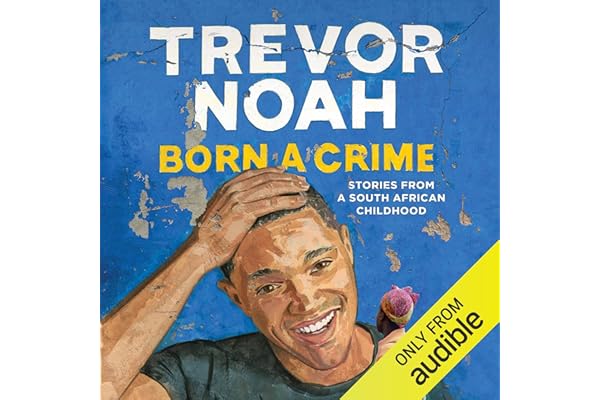
I remember the first time I saw Trevor Noah sitting behind the desk of the Daily Show. He was replacing Jon Stewart. Where did they get this guy from? I thought. It wasn’t long before I became a fan of his wit and humor. The Daily Show was in good hands.As much as I would have liked to have read about his rise through the comedy ranks and onto American television, this memoir covers his growing up in South Africa. We’ll have to wait for his second memoir to catch up on his more recent escapades.For most of the book, I listened to the audiobook, which Trevor Noah narrates. The few times I read from the Kindle, I heard Trevor’s voice. This is one book where the audiobook is the best way to enjoy this funny and heartfelt memoir. I don’t think anyone else could have pulled it off as well as he did. One advantage of having Trevor as the narrator is that you get to hear him imitate the many characters in the book. It’s like having Trevor sitting next to you in a bar and listening to him tell you his stories firsthand.I can’t remember when I laughed so hard from a book. I know I caused a few stares at the gym as I listened in my earbuds. Because it’s a memoir and not a stand-up routine, Trevor has time to set up each story. He carefully creates each character, describing their background and then mimicking their voice. He paints a picture that’s easy to see. The story of him taking a crap in the kitchen and his blind grandmother sensing, or smelling that something wasn’t right, had me laughing out loud. I can still hear his voice as he was tasked with having to say a prayer to rid the house of whatever demon had left a turd in the trash.Trevor owes a lot to his mom. She was the one constant in his life, a teacher, caregiver, and disciplinarian. Later in the book, Trevor talks about his brother Andrew, who had a different father. He describes how his mom treated Andrew differently and didn’t spank him as much as she did him. When Trevor confronts his mom about this disparity in corporal punishment, his mom claims that Andrew is small and thin and Trevor has an ass made for whippings.As funny as the book is, it is also poignant and philosophical. Trevor talks about his short stint in jail after being arrested for car theft. He talks about how some parents, including his mom, would insist that their sons or daughters face the consequences of their misdeeds and not offer to help them in their time of need. While there may be a time for such tough love, Trevor explains that by not helping them, they risk setting their children up for a lifetime of difficulty.The book contains many lessons about racism and culture. Trevor, who grew up in South Africa during Apartheid, has the background to speak authoritatively about these subjects. But he does it through humor.I look forward to hearing more from Trevor Noah. In the meantime, listen to the audiobook.