Top 10 Best-Selling Engineering & Transportation for November 2025

Price: $13.56

Key Features:

  • High Quality Materials
  • Fast Shipping
  • Customer Support
  • Money Back Guarantee

Top 10 Best-Selling Engineering & Transportation for November 2025

$13.56

Category:
Secure Purchase
Free Shipping
Easy Returns

Product Description

Danh sách Top 10 Engineering & Transportation bán chạy nhất tháng November 2025 được tổng hợp dựa trên dữ liệu thực tế từ Amazon.com. Các sản phẩm được đánh giá cao bởi hàng nghìn người dùng, với điểm rating trung bình từ 3.1 đến 4.8 sao. Hãy tham khảo danh sách dưới đây để chọn sản phẩm phù hợp với nhu cầu của bạn.

#1

The Philosopher in the Valley: Alex Karp, Palantir, and the Rise of the Surveillance State

The Philosopher in the Valley: Alex Karp, Palantir, and the Rise of the Surveillance State


Price: $17.05
3.1/5

(28 reviews)

What Customers Say:

  • The Subject Redeems the Book
    Invaluable book, packed with fascinating details, quirks, idiosyncrasies, painful losses and insights into a sui generis, and in his vulnerabilities and empathy quite touching, authentic genius and one of the surpassing figures of our times. We’re lucky — I would say blessed — to have him on our side, and by our side I mean the side of Western Civilization. But to capture the nature and ultimate significance of a complex, driven, and, almost, in a Nietzschean sense, of self-transcending and self-overcoming, personality like Karp’s, it would take a biographer like William Manchester, or, at least Walter Isaacson, whose imagination and human sympathies could soar the way their subjects’ grand visions and great achievements did. And, write with a Plutarchian eloquence befitting them. Unfortunately, this writer does neither. And multiple examples of an intrusive blue-bubble agitprop are annoyingly distracting. But the result, though marred, is still lively, informative not only about Karp but about the history of Palantir, and unequivocally worth reading. Karp’s magnanimous spirit comes through like a very human face in this book’s slanted mirror in need of a bit of straightening.
  • A Step Above Wikipedia; Missed Opportunity
    I read this book immediately after reading Shoe Dog, the story of Nike’s founder, Philip Knight. Shoe dog is the exemplar of a biography on a captain of industry. You come away from reading that book understanding its subject and his motivations. This book, however, reads more like fanboy service than a critical analysis of a polarizing public figure… Arguably, one of the most important and controversial business leaders of the 21st century. Regardless of how you feel about its subject, Dr. Karp, this book is a wasted opportunity.
  • A Mixed Review of “The Philosopher In The Valley”
    Interesting and informative book about Karp and Palantir however two things mar the read. First, the writing style is often jilted and non-flowing (although at times it is fine). Why the inconsistency? Second, the author (Michael Steinberger) periodically can’t resist allowing his progressive anti-Trump anti-conservative bias showing through with gratuitous non-related shots that contextually are inappropriate and off-putting. A final note, though, speaking with some life experience in graphics and printing, the outside cover art is a 5 “*” masterpiece. I would be untruthful if I said it wasn’t at least a small part of the reason for my purchase of the book.
  • Karp is fascinating. This author is so politically biased it almost ruined the focus on him.
    Are objective biographers extinct?Alex Karp is unquestionably one of the most fascinating people of the 21st century. An objective biography of him without the taint of the author’s opinions, would be welcome.Literary experience is like drinking a rare vintage scotch in a dirty glass.
  • Good read
    Great insights into Karp and Palantir — their tough start and eventual rise
  • wasted opportunity
    The book is supposed to be a biography of Karp, but the author’s politics gets in the way and is distracting and annoying. Look, I voted democrat for 30 years, so what!! The author presents Karp and Palanter through a philosophical and judgmental left wing progressive moral prism. What does the reader learn from this book? Answer: The author hates trump, loathes and detests him. Truly good biographers may reveal their personal political opinions from time to time in a biography ; great biographers almost never do. The author here is neither. So, this was a disappointing read.
  • Outstanding Book! Thank you Michael.
    First off, I want to thank Michael Steinberger for spending the time in pursuit of this book! I’ve been a Palantir investor since the DPO and his book connected many dots in the Palantir story.As a retired army reserve officer with 23+ years service and a former owner of a technology company, I am glad Palantir is a leading force in protecting our society.This is an excellent book! My only suggestion is to do another.
  • Political bias of the author
    This book could have been very good if the author had overcome his impulse to politicize his description of people and events. He accuses Ron Paul of “newsletters…that included virulently racist and antisemitic content;” describes Trump’s campaign as “steeped in racism and xenophobia,” Trump’s effort to curb illegal immigration as “notable mainly for its cruelty…and human rights abuses” and his administration as “an authoritarian regime.”The author disingenuously attempts to defend Biden’s ridiculously incompetent withdraw from Afghanistan by emphasizing its “complexity.” If you can tolerate (or if you welcome) the stark, untempered left wing political bias (which you might expect from a New York Times writer), Karp’s story and his unusual personality and background are interesting, as is the evolution of the business and culture of Palantir. Insights into the development of data aggregation and assessment platforms and the problems those systems were designed to address are informative and entertaining. But, BEWARE, the political rant is nonstop. I wish he had had a better editor.

The Philosopher in the Valley: Alex Karp, Palantir, and the Rise of the Surveillance State is one of the best-selling products with 28 reviews and a 3.1/5 star rating on Amazon.

Current Price: $17.05

#2

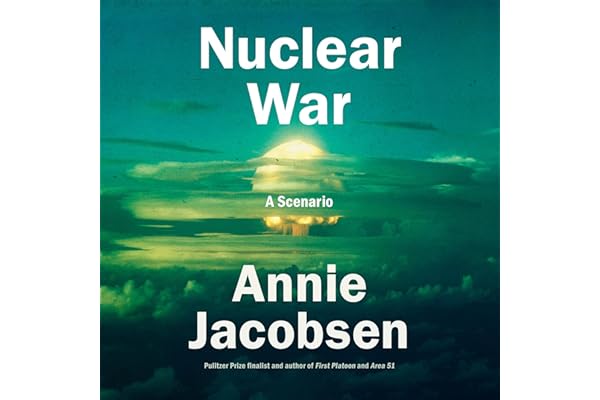
Nuclear War: A Scenario

Nuclear War: A Scenario


Price: $17.72
4.6/5

(10,922 reviews)

What Customers Say:

  • Great Read!
    This book puts it quite simply. No nation or group should ever use nuclear weapons again. Well researched and scary.
  • Interesting scenario hypothesized
    Good, quick read. Just technical enough to be informative and entertaining, but also informative enough to scare any thinking human being. Question not answered (and not the purpose of this book) is not if, but when? It’s only a matter of time, whether it be a North Korean hermit king madman, an insane middle eastern leader, whether, Iran, Israel, or someone else, or one of the big three superpowers, but someone, somewhere, will think such a war is “winnable”. Or, such is the desire of some of our elites, who could see this as a way of accomplishing their goal of reducing earth’s population by 90%. If they think that’ll work, they need to read Ms. Jacobsen’s final chapter. Better to play a game of Tic Tac Toe.
  • Nuclear War: The Ugly Reality
    What would happen to the world if a Nuclear missile was launched toward the United States? How bad would the destruction be and how long would it take before more missiles were launched and before the conflict finally came to an end? Nuclear War: A Scenario attempts to answer these and other questions.Like the book’s title indicates, this is a scenario; a play-by-play prediction of what could happen if one nation launched a nuclear weapon against another. In this instance, the scenario is North Korea launching a weapon toward the United States. There is very little time to respond and split- second decisions have to be made. The book does its best to present the plot, the key players, and the likely outcome of complete destruction once Russia also enters the fray.What I liked best about this book is the purely non- fiction parts; that is, the parts of the book that inform the reader of the various government organizations that would step into gear if such an event really occurred. I also like how the book points out the many deficiencies in America’s nuclear defenses and how helpless we would be if such an attack really took place. Oh, and the suspenseful nature of the book is also one of its strengths. You feel like you are reading a thriller as you turn each page and discover what happens, minute by minute, once the weapons have been launched.Where the book falters a little is with the scenario itself. Some of the responses from the countries involved seem a little far- fetched. Would Russia necessarily assume immediately that the missiles headed in their general direction were intended for them and not North Korea? The book goes with the assumption that yes, Russia would make this assumption and would respond by launching missiles toward the United States. This, and other reactions, don’t necessarily seem all that plausible. I get it- they were added because it made for a better story and it tied in better to the non- fiction aspects of the book. But this and other reactions/decisions will leave many readers shaking their heads from side to side.Still, taken as a whole, Nuclear War: A Scenario is a solid read. It’s a frightening book that lays bare the hideous realities of nuclear war and furthers the call for action. Virtually no one of sane mind wants something like this to become reality and we need to do what we can to make sure such a scenario remains in the fiction realm.
  • Captivating, horrifying, and haunting
    Whew…. where to begin with this book? I’ll start by saying I certainly have never read anything quite like it! But first, a digression:I’ve professionally published two novels about a zombie apocalypse and written multiple other tales focused on the end of the world. In creating those stories, I have spent an inordinate amount of time both researching nightmarish scenarios and pondering how our society could crumble. Normally, such terrible things are casually dismissed by my psyche after many years of desensitizing horror love that have insured I am effectively broken regarding any “typical” reaction to horrifying things. Needless to say, I went into this book thinking it would be interesting and nothing more. I was very wrong.This story haunted me from the start. It is written in a very digestible format that interjects history lessons and pertinent interviews throughout its pages. These interjections allow for the scenario described to carry the weight it deservedly should. All the while, current events added further relevance to the tale which, in all, created a unique journey into an abject horror that was as uncomfortably believable as it is unfortunately plausible.The overall experience was A LOT to get through. I found myself having to take breaks as my anxiety level surged above the interest for what was to come in the story. Never has a book elicited such a response with me. I was as captivated as I was horrified. In the end, the author succeeded in her mission of convincing me that we exist on the razor’s edge and that edge has zero room for nuclear weapons.Please read this book. It is vitally important that we all come to the realization that our world would be better without these horrifying weapons. They do not protect or defend – they annihilate. If we don’t reach that collective realization as a species, then it is all too possible that we may no longer have a world to protect.
  • Excellent Book; Both Informative and Interesting; Highly Recommend
    I heard about this book from the author’s interview on an episode of Dan Carlin’s Hardcore History Addendum podcast entitled “The Handmaidens of the Apocalypse.” This book was an extremely easy read and almost ridiculously informative. The book drops you at the edge of a “bolt out of the blue” nuclear attack, an attack so limited in scope that it uses only two of the world’s thousands of nuclear missiles. It then pounds through the next roughly 60 minutes, showing how pressured and ineffective the options are for response. So ineffective, in fact, that escalation and annihiliation are almost inevitable. I highly recommend giving this book a read.
  • I was trained for this
    This is a great read. As a trained USAF disaster preparedness officer,this was my world. I served ten years learning about nuclear, biological and chemical warfare. After participating in a class called NETOPS (nuclear emergency team operations), I realized my heart was no longer there, and I changed career fields. This well written story should be mandatory reading for future graduates of the Air Force Academy. My thanks to the author for writing this.

Nuclear War: A Scenario is one of the best-selling products with 10922 reviews and a 4.6/5 star rating on Amazon.

Current Price: $17.72

#3

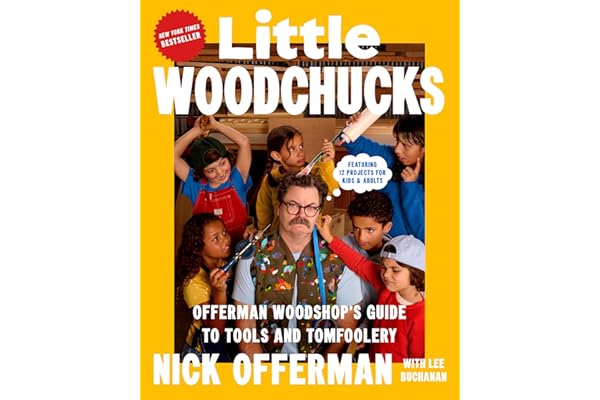
Little Woodchucks: Offerman Woodshop’s Guide to Tools and Tomfoolery

Little Woodchucks: Offerman Woodshop


Price: $23.93
4.5/5

(60 reviews)

What Customers Say:

  • A exceptionally great book for making projects with kids!!
    {“clickstreamNexusMetricsConfig”:{“actionType”:”DISCOVERY”,”producerId”:”vsemetrics_playercards”,”eventType”:”IVEVideoView”,”productId”:””,”eventOwner”:”vsemetrics_playercards”,”schemaId”:”clickstream.CustomerEvent.4″},”clientPrefix”:”vse_reviews_desktop_r1nxo0590t8l85_1764115874879″,”ccvDisclosure”:””,”closedCaptionsConfig”:{“captionsOnTexts”:{“de”:”German (Automated)”,”en”:”English (Automated)”,”fr”:”French (Automated)”,”es”:”Spanish (Automated)”},”captionsOffText”:”Captions off”,”languageToLabelTexts”:{“English”:”English”,”German”:”German”,”Spanish”:”Spanish”,”French”:”French”}},”sushiMetricsConfig”:{“isRobot”:false,”clientId”:”VSE-US”,”videoAsinList”:””,”weblabIds”:””,”eventSource”:”Player”,”sessionId”:”142-9236287-8054746″,”refMarkers”:”vse_reviews_desktop_R1NXO0590T8L85_1764115874879_ref”,”placementContext”:”cr_inline_review”,”marketplaceId”:”ATVPDKIKX0DER”,”isInternal”:false,”endpoint”:”https://unagi-na.amazon.com/1/events/com.amazon.eel.vse.metrics.prod.events.test”,”requestId”:”0BWEZRF23BDFGTRQZGHR”,”customerId”:”A274QLC7UU1KFO”,”sessionType”:1},”mimeType”:”application/x-mpegURL”,”reportUrl”:””,”nexusMetricsConfig”:{“isInternal”:false,”widgetMetricsSchemaId”:”vse.VSECardsEvents.9″,”clientId”:”VSE-US”,”videoAsinList”:””,”weblabIds”:””,”eventSource”:”Player”,”videoAsin”:”R1NXO0590T8L85″,”customerId”:”A274QLC7UU1KFO”,”producerId”:”vsemetrics_playercards”,”refMarkers”:”vse_reviews_desktop_R1NXO0590T8L85_1764115874879_ref”,”placementContext”:”cr_inline_review”,”playerTSMMetricsSchemaId”:”vse.VSECardsPlayerEvents.9″},”videoHeight”:0,”videoWidth”:0,”initialClosedCaptions”:”en,https://m.media-amazon.com/images/S/vse-vms-closed-captions-artifact-us-east-1-prod/closedCaptions/997662d8-65bd-4b1e-a778-962b67a6753c.vtt”,”eligibleToTriggerCCWeblab”:false,”videoUrl”:”https://m.media-amazon.com/images/S/vse-vms-transcoding-artifact-us-east-1-prod/684a43a4-4db3-4d3c-91f9-544cfd0e470e/embedded.cc.default.vertical.jobtemplate.hls.m3u8″,”metricsEmissionMethod”:”nexus”,”imageUrl”:”https://m.media-amazon.com/images/I/61OLzModsRL._SY256.jpg”,”awaConfig”:{“useUpNextComponent”:false,”clickstreamNexusMetricsConfig”:{“actionType”:”DISCOVERY”,”producerId”:”vsemetrics_playercards”,”eventType”:”IVEVideoView”,”productId”:””,”eventOwner”:”vsemetrics_playercards”,”schemaId”:”clickstream.CustomerEvent.4″},”initialVideo”:”R1NXO0590T8L85″,”shouldPreload”:true,”enableClickBasedAttribution”:false,”isChromelessPlayer”:false,”closedCaptionsConfig”:{“captionsOnTexts”:{“de”:”German (Automated)”,”en”:”English (Automated)”,”fr”:”French (Automated)”,”es”:”Spanish (Automated)”},”captionsOffText”:”Captions off”,”languageToLabelTexts”:{“English”:”English”,”German”:”German”,”Spanish”:”Spanish”,”French”:”French”}},”enableDynamicBlur”:false,”showPlayerPlayButton”:false,”isVideoImmersivePlayer”:false,”metricsEmissionMethod”:”nexus”,”skipInitialFocus”:false,”playerSkin”:”none”,”disabledViewIds”:[“replayHint”],”includeEarnsComissionDisclosure”:false,”customerId”:”A274QLC7UU1KFO”,”containerId”:”vse_reviews_desktop_r1nxo0590t8l85_1764115874879-player-ef11239e-1690-42f7-bc1b-99b4a25d739d”,”allowCrossOrigin”:false,”requestMetadata”:{“marketplaceId”:”ATVPDKIKX0DER”,”clientId”:”VSE-US”,”sessionId”:”142-9236287-8054746″,”method”:”cr_inline_review”,”requestId”:”0BWEZRF23BDFGTRQZGHR”,”pageAsin”:””},”shouldLoop”:false,”shouldDisableControls”:false,”alwaysSetInitialVideo”:true,”showPlayerCloseButton”:false,”clientPrefix”:””,”useAutoplayFallback”:false,”sushiMetricsConfig”:{“isRobot”:false,”clientId”:”VSE-US”,”videoAsinList”:””,”weblabIds”:””,”eventSource”:”Player”,”sessionId”:”142-9236287-8054746″,”refMarkers”:”vse_reviews_desktop_R1NXO0590T8L85_1764115874879_ref”,”placementContext”:”cr_inline_review”,”marketplaceId”:”ATVPDKIKX0DER”,”isInternal”:false,”endpoint”:”https://unagi-na.amazon.com/1/events/com.amazon.eel.vse.metrics.prod.events.test”,”requestId”:”0BWEZRF23BDFGTRQZGHR”,”customerId”:”A274QLC7UU1KFO”,”sessionType”:1},”ospLinkCode”:””,”showPosterImage”:true,”languageCode”:”en”,”languageLocalization”:{“play”:”Play”,”volumeLevel”:”Volume Level”,”subtitles”:”Subtitles”,”volumeSlider”:”Volume Slider”,”playVideo”:”Click to play video”,”fullscreen”:”Fullscreen”,”scrubberBar”:”Scrubber bar”,”mute”:”Mute”,”unmute”:”Unmute”,”pause”:”Pause”,”captions”:”Captions”,”nonfullscreen”:”Non-Fullscreen”},”version”:””,”isMoreVideosButtonEnabled”:false,”nexusMetricsConfig”:{“isInternal”:false,”widgetMetricsSchemaId”:”vse.VSECardsEvents.9″,”clientId”:”VSE-US”,”videoAsinList”:””,”weblabIds”:””,”eventSource”:”Player”,”videoAsin”:”R1NXO0590T8L85″,”customerId”:”A274QLC7UU1KFO”,”producerId”:”vsemetrics_playercards”,”refMarkers”:”vse_reviews_desktop_R1NXO0590T8L85_1764115874879_ref”,”placementContext”:”cr_inline_review”,”playerTSMMetricsSchemaId”:”vse.VSECardsPlayerEvents.9″},”shouldStartMuted”:false,”airyVersion”:”VideoJS”,”languagePreferenceStrings”:{},”enableInactiveFocus”:true,”isReactFactory”:false,”enableDelphiAttribution”:false,”includeReportWidget”:false,”shouldAutoplay”:false},”needPlayerFactory”:false,”isMobile”:false}The video showcases the product in use.The video guides you through product setup.The video compares multiple products.The video shows the product being unpacked.Video Player is loading.Click to play videoPlayMuteCurrent Time 0:00/Duration 0:01Loaded: 100.00%0:00Stream Type LIVESeek to live, currently behind liveLIVERemaining Time -0:01 1xPlayback RateChaptersChaptersDescriptionsdescriptions off, selectedCaptionsCaptions off, selectedEnglishAudio Trackdefault, selectedFullscreenThis is a modal window. This book is amazing!!! And it is good for a dose of early learners and advanced. I adore the photos!! Those kids are so adorable!
  • Great book for parents❗️
    It’s a great book for parents who want to do fun projects with their young children. Gets them away from the TV and their phones! Promotes bonding and teaches practical skills to children.
  • Covers a lot of wood projects with a variety for all age groups.
    Fun and well thought out projects!
  • I have a box Kite directions
    Great book for crafting book. Full of tips.
  • A Frank assessment for an 8 yr. old.
    Need to have a lot of tools for the projects but well written and informative. Need more time to see how much interest there is.
  • Fun(ny) and great projects for kids
    Hysterical read and absolutely clear instruction on tools and woodworking projects. Dividing the projects by age range is terrific. Starting with our 6 yr old, there is longevity for this fun, fun book. The best thing? Not an app in sight! Highly recommend.
  • Teach your kids/grandkids well
    Great book for grandparents or parents who choose to have their children learn how to be makers rather than merely consumers.
  • Awesome book
    I bought this book for my son and 3 year old grand so they could make projects together. Well written and great instructions with great photos

Little Woodchucks: Offerman Woodshop’s Guide to Tools and Tomfoolery is one of the best-selling products with 60 reviews and a 4.5/5 star rating on Amazon.

Current Price: $23.93

#4

Ugly’s Electrical References, 2023 Edition

Ugly


Price: $22.91
4.8/5

(1,897 reviews)

What Customers Say:

  • Excellent
    It helps you study and guides you in your work; it’s very, very useful. Thank you! ????????????????
  • My little NEC electrical code book
    Great little cheat book, love having this with me during work it takes important information from the nec electrical book and its very simple to use. Would recommend getting one and same some space in your tool chest.
  • Pass your J man test!
    I used this to quickly find solutions for my jman test. easy to navigate and useful for sure
  • Great book
    Lots of great info.
  • Must Have for All Electricians
    A must have for all electricians
  • Good content. Lots of useful information.
    Great product, but way too small for me to read … especially in the field. Ended up ordering an electronic copy I can use in the shop and for planning jobs. Other than the size, the content is useful and handy to have all of it in one place.
  • worth having in your electrical gear
    Concise, legible, pleasing size print. Perfect size, just right!
  • Great for on the go
    I keep this in my toolbag for whenever I need it.

Ugly’s Electrical References, 2023 Edition is one of the best-selling products with 1897 reviews and a 4.8/5 star rating on Amazon.

Current Price: $22.91

#5

Pilot’s Handbook of Aeronautical Knowledge: FAA-H-8083-25C

Pilot


Price: $14.95
4.7/5

(337 reviews)

What Customers Say:

  • Review of Pilot’s Handbook of Aeronautical Knowledge (2024): FAA-H-8083-25C
    The Pilot’s Handbook of Aeronautical Knowledge (2024): FAA-H-8083-25C is an outstanding resource for both aspiring and seasoned aviators. As an official Federal Aviation Administration (FAA) publication, it sets the standard for accuracy, depth, and clarity in aviation education. The 2024 edition brings significant updates that align with current industry standards and technological advancements, making it an indispensable tool for flight students and aviation professionals alike.This handbook covers a comprehensive range of topics, from basic principles of aerodynamics to advanced navigation techniques. It is organized into well-structured chapters that guide readers through fundamental concepts like aircraft systems, regulations, and weather patterns, progressing toward more complex subjects such as airspace operations and risk management.The 2024 edition has incorporated updated information on emerging technologies like drones (unmanned aircraft systems), advanced avionics, and the latest safety protocols. Each chapter is supplemented with clear diagrams, charts, and high-quality illustrations that enhance understanding.Key Features• Updated Regulations: Reflects the latest changes in FAA rules and procedures, ensuring readers are well-prepared for real-world applications.• Modern Avionics: Includes new sections on advanced electronic systems used in modern cockpits, a crucial addition as general aviation increasingly embraces digital technology.• Enhanced Visual Aids: The handbook’s visual content, including 3D diagrams and weather charts, is significantly improved, making complex concepts easier to grasp.• Practical Application: Case studies and scenarios provide practical insights that help pilots apply theoretical knowledge effectively during flight operations.While the Pilot’s Handbook is primarily intended for student pilots preparing for their private, commercial, or ATP certificates, its straightforward language and logical flow make it equally useful for aviation enthusiasts and professionals seeking to refresh their knowledge. The glossary and index are thorough, enabling quick reference for specific terms or topics.Although comprehensive, the book can be dense for beginners who may struggle with technical terminology. Supplementing it with hands-on flight training or instructional videos is recommended for deeper comprehension. Additionally, pilots operating in highly specialized environments might require additional resources tailored to their specific needs.The Pilot’s Handbook of Aeronautical Knowledge (2024) is a must-have for anyone serious about aviation. Whether you’re a student preparing for FAA exams or a veteran pilot brushing up on the latest industry trends, this publication is a reliable and thorough reference. Its detailed updates and practical applications make it one of the most valuable aviation handbooks available today.Highly recommended for its accuracy, clarity, and comprehensive scope.
  • Works great
    Informative up to date
  • Another good 107 study guide
    It’s a great book with lots of info. Along with the other recommended books, you can plan on passing the 107 test if you spend some time reading it. I scored an 88 on my first try with no other programs or learning tools.
  • Knowledgeable
    Very helpful for beginners that are just starting out in the aviation field.
  • Must have for FAA part 107
    Good resource for the FAA part 107 certificate holders. Much better than printing out the free pdf.
  • Pilots Handbook
    Arrived in good condition.
  • As described
    I am (hopefully) a future pilot just starting ground school and I purchased this book to read & study in addition to the ground school lessons as it was listed on my school’s website. The book came quickly and as described – in new condition. I look forward to learning!
  • content is 2023 version
    This is a necessary and useful handbook content-wise. However, the “2025 edition” is a bit misleading. There is only a round yellow sticker on the outside indicating it’s for 2025. Otherwise, it’s 2023 on the inside on what is printed. I mean that is basically fine… just don’t try to pretend it’s any different for 2025.

Pilot’s Handbook of Aeronautical Knowledge: FAA-H-8083-25C is one of the best-selling products with 337 reviews and a 4.7/5 star rating on Amazon.

Current Price: $14.95

#6

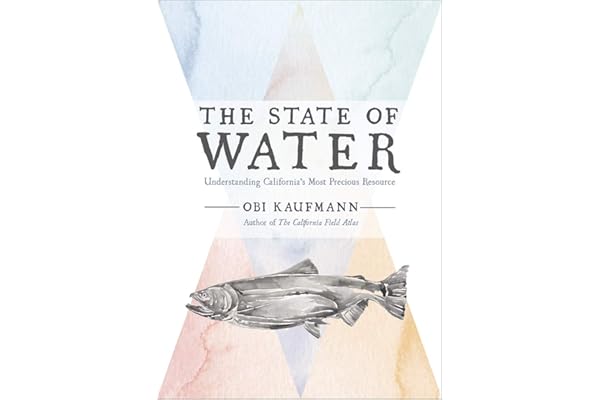
The State of Water: Understanding California’s Most Precious Resource

The State of Water: Understanding California


Price: $13.56
4.6/5

(105 reviews)

What Customers Say:

  • Great introduction into California water resources. Obi Kaufmann is really good.
    Good introduction to the state of the water resources in California. You need to get educated about water issues in order to make intelligent decisions about how we use it. Otherwise those that wish to use them up for their own profit will do it, ruin it, and move on to the next source of wealth.Check out his other books, they all are good.5 stars.
  • The State of Water – Understanding California’s Most Precious Resource
    The author Obi Kaufmann has a deep love and relationship with the State of California. This book is an informative eye-opening study of water in California. The many watercolor illustrations of animals and applicable maps are a work of art. I would recommend this book to anyone who wants to learn about the system of water in California. Thank you Mr. Kaufmann.
  • Cute and very insightful book
    I had to get this for a class, but found myself reading parts that weren’t even assigned for readings. The paintings are beautiful and really capture the essence of California’s nature
  • California water – book is a simple, straight forward education
    Beautiful presentation describing California’s water resources. Small, concise book. Great accompaniment to The California Field Atlas. Looking forward to more by Obi Kaufmann.
  • We need water.
    Quick synopsis with nice illustrations by the author. Up to date information about the state of water use in California and major issues concerning the transport and storage of the precious resource. Some focus on remediation of older issues concerning environment, hydroelectric, and siltation of storage reservoirs.
  • Informative and poetic
    Although a born and raised Californian, I am learning so much from this book. A treasured friend now gone into the void would often say to ‘Think like a Mountain,’ and this book has such perspective.
  • Beautiful.
    Lovely and beautiful book. I gave these as gifts to my team at the State Water Board.
  • Banned in Yosemite
    I bought this book because I was wondering why the Federal Govt had it removed from shelves. Must be scary!

The State of Water: Understanding California’s Most Precious Resource is one of the best-selling products with 105 reviews and a 4.6/5 star rating on Amazon.

Current Price: $13.56

#7

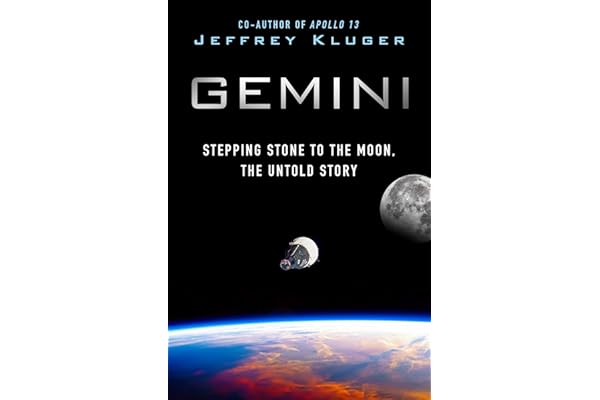
Gemini: Stepping Stone to the Moon, the Untold Story

Gemini: Stepping Stone to the Moon, the Untold Story


Price: $29.00
4.6/5

(26 reviews)

What Customers Say:

  • Great book
    Followed Gemini from beginning to end as an 8 to 10 year old, hoping to become an astronaut. Was responsible for my entry into the science and engineering fields.This book brought back some fond memories. The screech of the turbo pumps just prior to ignition of the Titan booster. Getting the NASA tech briefings in the mail. Watching every broadcast launch and recovery. And many more.Thank you , Mr. Kluger. You made an old man happy.
  • “The middle sibling of the manned space program”
    “The only question now was how to pronounce that name. The astrology nuts would speak the word with an eye at the end – GEM-in-eye. But there were not a whole lot of astrology nuts at NASA. There were pilots and engineers and military men, and they did what pilots and engineers and military men do – which is to say that they made up their own technical pronunciation. Within the walls of NASA, the word would thus land with a long e at the end – GEM-in-ee.”There’s a scene in the movie “That Thing You Do” where astronaut Gus Grissom is being interviewed on tv and he corrects the host on the pronunciation, so that explanation jumped out at me while reading. And this is an excellent history of the Gemini program, the forgotten middle child in the American space program between Mercury and Apollo. Kluger, who wrote an excellent book on Apollo 8, has done a great job with the Gemini Project as well. Gemini was very much a competition with the Soviet space program – but much more public even when things didn’t go right. Whereas Mercury got men into space – albeit low orbit, and one man at a time – Gemini was a stepping stone to Apollo, where the US would attempt to land men on the moon. Gemini began with crews of 2 and featured space walks and longer missions and docking with other space vehicles.But with our hindsight, we don’t often understand how difficult and dangerous these things were. And Gemini had its own tragedy as well, when two of the astronauts were killed in a training flight accident (in T-38 jets, not in the space capsules). Plus, it was hugely expensive, and with the Vietnam War going on, Congress complained about the high cost and whether it was worthwhile or not and whether the US could catch up to the Soviets, who seemed to have an insurmountable head start. But with President Kennedy’s challenge to land a man on the moon before the decade was over and the clever promotion that rallied the American people, Gemini was hugely successful.”America would ultimately celebrate Mercury and Apollo – its first venture into space and its first venture to another world – louder and longer and with more passion than it would celebrate Gemini, the middle sibling of the manned space program. But it was Gemini that taught the US to live in space, to work in space, to walk in space, to thrive in space. Without Gemini, men would never have walked on the moon… Sixteen men flew those ten missions – and those sixteen men have never been fully celebrated for the greatness they exhibited. Let history right that wrong at last.”This was a great book that highlights the accomplishments of all those who made the Gemini program and future space flight possible. It remined me of other excellent books on the subject, such as The Right Stuff and Red Moon Rising.
  • A history of NASA’s Project Gemini
    Jeffrey Kluger’s “Gemini” is a history of NASA’s Gemini program, a series of two-man orbital missions designed to develop and test various capabilities necessary for sending astronauts to the moon via the Apollo program. It is a well-researched, well-written, and instructive work of non-fiction.One of Mr. Kluger’s principal aims is to explain Gemini in the context of the entire effort to meet President Kennedy’s 1961 goal of “… landing a man on the moon and returning him safely to the earth” before the end of the decade. To do that, he reviews:- Soviet accomplishments in space, including the first orbital satellite (Sputnik) and first manned missions;- US efforts to catch up, including the employment of German scientists from the WWII V-1 and V-2 rocket programs, and the formation of NASA and Project Mercury,- The involvement of various politicians in the “space race,” including Presidents Kennedy and Johnson.- Project Mercury’s seven astronauts and their missions, as well some of the people leading NASA on the ground.He then goes on to detail all ten of the Gemini missions, concentrating on the men who flew them, each mission’s objectives and why they were necessary to “get to the moon,” and what actually happened during each mission. The story he tells is filled with anecdotes and allows readers to get to know—at least a little—the astronauts involved in the project.Mr. Kluger’s prose is straightforward and clear. He has a talent for explaining complex technical matters in easy-to-understand terms. I especially appreciated this when it came to his descriptions of the physics of rocketry, orbital mechanics, and spacecraft design and construction. His accounts of various “space walks” had me on the edge of my chair.Scheduled for publication on November 11 of this year, just in time for the holidays, “Gemini” is a good choice for anyone interested in NASA, the history of space exploration, and/or the “space race” between the US and USSR throughout the 1960s.My thanks to NetGalley, author Jeffrey Kluger, and publisher St. Martin’s Press for providing me with a complimentary ARC. All of the foregoing is my honest, independent opinion.

Gemini: Stepping Stone to the Moon, the Untold Story is one of the best-selling products with 26 reviews and a 4.6/5 star rating on Amazon.

Current Price: $29

#8

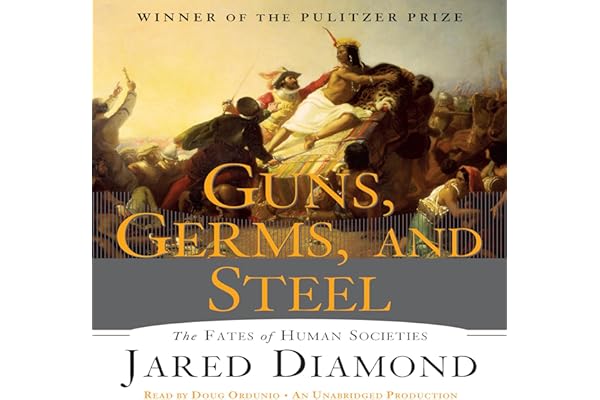
Guns, Germs and Steel: The Fate of Human Societies

Guns, Germs and Steel: The Fate of Human Societies


Price: $19.69
4.5/5

(14,256 reviews)

What Customers Say:

  • One of my favorite books and the inspiration for my World Regional Geography courses that I teach.
    Two decades ago when I served in the Missouri National Guard we had an extended drill weekend at Ft. Leonard Wood for a live fire artillery exercise. This was a three day drill and I remember it clearly because it was the same weekend as Princess Diana’s funeral on September 6, 1997. I had been at the local library the day before we rolled out and saw an interesting book that promised to explain why western civilization had been the one to colonize the New World and rise to ascendency over much of the world for a long period of time. That had always been an interesting question for me and one which many people do not know the answer to. I checked out the book and during some downtime I began to read. To say that the book grabbed my attention is an understatement. I started it on Friday and finished it on Saturday. My whole conception of how history had seen the rise of Western Civilization was fundamentally altered and would never be the same.At the time I thought that using Guns, Germs, and Steel as an educational tool would be a great idea. My dream of teaching history had never been realized and in 1997 seemed like it would never happen. However, history is full of strange things and in 2009 I got the chance to return to college and pick up my degrees. I began teaching American History in 2013 and was then asked to teach World Regional Geography for the Spring 2014 semester. They handed me a textbook and said, “Good luck.” As I drove back home I considered how I would teach this course and my mind recalled Jared Diamond and his Pulitzer Prize winning book. To make the story short, I built a course that used the textbook, Diamond’s book, and the National Geographic series based on the book.Obviously I take what Diamond said in Guns, Germs, and Steel seriously. I think Diamond did some outstanding work in doing three decades of research and then writing a book which to me is resonates with readers. For many years the idea that Western Civilization was superior to any other form has been the dominant world view. Diamond rejects that completely by saying Western Civilization had advantages that others did not have due to geography, or literally where it was. When you stop and think about it, why were the Europeans so superior to others for so long? Was it their race, their ideals, or what? Diamond said it was because of where they started that they developed into the world spanning civilization we know.What advantages did the Europeans have over others? They arrived with technology superior to all others, were better organized, and had the lethal gift of germs which in the Americas killed over half the population and was the biggest reason as to why the Europeans took those lands over. When Diamond explored the germ theory he realized that these germs came from contact with domesticated mammals such as horses, cows, pigs, chickens, sheep, and goats. These same mammals were what enabled Europeans to transport materials as well as have a convenient food supply and a power source such as horses pulling plows.This idea works when you look at the Americas and Australia, but not when you look at Africa and Asia. The lethality of germs did not affect the people in those regions like it did the Americas. In fact, some of the diseases in Africa killed the Europeans and prevented them for exploiting Sub-Saharan Africa for centuries. Some of these germs are now known to have come from Asia as well along with domestic animals that came from there. Many of the larger mammals Europe had were also found in Asia. In fact, some of the technology such as gunpowder came from Asia as well. Diamond acknowledged this in his book and sought to explain why Europe was able to expand while Asia did not.This is something I really stress in my class and it is something which the book and National Geographic series does not explore as deeply as it should. Diamond saw a decision made in the 15th century by a Chinese emperor as being the decisive event that altered human history. At that point China was the leading power in the world. It had a great navy, the largest country, gunpowder, advanced technology and far more people thanks to its agricultural practices than any other nation at that time. The decision by emperors in China’s Ming dynasty led to China losing its technological advantage over Europe although no one had any idea that this was happening. These decisions or orders are called Haijin.Diamond did not explore this in any depth other than to point to it and say that China’s inward looking policies which had existed for centuries were the result of its location, its geography. Its singular form of government used Haijin to build up its power at the expense of expanding China’s culture and boundaries. There is a lot here to work with, but Diamond seems to casually bring it up in the book’s epilogue. Instead he focuses heavily on the Americas where his theory of environmental determinism is the strongest. I think he gets the theory right, but in the case of Asia he needed to go deeper.Since Diamond is an ornithologist by education, and his world journey’s focused on New Guinea, I think his point of view was heavily influenced through his contact with hunter-gatherers. His theory is at its weakest in Asia and specifically China. That again reflects his preference for focusing on one type of people versus another. This does not mean his theory is wrong. It just needs expansion and I do not think Diamond will be doing that any time soon. His recent works have dealt with different ideas.Even with this glaring problem, I think this book is outstanding. It does answer the question of why Western Civilization dominated the world for the most part. For my geography class it is a wonderful tool. I focus heavily on how man domesticated two grains from the Middle East, wheat and barley, and built Western Civilization upon them. Coupled with the domestication of large mammals, the forerunners of Western Civilization spread through Europe. Geography played a huge role in why it went west and why there are so many differences between East and West on a cultural level. It also explains why there are such huge differences between North Africa and the lands to the south of the Sahara.The role of geography in shaping mankind is without a doubt the single underlying reason as to why history occurred like it did. This is really hard for students to understand because they seem to have been taught a much different concept prior to taking a geography course. Only by explaining the human-environment interaction do students begin to realize that geography caused man to make decisions which would reverberate for millennia. The people of the Middle East followed the Tigris and Euphrates rivers northwest into Anatolia and out of the desert. Man’s movement west, north, and south with the crops and animals of the Middle East were shaped by geographical barriers.Diamond points out how man overcame these barriers over time. The civilization that was able to do so developed greater technologies than others. He points to both European and Chinese naval developments in this regard. China’s need to continue to build its naval forces was negligible due to a lack of naval enemies while in Europe those enemies were often themselves as nations competed for resources and trade. Since China controlled all of its trade which was mostly internal or land based, its need for a navy was reduced. Europe surged ahead while China languished.In my classes I point to the barriers as we explore the world’s regions. I show how these barriers played such big roles. We play a board game by Avalon Hill that helps to illustrate this as well. Diamond’s book plays a big role in my class and so do his theories. I find it really helps students take the principles and ideas from the first part of the class and begin to apply them to the world regions we study. They are able to make the mental leap to the realization that the people of the world are different for many reasons, the foremost being the place in which they live more than anything else. It helps them to break down and discard the erroneous belief which many of them have regarding their place in the world. Using Diamond’s Guns, Germs, and Steel I am able to use Transformative Learning Theory to overcome the disorientating dilemma they find themselves in at the beginning of class.I could build a new class out of Diamond’s book that encompasses geography, history, and sociology if my school would let me. In fact, I could build two classes out of it. One would focus on why Western Civilization developed like it did and expanded to the Americas while the second one would focus on the development of Eastern Civilization and its failure to expand beyond Asia itself. While courses exist that dive into those ideas, they are built around history more than anything else. Few instructors use environmental determinism in explaining how early mankind developed in the places it did. The ultimate objectives of these courses would be why they developed like they did, not just their history.Diamond has written several other books such as Collapse, The Third Chimpanzee, and The World Until Yesterday. He is Professor of Geography at the University of California, Los Angeles. He has been awarded all kinds of prizes and awards for his research and work in multiple fields. I find it interesting that he began to study environmental history in his fifties which led to this book and many others. This to me is proof that you are not bound by formal rules regarding your education, but rather by using your interests coupled with the research capabilities your education has provided you new careers beckon. This book is a testament to following one’s interests and using one’s intellect. I highly recommend it to all readers. It is one of my favorite books and I have read through it multiple times.
  • You may never see the world the same way again
    Ok I got a lot out of this book.Like Yali, the charismatic New Guinean local politician who quizzed the author 25 years before the book was written wanting to know why Europeans developed so much cargo and brought it to New Guinea which had little cargo of theirs, I bought this book in a bid to understand why Africa and its inhabitants developed at a much slower pace than other continents. Was it a matter of fate? Or was the politically incorrect charge that Africans are innately inferior to their fairer skinned counterparts somewhat justified ?Jared Diamond makes a strong case for Geography’s deterministic role in the evolution of societies. In other words, the rich societies of today simply won the geographical draft lottery (in terms of who got the largest continental pie/size, who got the most ideal conditions for farming, who got the most number of wild mammals suitable for domestication, and who got the widest variety of wild plant species ideal for agriculture) played over 13,000 years ago when modern man began to settle into village life in a few parts of the world. That decisive edge, reinforced over the last 13,000 years is what led to the emergence of an indomitable Europe that eventually came to lead the world due to its development of guns, germs, and steel.According to the Author, Eurasia got decisively lucky in more ways than one:The Late Pleistocene extinction decimated Eurasia’s competitors by felling wild mammal species of most of North and South America and those of Africa that may have facilitated intensive farming instead of the hunter-gathering lifestyle which eventually became a big impediment to the development of rapidly evolving complex societies on those continents. Those extinctions left Eurasia with many more wild candidates for domestication than the Americas and Africas offered.Agriculture and Continental Size were huge enablers. Eurasia is twice as large as the next largest continent, Africa, and had a wide extensive landmass of fertile soil amidst a variety of wild life that were easily domesticated for animal herding and valuable crops that facilitated the development of intensive farming techniques that helped serve denser populations and formed the basis for the formation of complex organized societies. Denser populations tend to rise only under conditions of food production, populations served by food surpluses from intensive farming techniques were more likely to have non-farming specialists, technocrats, warriors and bureaucrats. In contrast, poorer societies such as hunter-gatherers without such advantages remained as hunter-gatherers living in bands which were far from ideal to produce crop surpluses available for redistribution or storage, and hence could not support and feed non-hunting craft specialists, armies, bureaucrats, and chiefs to enable them evolve complex societies.In turn, agriculture spawned lethal germs emanating from Eurasian’s long advantageous exposure to domestic Animals which was as decisive in eliminating local populations in conquest as guns and steamboats were. As illustrated by the New world’s conquest of almost 95 percent of the 20million American Indians; exposing the Indians to strains of germs the Indians had never been exposed to, and against which they therefore had neither immunity nor genetic resistance to.The development of writing was another essential agent in assisting the conquests of Eurasian Societies: by fostering the development of maps that were beneficial to sailors exploring new lands to conquer, by providing a new way of communicating and (through preserved records) inspiring later generations to conquest, writing played a crucial role in the course of civilization but could not have been possible without food production. Writing emerged independently only in the Fertile Crescent, Mexico, and China because those were precisely the first areas were food production arose in their respective hemispheres.I already told you that what brought me to this book was to understand why as an African, we’ve evolved rather slowly compared to everyone else? I got my money’s worth somewhere in pg 399 where the author states that “the factor behind Africa’s slower rate of Post Pleistocene development compared with Eurasia’s is the different orientation of the main axes of thee continents. Like that of the Americas, Africa’s major axis is north-south, whereas Eurasia’s is east-west. As one moves along a north south axis, one traverses zones differing greatly in climate, habitat, rainfall, day length, and diseases of crops and livestock. Hence, crops and animals domesticated in one part of Africa had great difficulty in moving to other parts. In contrast crops and animals moved easily between Eurasian societies thousands of mile apart but at the same latitude and sharing similar climate and day lengths”. In a nutshell, geography, and not biology, ultimately did us in.I found this book a bit of a slog to get through due to the author’s interdisciplinary approach ( history, archaeology, evolutionary biology, sociology, cultural anthropology etc) which mirrors his career trajectory so far. One of the few bones I have to pick with the book, as so many other reviewers have already mentioned, is its lack of sources. I also thought the author strove, quite frequently, a bit too hard for political correctness in for example, sounding a bit patronizing to the plight of poor societies like mine. I admit it may amount to career suicide for a tenured professor to have done otherwise; but to my mind any reader who can’t handle a little intellectual honesty no matter how inconvenient isn’t ready to address the fundamental questions about the human condition. For some reason, the kindle version I purchased didn’t have images due to copyright issues. A bit of a setback because I didn’t have any maps handy to make sense of the strange locations that pop up at various points in this read and no thanks, I like to read with an internet connection as far from me as possible. Then lastly, there was the glossy treatment of why different parts within Eurasia developed differently which he addresses scantly in a later edition of the book.But GGS ultimately proved to be a great read for me, and highly recommended for anyone who wants a keener appreciation of the world we live in today. But be forewarned, you may never see the world the same way again which surely is a good thing.

Guns, Germs and Steel: The Fate of Human Societies is one of the best-selling products with 14256 reviews and a 4.5/5 star rating on Amazon.

Current Price: $19.69

#9

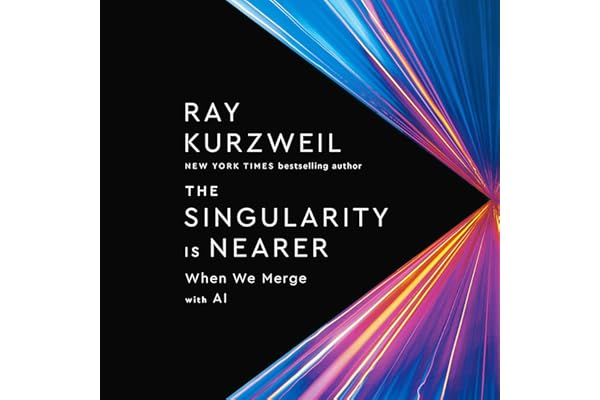
The Singularity Is Nearer: When We Merge with AI

The Singularity Is Nearer: When We Merge with AI


Price: $17.72
4.4/5

(1,349 reviews)

What Customers Say:

  • Excellent Look at A.I. and Other Future Technologies
    This is a fascinating book. Although I bought it to get a better understanding of artificial intelligence (AI), it covers much more. The author also discusses technologies such as 3D printing and vertical farming which are undergoing accelerated development. When discussing these technologies, he cites historical examples to make his point. Although some topics are extremely technical, the author’s writing style makes these concepts easy to understand. The term “singularity” refers to the moment when human consciousness is enhanced beyond our current comprehension.In the field of nanotechnology, the author discusses a potential increase in human intelligence through virtual neurons such that people will directly interface with the cloud. He also shows how the associated cost is rapidly decreasing. For example, one dollar now buys over 11,000 times as much computing power as it did a decade ago. An astonishing level of reduction. These metrics are then paired with graphs to give the reader a clear picture.One interesting topic is the concept of mind uploading (aka: whole brain emulation). Computers will be able to simulate human brains in every way within the next two decades. This is followed by what it means to transfer someone’s consciousness into a computer brain. He also discusses the legal implications of a conscious AI and the inability of our political and legal systems to adapt fast enough to enshrine certain rights into law. In the future, biological brains cannot keep up with minds augmented by non-biological nanoengineering.Equally fascinating is an analysis on how the world has become safer. There is currently less violence and greater literacy than in previous centuries. He then highlights how positive developments never make the news. We only see negative stories because they are newsworthy and entertaining.Bottom line: This book covers multiple areas of technology and describes how they will likely change our society. It is written in a manner that is easy to understand, and it will definitely open the reader’s eyes to what is coming.
  • Kurzweil downplays risks because he wants to live forever
    I bought this book because I believe Kurzweil’s predictions, particularly about computation acceleration, are eye-opening. However, even though The Singularity is Nearer is based on A.I. development, it devotes a lot of time to the social and biological implications of the technology, according to Kurzweil.While I am convinced that his foresight is generally correct with regard to technological advancement, I am not persuaded that his largely rosey description of the future is correct.Even if A.I. eventually results in certain positive outcomes, I think Kurzweil significantly underestimates the social disruption that would occur before society gets to those ideal results, if it ever does. The revolution, or its aftermath, could be so catastrophic that the disruption reaches a point of no return. In my opinion, Kurzweil underestimates possibilities like this. He seems eager to get to positive biological outcomes, particualrly in relation to nanotechnology and the aging process.In online interviews with Kurzweil, and in this book, the thought kept coming back to me that Kurzweil’s ultimate objective is to live forever. I have heard him say that he is going to extremes in attempt to live a decade or two longer so that he can benefit from advanced A.I., perhaps through digitally preserving his consciousness. These ideas reminded me of Ecclesiastes 3:11, which says that God “has put eternity into man’s heart.” Even if Kurzweil’s predictions about A.I., society, and even biology are correct, I don’t think he will find what he is looking for. In my view, his search is ultimately about God.A few note to lay readers: Within the first 20 pages of the book, Kurzweil inserts a sophisticated 8-page discussion on neutral networks. Don’t put the book down in this section! It should have been an appendix.Also, the last chapter is called “Dialogue with Cassandra.” It’s an interesting interview, but there is no preface to the conversation at the beginning of the chapter. I double-checked the introduction and the notes in the back of the book and couldn’t find out more information about what I was reading or who Cassandra is. I must have missed something. Nevertheless, a quick Google search suggests that Cassandra is fictional. Perhaps this is a pop-culture reference I don’t know about. Still, it’s an interesting read, even if a little bizarre.
  • Happy client
    Easy read
  • Must-read
    Great book, must read if interested in AI

The Singularity Is Nearer: When We Merge with AI is one of the best-selling products with 1349 reviews and a 4.4/5 star rating on Amazon.

Current Price: $17.72

#10

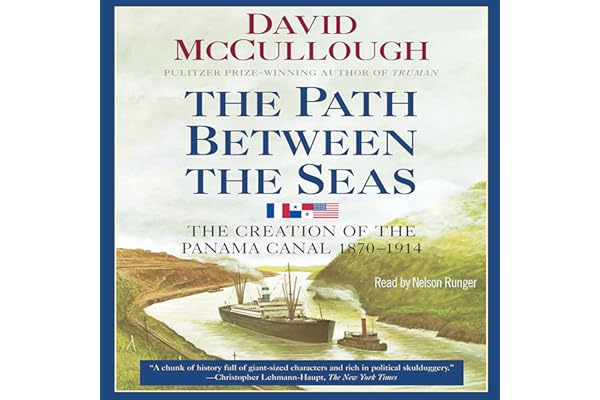
The Path Between the Seas: The Creation of the Panama Canal, 1870-1914

The Path Between the Seas: The Creation of the Panama Canal, 1870-1914


Price: $26.24
4.5/5

(8,048 reviews)

What Customers Say:

  • exhaustive, but not exhausting
    Read this as part of my preparation for a full transit cruise. I am SO MUCH better prepared for this journey.Parts of it were fascinating, parts were horrifying. The rigid segregation was shocking in contrast to much of the Canal administration being worker focused. But only white workers.
  • Interesting, although not his best
    I enjoyed learning about how the canal works, the significant challenges to its success, and the people who overcame those challenges. However, the writing isn’t as clean as most of McCullough’s work. For example, there were a lot of unnecessary tangents that seemed to serve no purpose and transitions between paragraphs were often missing. This made the book a bit clunky to read at times, but still well researched and interesting.
  • Details, details, details
    Lots of details from canal concept to competition. If you’re looking for construction details you’ll need more research. 600+ pages outlines all hardships imaginable in starting to finishing the big ditch.
  • Fascinating!
    I learned a lot and its a very good read! I recommend it. It was amazing story I wasn’t sure I would be interested
  • Wonderful pre-cruise read
    A must-read book for anyone planning a trip through the canal. The complexity of the project — from engineering to politics to financing — is astounding. McCullough never fails to deliver with his thorough research and engaging writing style. This book has a big cast of characters but his style makes it easy to keep them straight.
  • intriguing – Teddy Bear’s great gamble which is an heroic (although often failed) story
    interesting story. Have about 100 pages left to read. It gets a bot tedious here and there – way too much detail about people and circumstances that appear irrelevant to the story of breaking through this chunk of mid-America, which is an incredible story of human effort as well as ignorant ambition.
  • A little known piece of history taken very seriously
    David McCullough takes all his books very seriously. No detail is too small. Even the minuscule unworthy details are footnoted as if he is reluctant to give up even one morsel. Maybe some of details should have been omitted for the sake of pacing. I almost gave up on the book toward the middle when all the “back and forth” negotiations of the financial dealings were over-explained.None the less, this is a very interesting book about the unbelievable undertaking of splitting a continent in two, about joining two oceans nature never intended to be merged. What boldness, imagination, arrogance, bravado, and confidence the men of this era had. It is amazing to just read in awe as they undertake this insane venture without pause for people or environment or capital. This project could never happen today.25,000 people died building this canal, trillions of dollars were spent, war was waged over it’s domain, and when it was done, it was utterly forgotten. Forgotten because of its efficiency. Forgotten because it was so perfectly functional there was nothing to report.Briefly, after their success with the Suez Canal in Egypt the French undertook the much more difficult task of building the Panama Canal. They were overconfident and unprepared for the challenges of building a canal in the tropics. Mosquito borne deceases such as Yellow Fever and Malaria decimated the mostly black Caribbean laborers but killed with out difference the French engineers as well. Understandings of mosquito borne deceases in the 1887 were just emerging. Graft, decease, mud slides, cost overruns, and public skepticism finally drove the French to abandon this privately financed project after 10 years of work.The French left the buildings, railroads, and equipment sitting in the jungle to rott. Enter Teddy Roosevelt. Never one to back down from a challenge, President Roosevelt bought the property, railroad, and equipment from the French and took up the task. It could be one of the United States greatest achievements that no one knows about.It was a hard concept to grasp at the time, but decease caused by mosquito was a very radical idea. People refused to believe it. At the time, Malaria and Yellow Fever were thought to be a product of poor sanitation. Innovative Americans took the little research they had available and eliminated the decease problem before any workers arrived. Mr. McCullough is excellent here talking about the science behind the spread of decease and how it was shut down. Miraculous really.Roosevelt sold the idea to the American people and put the best men in charge. He gave them what they wanted and stayed out of their way. There was a change of leadership half way through and the project was actually finished after Roosevelt had passed away. It was an American public project but the canal was open for all people of all countries and the fees paid were the same for American boats as for all others. We were a magnanimous group of Americans back then.The Panama Canal makes me very proud to call myself an American.
  • More than most would ever want to know about building the Panama Canal
    Well, the author appears to have done a very thorough job researching and documenting the history behind the effort to build the Panama Canal, and so the author deserves credit and kudos for that. But for me, it just wasn’t that much fun to read about.There are three main parts to this book. The first part was about France’s attempt to build a canal. The second part was about the USA’s decision to build a canal in Panama (instead of Nicaragua) — and the politics associated with that decision. The third part is about all the work that the USA did to actually build the canal.Now I freely admit that I did not even know that France was the first country to attempt to build a canal through Panama. And I did not know that France’s attempt to build a Panama Canal was championed and spearheaded by French diplomat Ferdinand de Lesseps, the same man who successfully spearheaded the building of the Suez Canal. Some of the physical difficulties the French encountered were interesting to read about (and were also later encountered by the Americans too). But the French effort was a third of the book. So be prepared for lots of French names. There was also a lot of discussion on financial matters since building a canal is expensive, money had to be raised (and bribes paid out) and, in the end, the effort went broke. Personally, I was more interested in the difficulties trying to physically build the canal – and less about all the efforts to finance that effort.To me, that first part was just “kind of” interesting. But it was a lot more interesting, comparatively, than the second part, which mostly involved a lot of wrangling politics. Now, I knew that America helped engineer Panama’s split from Colombia, forming its own country. And, certainly the book should (and did) cover that aspect. But other than that, this part was just something I slogged through.The third part was everything I’d hoped this book would be: The battles against disease. Taming a wild river. Cutting through the mountainous spine. Building the locks. Massive machines. Racial discrepancies. Basically, life living and working in the jungle – and the gradual changes to those conditions over the duration of the canal’s construction.Bottom Line: First part: 3 stars. Second part: 1 star. Third part: 5 stars. Don’t let the second part discourage from finishing the book.

The Path Between the Seas: The Creation of the Panama Canal, 1870-1914 is one of the best-selling products with 8048 reviews and a 4.5/5 star rating on Amazon.

Current Price: $26.24

Updated: Nov 26, 2025
Data from Amazon.com
10 products

Customer Reviews

5 star
70%
4 star
20%
3 star
7%
2 star
2%
1 star
1%
John D.
★★★★★
March 15, 2024
"Great product! Exactly as described. Fast shipping and excellent quality."

Product Specifications

Brand Amazon Brand
Material High Quality
Dimensions See product details
Weight See product details