
Top 10 Best-Selling Education & Learning for November 2025

Price: $13.78

Key Features:

  • High Quality Materials
  • Fast Shipping
  • Customer Support
  • Money Back Guarantee

Top 10 Best-Selling Education & Learning for November 2025

$13.78

Secure Purchase
Free Shipping
Easy Returns

Product Description

Danh sách Top 10 Education & Learning bán chạy nhất tháng November 2025 được tổng hợp dựa trên dữ liệu thực tế từ Amazon.com. Các sản phẩm được đánh giá cao bởi hàng nghìn người dùng, với điểm rating trung bình từ 4.4 đến 4.7 sao. Hãy tham khảo danh sách dưới đây để chọn sản phẩm phù hợp với nhu cầu của bạn.

#1

The Big Short: Inside the Doomsday Machine

The Big Short: Inside the Doomsday Machine


Price: $21.84
4.6/5

(16,859 reviews)

What Customers Say:

  • Who knew?
    Based on reading Michael Lewis’ Liar’s Poker and Moneyball, I wondered whether The Big Short would prove to be entertaining and informative. If you’ve read some of Lewis’ books, you might agree that the “entertaining” part would seem to be a reasonably safe bet. It turns out, it is. The Big Short is fast-paced, straightforward, conversational and salty–very much like his earlier works. Indeed, if you didn’t know Michael Lewis had written this book, you could probably guess it. It is easy reading and very hard to put down. In short (no pun), The Big Short doesn’t disappoint in being entertaining.In a sense, this book is similar to Moneyball in that Lewis tells his story by following a host of characters that most of us have never heard of–people like Steve Eisman (the closest thing to a main character in the book), Vincent Daniel, Michael Burry, Greg Lippmann, Gene Park, Howie Hubler and others.How informative is the book? Well, it may seem that Lewis has his work cut out for himself, since the events of the recent financial crisis are already well known. More than that, lots of people have their minds made up concerning who the perps of the last few years are–banks and their aggressive managers, “shadow banks” and their even more aggressive managers, hedge funds, credit default swaps, mortgage brokers, the ratings agencies, Fannie Mae and Freddie Mac, the Fed’s monetary policy, various federal regulators, short sellers, politicians who over-pushed home ownership, a sensationalist media, the American public that overextending itself with excessive borrowing (or that lied in order to get home loans), housing speculators, etc. The list goes on–and on. Okay, so you already know this. The defining aspect of this book, however, is that it asks (and answers) “Who knew?” about the impending financial crisis beforehand. Who knew–before the financial crisis cracked open for everyone to see (and, perhaps, to panic) in the fall of 2008–that a silent crash in the bond market and real estate derivatives market was playing out? Indeed, the good majority of this book addresses events that occurred before Lehman’s failure in September of 2008. In describing what led up to the darkest days of the crisis, Lewis does a good job helping the reader to see how the great financial storm developed. All in all, this is an informative book.Interestingly, in the book’s prologue, Salomon Brothers alumnus Lewis explains how, after he wrote Liar’s Poker over 20 years ago, he figured he had seen the height of financial folly. However, even he was surprised by the much larger losses suffered in the recent crisis compared to the 1980s, which seem almost like child’s play now.For a taste of The Big Short, Steve Eisman was a blunt-spoken “specialty finance” research analyst at Oppenheimer and Co., originally in the 1990s, and he eventually helped train analyst Meredith Whitney, who most people associate with her string of negative reports on the banking industry, primarily from late 2007. Giving a flavor of his style, Eisman claims that one of the best lines he wrote back in the early 1990s was, “The [XYZ] Financial Corporation is a perfectly hedged financial institution–it loses money in every conceivable interest rate environment.” His own wife described him as being “not tactically rude–he’s sincerely rude.” Vinny Daniel worked as a junior accountant in the 1990s (and eventually worked for Eisman), and he found out how complicated (and risky) Wall Street firms were when he tried to audit them. He was one of the early analysts to notice the high default rates on manufactured home loans, which led to Eisman writing a 1997 report critical of subprime originators. Michael Burry (later Dr. Michael Burry) was, among other things, a bond market researcher in 2004 who studied Warren Buffett and Charlie Munger, and who correctly assessed the impact of “teaser rates” and interest rate re-sets on subprime loans. In 2005, Burry wrote to his Scion Capital investors that, “Sometimes markets err big time.” How right he would be.Greg Lippmann was a bond trader for Deutsche Bank, who discussed with Eisman ways to bet against the subprime mortgage market. Before home prices declined, he noted, for example, that people whose homes appreciated 1 – 5% in value were four times more likely to default than those whose homes appreciated over 10%. In other words, home prices didn’t need to actually fall for problems to develop. (Of course, home prices fell a lot.) When Lippmann mentioned this to a Deutsche Bank colleague, he was called a Chicken Little. To which, Lippmann retorted, “I’m short your house!” He did this by buying credit default swaps on the BBB-rated tranches (slices) of subprime mortgage bonds. If that’s not a mouthful, read further in the book for a description of Goldman Sachs and “synthetic subprime mortgage bond-backed CDOs.” Then there’s the AIG Financial Products story, told through the story of Gene Park, who worked at AIG, and his volatile boss, Joe Cassano.Did I say this book is informative? Here’s a bit more: Did you know that a pool of mortgages, each with a 615 FICO score, performs very differently (and better) than a pool of mortgages with half of the loans with a 550 FICO score and half with a 680 FICO score (for a 615 average)? If you think about it, the 550/680 pool is apt to perform significantly worse, because more of the 550 FICO score loans develop problems. Think about how that got gamed.There’s more, but hopefully you’ve gotten the point. This is a very interesting, entertaining and informative book that accomplishes what it sets out to do. Chances are you’ll enjoy it.
  • The Few Who Truly Knew – A Masterpiece
    Economics is a social science. It is predicated on an understanding of human behavior, among other things. It’s also recognition that what we think we know may be incorrect. In their recent book, From Poverty To Prosperity – Intangible Assets, Hidden Liabilities and the Lasting Triumph Over Scarcity, Nick Schulz and Arnold Kling posed the following question to Douglass North, Nobel Laureate in Economics (1993). North is the Spencer T. Olin Professor in Arts and Science at Washington University in St. Louis:Here’s the question from Schulz and King: “What other obstacles prevent economists and policymakers from seeing what really matters?”North’s response: “Until they understand that our understanding of the world is very fragmentary, is not complete, is – I believe – partially incorrect, no matter how intelligent we are, we’re not going to make sense of the world.” p. 151.We live in a world where we must listen for the voices of dissent – the contrarians. When Michael Lewis’ The Big Short was delivered, I thought I might pick it up and read a few pages. Warning: This magnificent work is crafted in such a way that sampling the first few pages will transform your day (as it did mine) into devouring this masterpiece cover-to-cover. It is a book about the dissenters, the contrarians, “the few who truly knew” – who developed and exercised the foresight to comprehend the emerging financial crisis in the U.S. (and around the globe). It is a story from the perspective of a very few who recognized that “a great nation lost its financial mind.” P. xivAs Lewis writes:”A smaller number of people – more than ten, fewer than twenty, made a straightforward bet against the entire multi-trillion-dollar, sub-prime mortgage market and, by extension, the global financial system. In and of itself it was a remarkable fact: The catastrophe was foreseeable, yet only a handful noticed.” P. 105″Even as late as the summer of 2006, as home prices began to fall, it took a certain kind of person to see the ugly facts and react to them – to discern, in the profile of the beautiful young lady, the face of an old witch. Each of these people told you something about the state of the financial system, in the same way that people who survive a plane crash told you something about the accident, and also about the nature of people who survive accidents – all of them were, almost by definition, odd. But they were not all odd in the same way.” P. 107This book is incredibly insightful regarding the motivation of homo sapiens in a capitalist society, how we think, what we overlook, and the necessity to learn to question the world around us. Consider the following excerpts from this book:”All shared a distinction: They had proven far less capable of grasping basic truths in the heart of the U.S. financial system than a one-eyed money manager with Asperger’s syndrome.” Lewis’ commentary on the failure of foresight by Paulson, Geithner, Bernanke, Blankfein (Goldman Sachs), Mack (Morgan Stanley), and Pandit (Citigroup) vs. hedgefund manager Michael Burry of Cupertino, CA P. 260.”I hated discussing ideas with investors,” he said, “because I then become a Defender of the Idea, and that influences your thought process.” Once you became an idea’s defender you had a harder time changing your mind about it. P. 56 – quote from Michael Burry.”In retrospect, their ignorance seems incredible – but, then, an entire financial system was premised on their not knowing, and paying them for this talent.” — Lewis’ characterization on what percentage of credit default swaps were sub-prime. P.88″Lippmann soon found that the people he most expected to see the ugly truth of the subprime mortgage market-the people who ran funds that specialized in mortgage bond trading-were the ones least likely to see anything but what they had been seeing for years. Here was a strange but true fact: The closer you were to the market, the harder it was to perceive its folly.” P. 91″The markets were predisposed to underestimating the likelihood of dramatic change.” P.108″Just throw your model in the garbage can. The models are all backward-looking – the models don’t have any idea of what this world has become.” P. 176 – quote from Steve Eisman.Lewis has an uncanny ability to use interviews and the sheer creative power of his mastery of language to explain terribly complicated concepts in a way the layperson can comprehend. Regarding the design of Morgan Stanley’s Credit Default Swap (CDS), Lewis uses the following phrase to characterize this instrument – “what amounted to home insurance on a house designated for demolition.” (P. 202). In terms of the CDO market, Lewis says: “Their trade now seemed to them ridiculously obvious – it was as if they had bought cheap fire insurance on a house engulfed in flames.” P. 164 — …you get the point.If you think that Lewis’ “The Big Short – Inside The Doomsday Machine” is “just another book” about a vanilla investigative perspective regarding the U.S. and global financial crisis – YOU’RE WRONG. Don’t succumb to this deception! This book is truly unique and will/must be enjoyed by a very broad audience.This work is a truly masterpiece. If you’re interested in human behavior, cognitive economics or yearning for a “can’t put it down” or how “a great nation lost its financial mind,” — this particular work stands out from all the rest of the pack. Buy it. Devour it. Think about it. Act upon it. Buy three for your colleagues and friends.If you’re a U.S. citizen, it’s your patriotic duty to read this book. If you are employed in the financial services sector of the global economy, this is required reading.My most heartfelt gratitude to Michael Lewis for sharing the stories of the few who truly knew: Those who “had the nerve to bet on their vision. It’s not easy to stand apart from mass hysteria -to believe that most of what’s in the financial news is wrong, to believe that the most important financial people are either lying or deluded – without being insane.” P.xviiiTo Michael Burry, Steve Eisman, Vincent Daniel, Danny Moses, Jamie Mai, Charlie Ledley, Ben Hockett, and your families; here’s something from my family to you and yours:You’re “not nuts.” You’re the folks who provide me with the essential courage to inquire, think, ponder and wonder about the prospects for a better future in this world. You exemplify the few who have lived their lives, embraced incomprehensible pain and sacrifice, and paid an unimaginable personal price — in pursuit of exposing systemic deception and, begin to restore my faith in the inherent value in the necessity for the contrarian among us. It’s people like you who give me hope as my family, my community, our country, and our world continue to struggle as “collateral damage” in the ongoing, ever-unfolding, yet-to-be-experienced, dimensions of the aftermath of this fiasco.I needed to believe in “heroes” again. Thank you for being “something” in the midst of nothing. It’s your character, tenacity, insight, intelligence and unwavering commitment to a pursuit of the truth amidst a sea of deception, which will endure with me. True stories of human heroism will never lose their charm. Thank you for living these truths for us.

The Big Short: Inside the Doomsday Machine is one of the best-selling products with 16859 reviews and a 4.6/5 star rating on Amazon.

Current Price: $21.84
#2

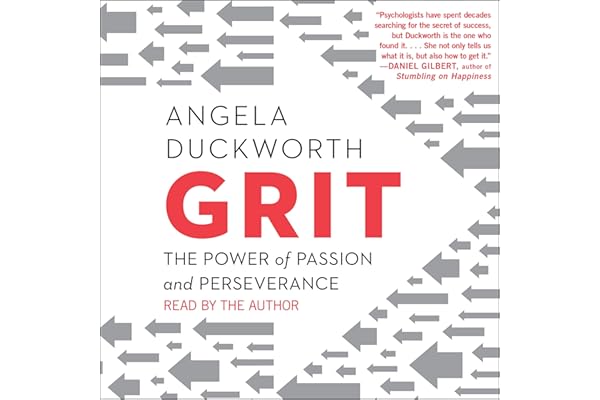
Grit: The Power of Passion and Perseverance

Grit: The Power of Passion and Perseverance


Price: $17.05
4.6/5

(20,268 reviews)

What Customers Say:

  • A Motivating Book That Redefines What Success Really Takes
    Grit was a great read and really changed how I think about long-term success. The core idea — that passion and perseverance matter more than raw talent — really hit home. Angela Duckworth does a great job showing that people who stick with something, put in the work, and stay committed over time usually outperform those who rely only on natural ability. It made me reflect on the areas in my own life where I’ve pushed through challenges versus the times I gave up too early.What I liked most is how the book mixes research with real stories from athletes, students, business leaders, and everyday people who pushed past setbacks. It feels motivating without being cheesy, and it reminds you that consistency matters far more than we usually give it credit for. The message is simple but powerful: effort counts twice.If I had one critique, it’s that some of the stories and examples start to overlap as the book goes on, and if you’ve read other personal development books, a few ideas may feel familiar. Still, the way Duckworth explains grit — breaking it down into passion, practice, purpose, and persistence — makes it easy to apply in real life.Overall, Grit is a meaningful, encouraging read. It pushes you to rethink what really drives achievement and helps you see that building perseverance is just as important as having talent. If you’re working toward big goals or want a mindset boost, this book is definitely worth your time.
  • Essential reading
    This should be essential reading, for everyone. I with I had been taught this when I was coming up, and can’t imagine who couldn’t benefit from if.
  • Army has been educating their finest at West Point military academy
    For decades the U.S. Army has been educating their finest at West Point military academy. Only about half of the 2,500 applicants meet its rigorous academic and physical standards, which are as high as the elite universities. Nearly all men and women are ‘varsity athletes’. The first few months, known as the Beast, are the most physically and emotionally demanding of the four-year course. All admitted candidates have been selected, based on the ‘Whole Candidate Score’ test.However, those who stayed and those who dropped out during the Beast, had indistinguishable scores. Both the Army and Dr. Duckworth were perplexed by the question: “Who spends two years trying to get into a place and then drops out in the first two months?”What emerged from Duckworth’s work on the problem was the Grit Scale—a test that measures the extent to which you approach life with grit. Grit turned out to be an astoundingly reliable predictor of who made it through and who did not.The Grit Scale was tested with sales people, among others, who are subject to the daily hardship of rejection. In an experiment involving hundreds of men and women who sold vacation time-share, Grit predicted who stayed and who left. Similar results were found in other demanding professions such as education.“I came to a fundamental insight that would guide my future work,” explains Duckworth. “Our potential is one thing. What we do with it is quite another.”Natural talent as the explanation of success, according to sociologist, Professor Dan Chambliss, “is perhaps the most pervasive lay explanation we have for athletic success.” However, his research led him to the conclusion that the minimal talent needed to succeed, is lower than most of us think.“Without effort, your talent is nothing more than your unmet potential. Without effort, your skill is nothing more than what you could have done but didn’t. With effort, talent becomes skill, and effort makes skill productive.”Grammy Award–winning musician and Oscar-nominated actor, Will Smith, says of himself: “I’ve never really viewed myself as particularly talented. Where I excel is a ridiculous, sickening work ethic.”Too many of us, it appears, give up far too early and far too often.Duckworth’s research has led her to the conclusion that Grit has four components: interest, practice, passion, and hope.According to the meta-analysis of sixty studies conducted over the past sixty years, employees whose personal interests fit with their occupations, do their jobs better, are more helpful to their co-workers, and stay at their jobs longer.Of course, just because you love something doesn’t mean you will excel at it. Many people are poor at the things they love. Many of the Grit paragons interviewed by Duckworth spent years exploring several different interests before discovering the one that eventually came to occupy all of their waking thoughts. “While we might envy those who love what they do for a living, we shouldn’t assume that they started from a different place than the rest of us. Chances are, they took quite some time figuring out exactly what they wanted to do with their lives,” she explains.The second requirement of Grit is practice. Numerous interviews of Grit paragons revealed that they are all committed to continuous improvement. There are no exceptions. This continuous improvement leads to a gradual improvement of their skills over years.“That there’s a learning curve for skill development isn’t surprising. But the timescale on which that development happens is,” Duckworth discovered. Anders Ericsson’s work with a German music academy revealed that those who excelled, practised about 10,000 hours over ten years before achieving elite levels of expertise. The less accomplished practised half as much.Ericsson’s crucial insight is not that experts practice much more, but that they practice very deliberately. Experts are more interested in correcting what they do wrong rather than what they did right, until conscious incompetence becomes unconscious competence.Dancer Martha Graham says “Dancing appears glamorous, easy, delightful. But the path to the paradise of that achievement is not easier than any other. There is fatigue so great that the body cries even in its sleep. There are times of complete frustration. There are daily small deaths.”Gritty people do more deliberate practice than others.The third component of Grit is purpose, the desire to contribute to the well-being of others. If Grit starts with a relatively self-oriented interest to which self-disciplined practice is added, the end point is integrating that work with an other-centred purpose.“The long days and evenings of toil, the setbacks and disappointments and struggle, the sacrifice—all this is worth it because, ultimately, their efforts pay dividends to other people,” Duckworth identified. Most Gritty people saw their ultimate aims as deeply connected to the world beyond themselves.The bricklayer may have a job laying bricks so he can pay for food. He may later see bricklaying as his career, and later still as a calling to build beautiful homes for people. It is this last group who seem most satisfied with their jobs and their lives overall, and missed at least a third fewer days of work than those with merely a job or a career as opposed to a calling.The final component of Grit is hope, but a different kind to the “hopium” many embrace. It is the expectation that our own efforts can improve our future. The hope that creates Grit has nothing to do with luck, so failure is a cue to try harder, rather than as confirmation that one lacks ability.The book also includes chapters on developing Gritty children, sports teams, and companies.It is a book for those who relish solid research and well-reasoned conclusions. It is highly motivational, in a mature and thoughtful way. Get the book. Work it, and share the knowledge. It could be transformative.Readability Light —+- SeriousInsights High +—- LowPractical High -+— Low*Ian Mann of Gateways consults internationally on leadership and strategy and is the author of Strategy that Works.
  • Great book!
    Highly Recommend this book. I read this book as I was doing a modified version of the 75 hard. Easy read and very very good. The chapter on Grit Parenting is very good as well. Very empowering

Grit: The Power of Passion and Perseverance is one of the best-selling products with 20268 reviews and a 4.6/5 star rating on Amazon.

Current Price: $17.05

#3

Learn Spanish with Paul Noble for Beginners – Complete Course: Spanish Made Easy with Your Personal Language Coach

Learn Spanish with Paul Noble for Beginners – Complete Course: Spanish Made Easy with Your Personal Language Coach


Price: $21.88
4.4/5

(645 reviews)

What Customers Say:

  • Why I must give it 5 stars
    The media could not be loaded. My name is Drew. I’m a vlogger who reviews learning-Spanish products. Today, I’m going to review “Learn Spanish with Paul Noble for Beginners.” This is not the first Spanish program from Paul Noble that I have purchased. I’m very familiar with his programs and I must say they are among the best.There are many things that I really like about Paul Noble’s style of teaching Spanish. He has a no-pressure style of teaching. He starts out by giving you some “ground rules” on how to get the most out of his program. For example, he recommends that you do not actively try to memorize the material.There are pauses for you to answer his questions before the Spanish speakers says the correct answers. But he tells you to feel free to use your pause button and think about your answers before responding.He also recommends that you do not write any notes when studying with his program. That was some of the best advice that I ever received in a Spanish program – because no one has the time to review the notes they’ve written down.As part of Paul Noble’s no-pressure style of teaching Spanish, he also tells you to not worry about making any mistakes when learning Spanish. His “ground rules” and no-pressure style of teaching really put me at ease so that I could easily absorb and recall the Spanish he teaches.This is one of the few Spanish programs that teaches both the Latin American Spanish pronunciation and European Spanish pronunciation. Personally, I would have preferred if the program only featured voice actors from Latin America – because the majority of the Spanish speakers who I meet are from Latin America.The only real weakness in this program is the same weakness that I have found in many other Spanish programs. Many of my Spanish speaking friends are millennials and we talk about social media. We also work in computers and technology. This program doesn’t cover much Spanish for computers and technology or social media. Even with this one flaw, I still give it 5 stars based upon its effective teaching method.In closing, I’ll leave you with the 4 learning-Spanish resources which are currently my favorites. (My list of favorites changes from time to time):1. 501 Spanish Verbs (501 Verb Series) If you think you can accomplish fluency in Spanish as an adult without mastering conjugating Spanish verbs, you are only fooling yourself. This book is an absolute essential resource for learning how to conjugate Spanish verbs. It will show you how to conjugate every Spanish verb tense imaginable. This is my NUMERO UNO resource for learning Spanish.2. Millennial Spanish – Millennial Spanish – Learn Beginner Spanish: Learn & Speak Conversational Spanish This is my favorite learning-Spanish audio program. What I like most about it is that it teaches Spanish for the new millennium. Instead of learning Spanish centered around the same old conversations that most Spanish programs cover – such as checking in a hotel or eating at a restaurant – you learn Spanish for conversations centered around social media, technology and computers, veganism and even Uber transportation. This audio Spanish program also meets all my other criteria for being a top-notch Spanish program: Only features native Spanish speakers to develop listening comprehension and proper pronunciation in Spanish, and has a fun and engaging teaching method. The ebook alone will not do the job. You’ll need to get the Audiobook at Amazon or Audible to get the most out of this learning Spanish program.3. Learning Spanish Like Crazy Level 1 – New & Improved Version: Learn Beginner Spanish Bundle: Lessons 1 to 30 This is my second favorite learning-Spanish audio program. There’s an “original” version of this audiobook that can be found on Amazon but this is the New & Improved Version. What stands out about this audio program is the style of teaching used. The teaching style is very engaging and interactive. The Spanish instructor is constantly interacting with the student and allowing the student to participate. Since the speakers in the audiobook are all native Spanish speakers, it really helps you to develop an authentic accent. But what appeals to me most is that there is a major emphasis on everyday, conversational Spanish unlike the Spanish taught in most audio programs which teach more academic or formal Spanish. Besides the beginner program, there is an intermediate version: Learn Intermediate Spanish Bundle: The Ultimate Learning Intermediate Spanish Bundle: Lessons 31 to 60 from Learning Spanish Like Crazy Level Two There is also a version for advanced students: Learn Advanced Spanish Bundle: Includes Both New Version & Original Version of Learning Spanish Like Crazy Level Three: The Ultimate Learning Advanced Spanish Bundle You will need the audiobooks. The ebooks alone will not be enough to learn Spanish effectively. All three audiobooks include a PDF transcript which can be found in your Audible library so there’s really no need to buy the ebook.4. Accelerated Spanish: Learn fluent Spanish with a proven accelerated learning system is my favorite learning Spanish ebook and that is because it does double duty. It has taught me numerous Spanish-learning hacks. And I have also learned countless techniques to enhance my memory. Not only am I able to use these techniques to remember all the vocabulary and grammar I learn when studying a foreign language, but I can also use the techniques to effectively remember anything, from small, minute daily tasks to insights that can have an everlasting impact. There is also a hardcover version of Accelerated Spanish.
  • Outstanding- uses many tricks to remembering the spanish language!
    Usually the present tense is what is taught first but these CDs are a little unorthodox. Paul Noble uses the past tense (actually the present perfect)in the beginning. He has a reason for using this tense first which I found in CD 10. He uses many tricks to learning the different tenses and one of them incorporates the present perfect tense. His method of teaching is very smart.I am remembering everything Paul is teaching because I only have to remember the tricks. You would think this 12 cd audio program would have more information on it, but because it gives you time to answer questions that is not the case. I have to say this is the only why to learn. I don’t care how much learning information is on this 12 CD set because I am learning everything at a great price. Yes! everything thing. Why does it take a simple European audio program to do what all the American programs have not done for me? Now, I know why all the Europeans know how to speak many languages because it is there education system.great feature is having two Translators:First Translator – South American SpanishSecond Translator- European SpanishThe CD box is poorly designed with each CD placed on top of each other and almost touching. I feel in time this design will scratch the cds.In conclusion, This is the only way to learn spanish:Step one- teach, Step two- question me, step three -I answer, and Step four- then I am given the answer in two forms of spanish. Five Stars outstanding!
  • Wow!
    Paul Noble has an excellent system for a learning speaking Spanish. I’ve done dozens of apps that teach you how to write. This is the first set of CDs that takes your learning beyond simple tourist phrases. She teaches you how to use Spanish and make complex relevant sentences. He is very easy to listen to and has a wonderful voice, the native speakers are clear and there is enough time to repeat the sentences. I listened to the entire set multiple times. My Spanish husband is impressed with the volume. I can speak now compared to when I started. I listen to them in the car on my way to work , I would highly recommend this product
  • Its spanish
    I liked how fast one can learn to order coffee with the first cd. I really like that there are two (one male and one female) repeating the pronunciations in spanish.What I dont like is that I’m unsure which spanish speaking country this cd is aiming to assist getting by in, since as the author mentions that different accents and phrases are used in different regions, like American vs England english.I really enjoyed the part about English being derived from Old German and Latin. I felt like a kid again sharing this “Did you know” information with my family.I purchased this to help me remember the basics and test out of the college level foreign language requirements. I am not sure if this will help with that, which is disappointing for such a steep price. I would like it more also if a text accompanied the cd to read along with what the speakers are saying to become familiar with the spellings and because other users have commented that the difficulty increases.I took Spanish in high school, and distinctly remember one of the first classes teaching I in english is Yo in espanol. This is nowhere mentioned in at least the first cd. So I am a little confused, butI will continue on with the cds in hope they end up being worth it.

Learn Spanish with Paul Noble for Beginners – Complete Course: Spanish Made Easy with Your Personal Language Coach is one of the best-selling products with 645 reviews and a 4.4/5 star rating on Amazon.

Current Price: $21.88

#4

Allen Carr’s Easy Way to Quit Smoking

Allen Carr


Price: $17.50
4.6/5

(3,937 reviews)

What Customers Say:

  • It helped me!
    It really works when the teachings are able to sink it. I first got this book in May of 2023 because at that time, after trying to stop drinking for years, my cousin died out the blue from cirrhosis and my whole want and taste for alcohol left my body and mind. I quit immediately and have not ever craved again after drinking hard liquor daily for years. I wanted to quit smoking too because I know that both of these addictions were killing me and doing nothing positive for me. I researched self help books and found this one. I started reading and read a few chapters and then put it down. But those initial reverse brain-washing teachings tauggt in the book were still heavy in my mind. They were working in my subconscious. I hated cigarettes but I also thought I “loved” them. I had to smoke first thing in the morning “to start my day off”, which only helped to drain my energy and in essence, ruin my whole day. I would be so ready to seize the day until I smoke a cigarette. After eating, after exercise, after and before everything, I needed to smoke. Nothing was complete or good enough until I smoked a cigarette. But it actually just ruined those moments. I was tired of the cigarettes controlling everything about my life. My mind was always thinking about and planning for the next cigarette. First I purchased some patches and lozenges because I started with the government quit help challenges and they suggest substitutes to help you quit smoking but recognize that it is the Nicotine that your addicted to, not the act of smoking. If you wrapped anything besides tobacco and Nicotine in cigarette paper, you wouldn’t want to light it up and suck carbon monixide into your lungs. It’s the Nicotine addiction. The reverse brain washing continues to work in the background. Number one, cigarettes do absolutely nothing for you. They don’t help you relax ..they actually make you more anxious. They don’t make you happy, feel good, nothing! It’s all in our minds. The only thing it does is take the monkey off ur back for a few seconds that the last cigarette caused. It’s the addiction to Nicotine that causes the so called good and the bad. The book helps you to recognize the truth. Just read or listen to the book. If you can open ur mind and allow the reverse brain washing to take place… since currently we are brain washed by the Nicotine, thinking it actually does something for us, it doesn’t! This book may help you and it may not. But today, I am a non smoker since June 23rd 2024. Over a month. I put tissue in a cut down straw and mimmicked cigarette smoking and I did the Nicotine patch for a few days to help me with the habit part…smoking in the morning,after meals, after sex…it helped. Then on that 4th day or so, I felt the patch poisoning me! I ripped it off a half hour after putting on and haven’t had the urge for nicotine since that morning. A month without nicotine. The teachings of this book finally got it…reconciled with my mind and body and I AM FREE NOW!!! I AM SO HAPPY TODAY! I don’t have to smoke anymore nor do I want to. No urges. I am now reading the book again and almost to the end. I will reread it too to seal the truth in my mind that smoking does absolutely nothing for you but make you stink. I recommend that everyone get this book if you need help quitting smoking, vaping, Nicotine. To note, I am a 49 yo, blackish woman, who has smoked mostly on and off since I was 17. 30 plus years. It really was easy to quit this time. Whoopie!!! I am free!!! And I smell good!
  • 1000% works
    Read this book as a joke but it definitely made me quit after 25 years of smoking. I’ve passed it on to the next smoker and told him to do the same after he quits.
  • would recommend
    This actually works. I am 3 months smoke free and recommend it to everyone! I got the audio book so I could listen while cleaning the house.
  • This book is the answer if you want to quit!
    This book worked for me! Stopped smoking after 35 years of being a daily smoker. So thrilled to be free! The book is right, it was a lot easier to quit than I ever imagined!Thank you so much!
  • Repetitive but a good source of support
    This book has been helping me as I work my program.
  • saving money
    I quit at chapter one and have not had to read another chapter since. it somehow made it all make sense and then it simple. wow
  • Disappointing
    I felt like I was being subjected to some kind of repetitious brainwashing, very boring and for all the repeated words there really wasn’t much new information on the dangers of smoking, much less on how to quit. Pretty much it’s all about the addiction – well, duh!! Bottom line, I had already cut back on cigarettes when I started the book – about 2 or 3 a day, by the time I finished the book and smoked the “important” (according to the book) last cigarette. The rest of the day I found I craved cigarettes even more than before. Apparently it was supposed to make me feel happy and make it easy to be done with them. Now I’m struggling to get back to where I was before I started the book.Note that I am over 70, I started smoking at 18 and I quit smoking at 24. That lasted 2 years, then when I was 26 I made the mistake of lighting a cigarette (thanks to pressure from my fiance when we moved in together). Since then I have quit on many occassions – sometimes for a year, sometimes 8 or 6 months, sometimes even less. Each subsequent time I quit it was harder to quit and took more willpower. I thought this book would help. It did not. And the weight gain is NOT from eating – I was sick with a bad sore throat and sinus cold last February and I couldn’t smoke without choking. I wasn’t eating either because I was so sick, drank a lot of water and took vitamin C and Elderberry. Took 10 days to subside, I’d smoked a total of 3 cigarettes during that time, I gained 6 pounds.
  • A skeptical look that ended up being a success story
    I’ve been around the block a few times. Tried quitting smoking with patches, gum, the whole nine yards. Nothing stuck. I even bought one of those fancy hypnosis things advertised late at night on TV. Didn’t work either. So, when I came across this book, Allen Carr’s Easy Way to Stop Smoking, I was skeptical, to say the least.But, hey, I was a pack-a-day vaper for years by this point, and I was starting to feel it in my lungs. So, I figured, why not give it a shot? The book wasn’t exactly a beach read. It wasn’t super short, and it did use some long words here and there. But the way Carr explained things about the psychology of addiction just clicked for me. It wasn’t about willpower, which I never seemed to have much of anyway. It was about understanding the whole game cigarettes were playing on my mind.Here’s the surprising part: It worked. I finished the book, put down my vape, and haven’t looked back. It’s been over a year now, and I can honestly say I don’t even crave nicotine anymore. Now, the book isn’t perfect. There’s a bit more repetition than a bodybuilder at a protein shake convention. But hey, if that’s the price I gotta pay to breathe easy and save a ton of money, then I’m all for it.So, if you’re a smoker who’s tried everything else and is ready to throw in the towel, give this book a shot. You might be surprised at what happens. Just keep an open mind and be willing to learn a new way of thinking about smoking. It worked for this old dog, so it just might work for you too.

Allen Carr’s Easy Way to Quit Smoking is one of the best-selling products with 3937 reviews and a 4.6/5 star rating on Amazon.

Current Price: $17.5

#5

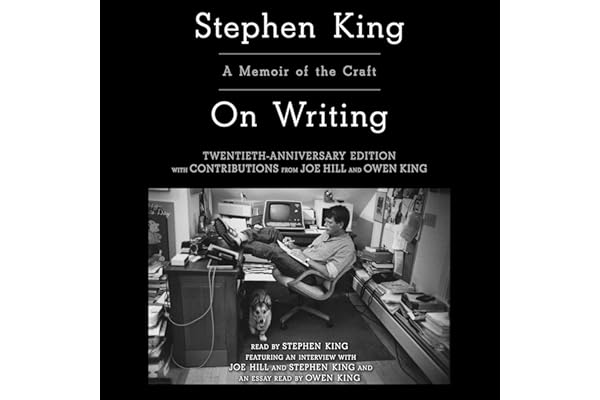
On Writing: A Memoir of the Craft

On Writing: A Memoir of the Craft


Price: $17.05
4.7/5

(19,908 reviews)

What Customers Say:

  • This is a must read
    This is a must read for anyone even considering being any kind of writer, even if you aren’t going to publish. SO many tidbits of information. This was first given to me to read as I was writing my first book, Then I bought my own copy.
  • Best writing book you can ever buy
    I’ve read this book so many times over the past 20+ years the book fell apart. I just bought a new copy, so I can read it another 20+ years. If you’re serious about writing better, buy it.
  • A delightful read
    This is a delightful “how I became and behave as a writer” memoir. It’s a page turner because King is a master writer but… how-to advice? This book is not for the newcomer.King demystifies the process by encouraging us to lean on what we know, but that advice only gets a new writer so far. He does share his expertise on some elements of the writing process, but again, this isn’t a manual for newbies.This book is entertaining and a wonderful glimpse into his process.
  • A Must-Read for Writers …
    especially since it is required reading for my Creative Writing class! On Writing by Stephen King is part memoir and part master class, blending personal stories with practical advice on the craft of writing. King’s approachable style makes even the toughest lessons feel accessible, and his honesty about both his successes and struggles keeps the book grounded. The sections on tools, discipline, and the value of reading widely are especially useful for aspiring writers. I appreciated the way he shared vivid memories from his life that shaped his voice and career. This book is both inspiring and practical, a valuable resource I will return to again and again.
  • Stephen King is my hero, and this book is a treasure
    This is one of my new most favorite books, ever. I adore it so, so much. *ADORE* it. It was an absolute delight to read how Stephen King became the author he is now, and get the jokes that only writers would understand. It was comforting to see that he has struggled with many of the same things that I have as a writer and how he has overcome it all through a wonderful, optimistic, “never give up” attitude, with faith in his love of writing.I absolutely adore his honesty and how genuine he is. I remember going to a so-called writing “Masterclass” taught by a so-called “pro” and his advice was NOT centered around the craft of writing—it was centered around money. He told everyone to lie about how they got their writing ideas, to embellish it, make it something magical. “And if you want to sell more books,” he said, “write from the perspective of a man. People prefer books where the main character is a man.” And I thought, this is terrible! That’s not how writing works! You don’t twist things to fit other people’s expectations, that’s just wrong! Where’s your integrity?! Where’s your love of discovery? Of the characters?Anyway, reading this was worth FAR more than that ridiculous class. Stephen King’s whole foundation is that you write because it makes you happy. If you write to make money, you’re just a monkey. You write what’s honest. You be TRUE to your story and to the characters regardless of their gender, race, sexual orientation, etc. (this shouldn’t have to be said, what’s the matter with people?)—you be true to the story you’re unearthing! I literally shouted, “Yes! Exactly!!” so many times while reading this book. It left me with so much hope. His advice is absolutely *priceless.* I marked several passages and I know I’ll be returning to this book again and again.I read this at a time in my life when I needed it most—funny how that happens. You know those moments that completely derail your mind, and you feel like you’ve been thrown into the middle of a deep well in the dead of night, one that smells of decay and death and of the blood from your head wound. And since the rocks are covered in slime and moss, every time you try to climb out, you slip and fall back in. And since you’ve never been thrown in a deep well before, you wonder if any of it is real—maybe you’re dreaming. And when you finally realize you’re not dreaming, you feel so much pain that you go numb. How exactly are you supposed to be feeling, again? Because at the moment you don’t feel much at all, even though tears are streaming down your face. And then you wonder what the protocol is for this situation. Is there a manual somewhere?You know those moments? I hope not. I’m so sorry if you do. So very sorry.Anyway, so—as you’re in that deep, dark well and wondering how to keep your head above water until you make it out, you happen to be listening to Stephen King read about how he was hit by a van. When he was in need of something to keep his head above the waters of pain and despair, his wife set up a space where he could write comfortably while recovering from his severe injuries. And you hear him say, “Writing is not life, but I think that sometimes it can be a way back to life.”And then you burst into tears, because you know that’s the answer you’ve been looking for. That’s how you’re going to make it. Because, as he says:“Writing isn’t about making money, getting famous, getting dates, getting laid, or making friends. In the end, it’s about enriching the lives of those who will read your work, and enriching your own life, as well. *It’s about getting up, getting well, and getting over. Getting happy, okay? Getting happy.*”Yeah, seriously. Stephen King is my hero. He really is. He gets it. Writing is healing. And this book is a treasure.So write on.
  • Stephen King Lives and Writes Through Situations
    My primary writing project during the past year has been to write a memoir. Being new to the genre, I started by publishing my father’s memoir, enrolled in an online writing course, read numerous writing books, and reviewed a few good memoirs. Stephen King’s book, On Writing: A Memoir of the Craft, touches on each of these activities.The breadth of this memoir comes as a surprise—what is a memoir of a craft anyway? King divides his memoir into several parts, including:• C.V. (17-101).• What Writing Is (103-137).• On Writing (141-249).• On Living: A Postscript (253-270).• And Furthermore, Part I: Door Shut, Door Open (271-284).• And Furthermore, Part II: A Booklike (285-288).• Further to Furthermore, Part III (289-291).His chapters are preceded by three forewords and, in spite of its length, this memoir reads quickly—but not too quickly. Still, the breadth of this work comes from the way that King weaves his life and his craft together—a visitor to the King house might be advised to forbear exploring the closets! What the heck; let’s explore.King is an author and a household name. He has written numerous (35+) books, many of which have also appeared in film. As an example, his breakout work, Carrie, sold first as a paperback novel (1973) and was released three years later as a horror film.Interestingly, Tabitha, King’s wife, rescued an early manuscript of Carrie from the trash, as King recalls:“I had four problems with what I’d written. First, … the story didn’t move me emotionally. Second, … I didn’t much like the lead character. Carrie White seemed thick and passive, a ready-made victim. … Third, … [I] was not feeling at home with either the surroundings or my all-girl cast of supporting characters. … Fourth, … the story wouldn’t pay unless it was pretty long. … I couldn’t see wasting two weeks, maybe even a month, creating a novella I didn’t like and wouldn’t be able to sell. So I threw it away.” (76-77)But, confronted with his Ideal Reader (Tabitha) telling him that this manuscript had promise, King went back and gave Carrie his best shot.This notion of an Ideal Reader is interesting. King writes for his wife, Tabitha, who happens also to be an author, which seems most fortunate because she can articulate her opinions to King in actionable language. King explains:“Call that one person you write for Ideal Reader. He or she is going to be in your writing room all the time: in the flesh once you open the door and let the world back in to shine on the bubble of your dream, in spirit during the sometimes troubling and often exhilarating days of the first draft, when the door is closed.” (219)King sees the Ideal Reader as particularly helpful in judging story pace—“the speed at which your narrative unfolds”—and the details to include in your backstory—“all the stuff that happened before your tale began but which has an impact on the front story” (220-223).Part of the back story in King’s memoir evolves into front story in his postscript where he describes in detail his experience of being run over by a Dodge van in June of 1999, while walking down a country road in rural Maine (253-255). This story of his near-death experience might have been just an interesting aside, except for the fact that King had motivational problems in finishing this memoir back in that summer (265). I suspect that his life story suddenly became a slightly higher priority, having been thrown 14 feet in the air (259) and improbably lived through the experience.Before I wrap up this review, let me make one more observation. King has an interesting view of plot. He describes plot as too big a hammer (a jackhammer) for normal use by fiction author and he prefers to motivate his characters through stressful situations (164). If you believe that we act out of our identities, then no two characters will respond the same way to a given tricky situation. How a story evolves out of a situation is therefore interesting and potentially surprising because people discover the character in themselves as they are challenged by life’s situations—we are ultimately strangers to ourselves; that is, until we are not. The thrill in the thriller is therefore hard to duplicate with a plot-line where the author already knows where the story will go and how it will get there—it is better to scrape the plot and discover the character the same way that a reader might. Therefore, King looks for strong situations and explores interesting what-if scenarios to challenge his characters and writes intuitively about how they respond (169).Stephen King’s memoir, On Writing, is an interesting and helpful book for wannabe and experienced authors both, because he explores both writing and the writing life. Film buffs might also read this book to garner the backstory on his films, many of which are now cult classics. Personally, I read this book mostly because I like to read and love to write—perhaps, you do too.

On Writing: A Memoir of the Craft is one of the best-selling products with 19908 reviews and a 4.7/5 star rating on Amazon.

Current Price: $17.05

#6

The Coddling of the American Mind: How Good Intentions and Bad Ideas Are Setting Up a Generation for Failure

The Coddling of the American Mind: How Good Intentions and Bad Ideas Are Setting Up a Generation for Failure


Price: $15.75
4.7/5

(9,840 reviews)

What Customers Say:

  • understanding changing our children’s educational systems
    My first thoughts after reading this book were, “I am glad I am no longer an active college professor: I never could walk on eggshells!”And as Lukianoff and Haidt well present, college professors, today, are walking on eggshells. Many are afraid to live up to their university goals of teaching the truth as they see it. Furthermore, they are afraid to support their fellow professors who do try to teach honestly for fear of retribution.But let’s back up: this book is not really about professors: instead, this book started as a serious observation that there is a rising rate of teen depression, anxiety, and suicides. But in the investigation of this problem, Lukianoff and Haidt discovered that this is but one of the outcomes. Among the other outcomes were the polarization of American politics, social injustices, and suppression of free speech, particularly on college campuses. And while Lukianoff and Haidt posit that these situations started in 2013 and continue today, I saw evidence of what is in the book as early as 2008 and perhaps even earlier at a state university. In other words, these didn’t just start with the “iGen” children coming of age at this time.Greg Lukianoff and Jonathan Haidt are well qualified to make such observations. Greg Lukianoff is the President of FIRE, the Foundation for Individual Rights in Education. He has served in this position for more than a decade. Thus, he has been a keen observer of the challenges that people have had to face in American education. Jonathan Haidt is a Social Psychologist and a Professor at New York University. As a professor and social psychologist, he has first-hand experience with students as well the ability to understand the dynamics within these populations.Lukianoff and Haidt present the case that there are three great “Untruths” that are underlying our treatment of youth today:1) What doesn’t kill you makes you weaker.2) Always trust your feelings.3) Life is a battle between good people and evil people.Note that the first is a perversion of Nietzsche’s famous dictum: “What doesn’t kill you makes you stronger.” The second is favorite advice of many pop psychologists today. And the third is a simplistic view originating from religion: “us vs. them.” The authors present convincing evidence that these “Untruths” are active and lead to bad ideas of how to treat children.One of the predominant themes, in this book, is that Cognitive Behavioral Psychology, CBT, presents valid tools by which to evaluate and rectify the situations which create harm from these Untruths in American society. I very much agree with the authors here. If I were to evaluate today’s political situations, the very distortions that CBT points out are active and frontmost in American polarization.Then Lukianoff and Haidt examine how intimidation and violence originate. A very quick synopsis is the quote they use from Nelson Mandela: “When we dehumanize and demonize our opponents, we abandon the possibility of peacefully resolving our differences, and seek to justify violence against them.” Here, the authors show how words have become defined as violence and the misguided concept that people need protection for their safety against speech that challenges their previously held conceptions. This then makes it possible for “witch hunts” to occur.The features of witch hunts are they arise quickly, there are alleged crimes against society, the crimes are often fabricated, and the proponents of the witch hunts invoke fear into anyone trying to defend the accused. Witch hunts are used to generate mob cohesion and to create a “common enemy” to destroy.As Lukianoff and Haidt show, witch hunts are occurring on US Campuses today in a “call out” mob mentality where the prevailing beliefs are challenged. Internally, it appears that the “call outs” are being made from the left while externally, the “call outs” are being made from the right. It is important to note here that 60% of the professorate is identified as being Far Left or Liberal while only 20% of the professorate is identified as Far Right or Conservative.Some of the witch hunts have been created by the professorate, themselves, in asking for condemnation of a professor who challenges their ideologies. Thus, it suppresses free speech as well as suppresses critical thinking. The witch hunts, particularly at universities where the leadership has been weak, has resulted in both harm to the employment of professors as well in some cases, direct violence to the professors. Other professors who might agree with an “outcast professor” stay silent as they fear the same thing might occur to them.The authors observe a cycle of polarization. A typical “polarization cycle” looks something like this: First, a professor says or writes something that is interpreted as provocative or inflammatory, regardless of what the intent was. Then, an activist retells the story to amplify the outrage. Next, a multitude of people writes angry posts on social media and threatening emails to the professor involved. The college or university administration fails to defend the professor and may take steps to sanction the professor regardless of the rights of the professor. Lastly, people that hear the story distort it to fit their views as confirmation bias. Things are out of control, and each side views the other side as evil, thus negating any chance for de-escalation.“How did we get here?” Lukianoff and Haidt ask this very question. There appear to be six explanatory threads, but the threads do not affect everybody, and even amongst the people affected, the effects are different. The six identified threads are 1) rising political polarization, 2) rising teen anxiety and depression, 3) changes in parenting practices, 4) the decline of free play and the restricted opportunities for childhood independence, 5) the growth of a corporate campus bureaucracy, and 6) a rising passion for “social justice” for major events where the concepts of “justice” have been perverted. These deserve more treatment in this already long review.First, there has been a growing shift towards the left in the college professorate. With the controversial election of President Trump, the campuses have become hotbeds of resistive political activity, and this activity is inflicted on the student bodies. Thus, there is and continues to be “witch hunt” activity in the long practice of universities to bring to campus a diverse set of provocative speakers. The major reason for doing this is to expose the student body to diverse views and to create discussions leading to the use of critical thinking. Conservatives speakers invited on many campuses resulted in violent displays of resistance and then either harassed on campus to prevent them from speaking or disinvited to prevent further violence.Second, the rising trend in teen depression and suicides has fostered an atmosphere of expectancy of depression amongst the student bodies on campuses. This trend is more significant with females than males, although very recent statistics show a sharp upturn for males as well. Much of this is attributed to the use of social media, which projects a distorted view of appearances and reality as well as creates in people the feeling of being left out of various activities. There also is a feedback mechanism at work here: students are more likely today than in the past to seek out mental health counselors for anxiety. As the mental health bureaucracy processes these visits, it may well suggest symptoms of mental unhealth. This is expanded on in the fifth thread.Third, parents have developed a fear of letting their children have unsupervised play. In part, some of this was caused by the highly publicized child abductions. Another factor in this has been the passage of child protection laws and the arrests of parents under those laws for letting their children be unsupervised. A culture of “safetyism” (that is, the child must be totally safe at all times,) has been built up and reinforced. There has been the observation that children seem to be growing up slower than in past years with regards to maturity. There are class distinctions: parents of the upper middle classes have the resources to involve their children in sophisticated activities such as music and art lessons. In the meantime, parents of generally the lower classes have subjected their children to adversity and possibly uncaring relationships as the parent struggle in their daily lives.Fourth, the decline of free and unsupervised play has resulted in children less competent to face the world as they age. Children are not able to take small risks and learn from them. Children spend more time on mobile devices than in engaging in physical and social experiences. The socialization of children has suffered. Children no longer have the opportunity to solve small disputes without parents or other adults being involved. They now rely on “third parties” to take over when a situation arises where they may be disagreements.Fifth, the bureaucracies of universities and colleges have greatly expanded the enforcement of the culture of safetyism. As an example, presented by Lukianoff and Haidt, a student visits a counselor for anxiety. During the visit, the counselor makes a leading statement, “Oh wow. People feel very anxious when they are in great danger.” The student now is being led to perceive danger. But this is not the end of it. The counselor then doing their required diligence under the campus rules reports to the Dean of Students that there was a cause for a visit. The Dean then sends a note to the student “I received a report that others are worried about your well being. … you are to refrain from discussing these issues with other students and use the appropriate resources listed below. If you involve other students … you will face disciplinary action. …“ A fictional example? No, it happened on a campus (references to it are given in the book.)Universities are big business today, generating over a half trillion dollars annually. To support this revenue, they have created bureaucracies to perform research, education, fundraising, (who here hasn’t received a fundraising letter from their alma mater?) branding, marketing, and legal compliance. Students are considered to be “customers” with all of which that connotes. They are sold a product. “The customer is always right,” so that students are invited by the university to author their educational experiences according to their desires rather than towards the need of the education purportedly being received. As a result, the university overreacts as in the example above. In demands to reduce dissension on campus, (under the thread of movement towards the left,) universities have tried to restrict free speech on their campuses.Sixth and lastly, the concept of social justice has been distorted. There is no widely accepted definition of “social justice,” but it would involve people getting what they deserve (distributive justice) and that the rules are applied fairly (procedural justice.) Social justice when it is consistent with these precepts is beneficial. Such social justice would remove artificial barriers and treat all people fairly. Today, under the various laws created with good intents, such as Title IX requiring universities and colleges to divide universities resources between female and male participants fairly, there are unintended consequences. Social justice is now being applied to the outcomes of groups rather than looking at justice for individuals. It is now considered acceptable to harm people for the desired outcomes. Thus, the distributive and procedural precepts of justice are being violated while reducing the fairness to individuals.Lukianoff and Haidt propose a large number of fixes to these problems under the title, “Wising Up.” Most of these are direct and logical consequences of the six threads discussed. The universities and colleges have a lot to do to clean up their cultures. Lukianoff and Haidt are optimistic that they can do the work needed. Probably the best recommendations are, 1) reduce child access to social media in both time and type, 2) Allow children the freedom to play and develop their socialization skills, and 3) get rid of identity politics in the nation as this is fueling extremism towards both the left and right.
  • Excellent accessible cultural analysis – A must-read!
    What is happening on the college campus? Is it really as bad as the news stories report? What can be done about it? Jonathan Haidt and Greg Lukianoff have put together a book to help. The title is long enough to make a puritan blush, but it certainly sums up the message of the book: good intentions and bad ideas can do a lot of damage. The book was born out of a 2015 article written for the Atlantic by the same title (You can read it here). This is the second book by Jonathan Haidt I have reviewed. The Righteous Mind here. This book is not a screed against the “kids today” and how we just need to get back to the good old days. Haidt is a moral psychologist who works as a professor at NYU. Lukianoff is the president of FIRE (Foundation for Individual Rights in Education) which focuses on defending First Amendment rights in higher education. Both men independently noticed some disturbing trends which led them to co-author their initial article. Afterward, they decided to put their research into a book to delve deeper into the problem and offer solutions. The book is divided into four parts:Part 1: Three Bad IdeasThe authors explore three key bad ideas which seem to be accepted more and more in society:1) Kids are incredibly fragile.2) We should always trust our feelings.3) Life is a battle between good and evil people.These ideas are bad because they are false. First, children are anti-fragile. They are not like glass which shatters. Rather they are more like a muscle that gets stronger when tested. This is not to say trauma is acceptable any more than we would say an athlete getting injured is getting stronger. The point is that kids are stronger than we think.Second, the problem with always trusting our emotions is that we can be easily fooled. We lose the ability to have a healthy confrontation because we stop caring about someone’s intent and only care about their impact on our emotional state.Third, when we boil relationships down to only a conflict between good and evil people we will not be open to compromise or even listening to the other side. If I think my opponent is basically Hitler then I am not going to reason or persuade him. I am going to fight him.These three key ideas are being taught and reinforced in our education system, entertainment, and social media. The problem with these ideas is not the intent behind them which is protection and the betterment of society. The problem is that these ideas in action make everything worse and actually do the opposite of what they intend: we become more fragile, more angry, more stressed and anxious and so on.Part 2: Bad Ideas in ActionThis section catalogs cases where these bad ideas were put into play. The authors are careful to note that events are not indicative of every college campus. However, they are present in major universities predominantly on the west and east coasts. The authors review some of the riots that occurred in recent years on college campuses as well as the march in Charlottesville. They examine the nature of intimidation and violence that is trending in the news. Then they look at why our society is so prone to witch hunts and the importance of viewpoint diversity.Part 3: How Did We Get Here?This section was the most emotionally difficult part of the book for me. The authors dissect how we arrived in this situation focusing upon polarization, anxiety and depression, the decline of play, the rise of safety policies, and the quest for justice. They examine the influences of social media, screens, overprotection, and misguided efforts to achieve social justice. This section is not blasting those who want justice, school administrators, parents or children. The authors are interpreting the data in terms of “six threads” that together help explain how it is we arrived in our present state.Part 4: Wising UpAgain, the book is not just old men yelling to protect their lawns. The authors present solutions along three lines: families, universities and society. They encourage parents to allow their kids to take calculated risks while resisting the urge to jump in as soon as they struggle. The authors talk about teaching children how to cope with disappointment and pain. They strongly recommend limiting screen time. There are more solutions, but if you want to know them you should read the book!REFLECTIONSThis book came out at the right time for me as I had just finished reading Haidt’s The Righteous Mind. I also watched the news and was actively wrestling with my own use of social media. Normally it takes me less than five minutes to fall asleep at night (apparently I’m overtired). Yet there was one-night last spring (2018) that I couldn’t go to sleep because I was so angry about things someone I didn’t know said on social media. My mind wouldn’t rest as I rolled over what my response would be to this person and how I would show them how wrong they were. I think it was around 1:00 am that I finalized my brilliant rhetorical salvo I would unleash in the morning. However, when I woke up I knew something was wrong with me. I needed to back off social media. Last fall I even deactivated my Facebook account. I didn’t even self-righteously announce it beforehand! The point is that I was primed to read this book.This book thoughtfully and fairly engages with serious issues in our society which will get worse unless we commit to making serious changes. I appreciate the authors’ desire not to castigate or vilify anyone. They want to make things better. They assume that the people involved in these issues on the campus are acting in good faith. This allows for thoughtful analysis and generous criticism that actually contributes to the conversation. My only criticism is that the final three chapters which present solutions are very short. Perhaps in time, the authors can present how they and some of the groups they point to as good examples are handling these modern challenges. Also, this book cannot give us the reason why we ought to live this way except for the general improvement of society. For Christians, grace and holiness are central for how we interact with others (or at least they should be!). There are core reasons why we are compelled as followers of Christ to live differently than society. As a holy people (set apart by mercy) we do not participate in that which is abhorrent to God. But as people who have been saved by grace, we explain our hope and commitment to Jesus with gentleness, respect, and love. This is not really a criticism. It is an acknowledgment of the limits of a non-Christian book.I was challenged by this book to consider how I am raising my children particularly in terms of allowing them to take risks and giving them the room to fail. This book also led me to reflect on how I interact with others. I found myself reading this book saying, “Yeah, the Bible says we should do that…” We know it yet we don’t do it. For example: thinking the best of others or at least giving them the benefit of the doubt. Or how about not be hasty with our words in person and especially online? I seem to remember something about taking every thought captive. A good sign to me that this is a good book is that you leave it hopeful that we can do better or at least how I can do better.THE BOTTOM LINEI said in my review of The Righteous Mind that I would likely recommend this book over that one. That turned out to be true. This book does a wonderful job explaining current trends and what can be done about them. Positively there seem to be reasons for hope that things are changing already on the college campus. While this is encouraging, the pressure to unnecessarily self-censor seems to be increasing and there remains a cause for concern. This book is well written, engaging and challenging. It is not a Christian book (I’ma pastor) so don’t expect biblical answers or a biblical worldview. I do recommend this book if you are looking for an insightful cultural analysis of the rise of terms like “trigger warning” and “safe space” and the current state of social discourse in America. Overall, an excellent read and well worth your time.
  • Insightful & Thought-Provoking
    I found this book to be thought-provoking and a timely read. The authors raise important questions about how we’re shaping the next generation’s resilience and critical thinking, as well as approaches to differing viewpoints. Some sections felt a little repetitive but overall a good reflection book on education and social discourse.

The Coddling of the American Mind: How Good Intentions and Bad Ideas Are Setting Up a Generation for Failure is one of the best-selling products with 9840 reviews and a 4.7/5 star rating on Amazon.

Current Price: $15.75

#7

Say What You Mean: A Mindful Approach to Nonviolent Communication

Say What You Mean: A Mindful Approach to Nonviolent Communication


Price: $15.75
4.7/5

(1,028 reviews)

What Customers Say:

  • Excellent Resource to Deepen Communication
    I am a veteran educator and rely on my communication skills to work with students, families and administrators. Delivering messages so they can be heard, and listening to others so they can feel seen and heard is a huge part of my professional existence.If you are interested in deepening your communication and apply mindfulness, self awareness (cognitive, affective and somatic) and concepts from Rosenberg’s Non-Violent Communication, this book is highly recommended.This is a VERY well written book by Oren Jay Sofer. The concepts (Oren refers to them as principles) and teachings are well structured and organized so that you are able to process the concepts multiple times during the book to really grasp and let them sink in. Oren shares contemplative practices that support the communication principles and at the end of the chapters, recaps with bullet points and with mini Q and A’s, further exploring the “what ifs” when applying the practice/principles. The list of Roadblocks to Communication was enlightening as there were some in there that didn’t appear as roadblocks, but looking deeply can get in the way of connecting with others.There is much wisdom and heart in the principles. His “pairing” of Practices (mindfulness related to help build presence, relational awareness, curiosity and care) to apply the principles in communication with others were helpful when I first started. It gave me a felt experience of what my body and mind needed to be when trying out the principles with others.I also enjoyed his direct and accessible style of writing about the concepts/principles, real life anecdotes (relatable, makes all of us Human!) and the meditation practices (guided online) that come with the book.A great book to read with a partner to embark on a journey to strengthen communication, for book clubs or summer reading for those who work closely with people and want to deepen connection with others through empathy and curiosity.⭐️⭐️⭐️⭐️⭐️
  • The Best Resource for Conscious Communication and Building Better Relationships
    This is one of my favorite books for learning effective communication. Oren so masterfully blends mindfulness with Nonviolent Communication, offering principles that are both practical and deeply conscious. As one of my favorite mindfulness teachers, his insights on conscious communication have been transformative for me personally and professionally.As a psychologist, I often recommend his work to my clients because of its clarity, accessibility, and profound impact. Whether you’re seeking to improve platonic, romantic, professional, or even familial relationships, Oren’s teachings provide invaluable tools for creating more authentic and compassionate connections. I’m so grateful to have learned (and continue learning) from Oren—his teachings are truly a gift.
  • Pragmatic and helpful, you will see results
    Initially I bought this book because, as a therapist, I thought it would be a nice supplement to the interpersonal effectiveness skills unit I was teaching in my DBT group. I specifically wanted to use a short excerpt on judgment and assumption in communication so I went directly to that section of the book and copied a few pages, but I honestly never intended to read the rest of the book. A few months later I saw it on my bookshelf and decided to give it a chance and I’m so glad I did!! This book is a gem. The beginning of the book guides the reader into an exploration of their own personal and unique communication patterns, normalizing the human tendency and desire to get our needs met at any cost, and provides this insight in a gentle spirit of non judgment. The author assists the reader in recognizing and identifying their own ineffective, and sometimes damaging, communication patterns. The next part of the book introduces a plethora of communication techniques and skills and demonstrates how to utlize and implement these skills in a way that honors each persons feelings and meets their unique relational needs. The skills the author provides create a distinct map that one can utilize to weave effortlessly thru difficult conversations and stressful interactions. I cant emphasize enough how helpful and pragmatic these skills are, and with practice, they have a noticeable impact on relationships and interactions. The book is academic yet it is also an easy and enjoyable read. The sheer number of skills introduced can feel overwhelming at times, but that is just a minor criticism. I have one suggestion and that would be to include, at the end of the book, a list of all the skills taught, a ranking of importance, and a formula to assit with implementatiom of these skills, such as, ” start with this skill and then, when comfortable, add this skill, and so on.” All and all, I am so happy to have found this book and i would definitely read other books by this author.
  • Communicating is complex!
    This book is a lot of information to digest – I think I will need to do a second reading of it to get all the little wisdom nuggets it provides. Even though I’ve only read it once though I feel it gives me a basic set of tools to practice and effectively communicate even in stressful situations.I look forward to practicing these new tools!

Say What You Mean: A Mindful Approach to Nonviolent Communication is one of the best-selling products with 1028 reviews and a 4.7/5 star rating on Amazon.

Current Price: $15.75

#8

Mother Tongue: The Surprising History of Women’s Words

Mother Tongue: The Surprising History of Women


Price: $15.75
4.4/5

(99 reviews)

What Customers Say:

  • Everyone–male, female, other–should read this
    Wow. A radical feminist friend recommended this book. It is very informative, not just of word origins. I kind of thought I knew already, for example I try not to use the word hysteria, but now I have a much better understanding of how pervasive in English are the negative, dismissive, and deriding terms about women, their parts, and emotions. The list could go on and on.All that said, it is a good read and, more importantly, an informative read. The author makes it humorous where possible and I walked away more aware of my native language.
  • Surprising history
    Very readable history and informative.
  • Lot’s of Good Information, but . . .
    There is a lot of good, interesting information in this book, BUT, I got the impression from the description that this was an academic study of word origins specific to words related to women. There is a lot of that but there is also a whole lot of obvious slanted opinion in the book as well. The author is decidedly slanted in her descriptions of some men and her descriptions of some of the words.Just as not all women are mild-mannered, well-behaved, domestic women, neither are all men domineering, self-serving patricians. The author has a definite tendency to bend that direction.Be that as it may, I found the book interesting. PEOPLE have a long ways to go yet to accept each other with all our foibles, all of our preferences, all of our talents. I have no problem with women dressing in a way that suits whatever she’s doing at the time. I DO have a problem with people insisting that just because an individual prefers to live in a manner that others consider to be the opposite of their physical gender, then they should medically change that gender. I understand that some people will never feel comfortable in their life without that change, but it doesn’t solve all problems and creates others to deal with. Can’t we all just “BE”? Guess not……
  • Great book about words and history of women
    As a non-native English speaker, I find this book a whole new world to understand. I wish there were a book like this for the Spanish language! I loved every page, and it’s full of little stories that you can use in many contexts: work, social gatherings, with friends, and family. I loved it!
  • Great book!
    I love this book! I am usually not a fan of audio books, but due to the length I opted for an audio book to listen to when I’m driving, cleaning, etc. It is so informative and interesting to learn about womens history and the derivation of words and meanings of words, and how they are broken down. I would definitely recommend this book to anyone who is even slightly interested, you won’t be disappointed. I imagine it would also make a great gift for someone!
  • Loved it!
    It would be really easy to make a book feminist linguistics dry and boring. Jenni Nuttall certainly did not do that.Reading Mother Tongue gave me the same feeling is nerding out with my best friend over history and beers- interesting, funny, relatable, and something I didn’t want to walk away from. I was highly impressed with the wealth of knowledge Nuttall incorporated into this book, as she connected the history of words related to women with a huge array of written works from the past 2000 years. Then, she skillfully connected them to present-day language and issues facing women. The book brilliantly balanced academic writing with jokes to lighten the tone, making it much more bearable than so many history books I’ve read in the past. I highly recommend for anyone that is interested in history, linguistics, or feminism!Thank you to NetGalley and the publisher for providing me with an ARC of this title!

Mother Tongue: The Surprising History of Women’s Words is one of the best-selling products with 99 reviews and a 4.4/5 star rating on Amazon.

Current Price: $15.75

#9

Get Out of Your Head: Stopping the Spiral of Toxic Thoughts

Get Out of Your Head: Stopping the Spiral of Toxic Thoughts


Price: $13.78
4.7/5

(24,533 reviews)

What Customers Say:

  • Christian women’s book on taking thoughts captive
    Read this with my women’s Bible study group and it was an excellent book for women of all different ages and backgrounds. I don’t think I’m an anxious person, but who doesn’t fail daily at taking their thoughts captive? Even menial, insignificant thoughts. Any worry or concern in our lives can become a track that keeps on playing and causes us to spiral into unhealthy emotions, behaviors, relationships and lifestyles.This book challenges the reader with questions to analyze their thoughts and to be real with oneself, tools to take those thoughts captive, and a vision for a new, better, more peaceful life when thoughts are surrendered to Christ. She uses humor, relatable stories, and testimonies of real women to drive home the concepts in a feasible way. I highly recommend to all women, no matter how big or little the stresses in your life feel. There is a better way to live!Excited to start the Bible Study and conversation cards by the same title which goes through Philippians.Note: the Bible study does not coordinate with the book in a way that is read at the same time. The author does offer a free book club guide for the book itself, including links to her accompanying podcast, on her website.
  • Must read and not just for women.
    This book is a great read and will conects with your personal experiences. The way she explains how to apply changes to your life and grow. Its speaking plain language not over your head. Highly recommend.
  • A Life-Changing Journey to Freedom from Toxic Thoughts
    “Get Out of Your Head: Stopping the Spiral of Toxic Thoughts” by Jennie Allen is an absolute game-changer!From the moment I dove into the pages of this remarkable book, I knew I was embarking on a life-changing journey. Jennie Allen’s words have a way of resonating deep within your soul, as if she’s speaking directly to you, guiding you through the tangled maze of toxic thoughts that can often consume our minds.What sets this book apart is its authenticity and vulnerability. Jennie shares her own personal struggles and triumphs, creating an atmosphere of trust and relatability. Through her stories, she brings the concept of toxic thoughts to life, allowing readers to recognize and confront their own patterns of negative thinking.The practical guidance and tools provided in this book are invaluable. Jennie offers practical strategies and biblical wisdom to help break free from the cycle of toxic thoughts. She encourages us to renew our minds, embrace the power of gratitude, and discover the true identity and purpose that lies within us.The writing style is engaging and conversational, making complex concepts easy to grasp and apply to our own lives. Jennie’s passion and genuine desire to see readers experience freedom from toxic thoughts radiate from every page. It’s evident that she truly cares about the well-being and transformation of her readers.”Get Out of Your Head” is not just a book; it’s a lifeline for those trapped in the clutches of negative thinking. It’s a reminder that we have the power to reclaim our minds and live a life of joy, peace, and purpose.In conclusion, I wholeheartedly recommend “Get Out of Your Head: Stopping the Spiral of Toxic Thoughts” to anyone who struggles with negative thinking, self-doubt, or anxiety. This book will inspire and equip you to break free from the chains of toxic thoughts and embrace a life of renewed thinking and abundant living.Disclaimer: I purchased this book with great anticipation and have been profoundly impacted by its message. Jennie Allen’s words have transformed my perspective and inspired positive change in my life. This review is a genuine reflection of my experience with the book and the profound impact it has had on me.
  • GREAT BOOK. HIGHLY RECOMMEND
    WHAT A WELL WRITTEN BEAUTIFUL & INSIGHTFUL BOOK. IT’S A GREAT READ & ALSO A GREAT MINISTERING TOOL. HIGHLY RECOMMEND.
  • Get Out of Your Head
    Circumstances often make us feel like we are out of control. And often, when life spirals out of control, our thoughts soon begin to follow. For me, when my thoughts get entangled, I often feel out of control and feel like I cannot get out of my head.The constancy of this spiral has me researching and learning more about brain science. This effort to counteract the never-ending spiral has taught me much about how the brain works. Over the past few years, I’ve dug into books by neuroscientists Dr. Ski Chilton and Dr. Caroline Leaf. This year, Jennie Allen has added another voice to the conversation in her latest book, Get Out of Your Head.While not a neuroscientist, it was easy to see in reading Get Out of Your Head that Allen had done a significant amount of research. Other books I read focus more on the scientific reasons why the brain functions the way it does. Here, Allen focuses on how to take thoughts captive. Allen relies on scripture to provide the backbone and lifeline for taking thoughts captive. Without the written word of God, there is no hope to take control of the spiraling thoughts in our heads.Get Out of Your Head and Find FreedomGet Out of Your Head continues Allen’s message of freedom that she preaches often. She reminds the reader that renewing the mind is possible. It’s possible because God has told us that with His help, we have the power to renew our minds.Allen breaks down the lies the enemy tries to throw at us and helps the reader rebuild the truth. As each lie is broken down, the reader is given tools and truth that will help take thoughts captive in order to take control of the mind.My ThoughtsAllen has written a very approachable book. Even if you think you’re not struggling to take your thoughts captive, I recommend reading Get Out of Your Head. Allen gives such an approachable understanding of how thoughts get stuck in our minds. And tangible instructions for what to do to help change these thoughts to find freedom.I found Get Out of Your Head to be a good read, but because I’ve read other books (all by neuroscientists) on this topic, I found the reading a bit light for me. However, if this is your introduction to how the brain functions, this would be a great start for you!When I first wrote this review, it was well before the coronavirus pandemic took over the world. In these anxious and uncertain times, Get Out of Your Head would be a good book to dig into as we face the unknown future ahead of us.I received a copy of this book from the publisher. This review is my own, honest opinion.

Get Out of Your Head: Stopping the Spiral of Toxic Thoughts is one of the best-selling products with 24533 reviews and a 4.7/5 star rating on Amazon.

Current Price: $13.78

#10

Fluent Forever (Revised Edition): How to Learn Any Language Fast and Never Forget It

Fluent Forever (Revised Edition): How to Learn Any Language Fast and Never Forget It


Price: $29.66
4.6/5

(3,244 reviews)

What Customers Say:

  • Engaging and Practical — Perfect for Language Learners on the Go
    I loved this book! It’s clear, motivating, and full of practical strategies that make language learning feel achievable. I’ve been listening during my commute, and it’s the perfect companion — easy to follow yet packed with useful insights. I’m especially excited to explore the author’s online resources to put the techniques into practice. Highly recommend for anyone serious about learning (and remembering) a new language!
  • Pathway to learning a language
    I am trying to learn Polish and I’m hoping to implement these strategies. Clearly written with a slight sense of humor. I have tried and struggled learning other languages in the past and I hope this method will help.
  • Helpful
    This is a good find for anyone serious about language learning. After bumbling around I had probably come up with about two thirds of the same sort of process described here, and it has certainly saved me a lot of trouble in finding websites (I never was very good at searching the net). It’s always nice to have help from someone who has been before you. I really am appreciating the section on using the free Anki flashcard software which I had not known about. It’s probably the best free electronic flashcard program out there (at least of the ones that work with Windows), that I know of, and the instructions are helpful.I absolutely agree with the author’s basic premise that one cannot learn a language properly without knowing the sounds. Instead of paper flashcards, you can use the electronic ones and even add audio clips. This, along with the Microsoft keyboard Layout Creator, is enabling me to become paper-free and has saved me from a roomful of stacks of paper and notebooks already. (The dictionaries take up quite enough space, thank you!) The MSKLC program enabled me to make one general keyboard for Western European Languages by defining “dead keys”, so all I have to do now is switch between one multilingual keyboard and the one for my non-Western language. I mention this because he does not address typing issues in this book, and it is a necessary consideration, especially (for example) when faced with the possibility of having to spend months learning how to write a right-to-left script, and considering that the handwritten forms in some languages differ significantly from the printed ones. And good luck trying to find a textbook on how to do that longhand! So the typing issue is very important.He also discusses using the IPA. I would also recommend the IPA Handbook for anyone looking for the computer codes for the IPA symbols. But for those who have trouble going to the new technology, he also describes how to set up regular paper flashcards, too. According to the author, if one uses paper flashcards, knowing how to use the IPA is even more important.Although the book seems a bit wordy and possibly repetitive at first, it is organized to get the concepts across, which are needed to understand WHY some methods work and others don’t.. I really think a young person in school could benefit from a lot of the information here and use it to make more effective use of his study time. The core of the book is really about the effective use of a Spaced Repetition System. An SRS system such as the Anki cards can be used for most any subject, not just languages.The book is really a good buy for the money. It appears the author is planning to generate his real income from the language-training packages he is developing for the phonetics for various languages. I cannot comment on those as he is not working on any packages for a language that I am interested in, according to the website. The language-training packages sound like a phenomenally good idea, though, but as far as it concerns anyone not interested in the ones on the list, he would have to do it the hard way and find a really accurate list of the IPA symbols for his language and learn the sounds from one of the various websites that have IPA sound clips. And find some good lists of words paired up for contrasting “Twin” or sounds or “minimal pairs” and hopefully find a native speaker who can record them for you. Which is what the internet is supposed to be good for: helping you find things, — and people.I was introduced to the IPA through “Pronounce it Perfectly in French.” The Barron’s series would work for anyone interested of course, in what they have to offer. So there is a market out there for putting together audio materials for languages other than French, German, Italian, Spanish, Russian, and Portuguese! In the meantime, I guess we have to do it the hard way. This book is, I think, encouraging for a beginner and also helpful for those who have failed attempts at language learning and couldn’t understand why they failed. It certainly helped me when I seemed to have become absolutely stuck in trying to use the internet to find resources for learning my chosen (non-European) language. It certainly gave me a nice boost.
  • Wyner is an Anki-Ninja!
    I’ve been dabbling in learning a second language for some time now, and always seem to lose steam. I had tried various text books, audio courses, and Anki decks that I found in Anki’s database, but never made much progress. That’s where Mr. Wyner’s book came in. I was initially skeptical, but elected to risk the twelve bucks for a copy after I read a guest post by Wyner on Tim Ferriss’ site.In short, it’s worth every penny. Other reviews detail what the book is made up of, so for brevity I won’t include a detailed list. This book’s value, in my opinion, lies in the breadth of techniques Wyner offers the reader. I’m familiar with immersion programs like Middlebury, websites like iTalki, and mnemonic devices, including the PAO system used by memory athletes. However, awareness of such things has only come after years of slogging around on the net, reading books here and there, and talking with professors at my college. Wyner’s book would have shaved years off of my own journey into languages, and he includes many more resources I wasn’t aware of that are worth the price of the book alone (and that’s not even including the FREE resources he links to on his website).Where Wyner truly shines is his mastery of Anki’s software. I have used Anki for some basic vocab stuff before, and had made some flashcards for classes before, but nothing nearly so in-depth as what he recommends. Wyner is truly an Anki-ninja, and clearly one of the beneficent ninjas, as he not only extolls its proper use, but also provides tutorials on how to maximize Anki so that one entry can become up to six flashcards, but also how to make web browsers to the mindless work for you.The icing on the cake is the emphasis on auditory and pronunciation training. By focusing on repeatedly testing minimal pairs (words that are *almost* the same that non-native speakers might not hear the difference between), Wyner asserts that we can indeed begin to hear the difference between speech sounds that we had been unable to distinguish before. He demonstrates how to make Anki cards for this sort of practice, but he’s also in the process of creating “pronunciation trainers” that work within the Anki framework. I don’t mind saying that I’ve pre-purchased the Russian trainer, which will hopefully be out soon.In closing, this book is a great asset for language learners of all sorts. The author wisely avoids getting bogged down in cases, tenses, declensions, etc, as each language has its own unique set of rules to learn. Instead, he brings to light a number of efficient and effective tools that help the learner to spend their time wisely. Having added about a hundred new words into my Russian vocabulary this week through efficient learning, I’m motivated to learn more.

Fluent Forever (Revised Edition): How to Learn Any Language Fast and Never Forget It is one of the best-selling products with 3244 reviews and a 4.6/5 star rating on Amazon.

Current Price: $29.66

Updated: Nov 26, 2025
Data from Amazon.com
10 products

Customer Reviews

5 star
70%
4 star
20%
3 star
7%
2 star
2%
1 star
1%
John D.
★★★★★
March 15, 2024
"Great product! Exactly as described. Fast shipping and excellent quality."

Product Specifications

Brand Amazon Brand
Material High Quality
Dimensions See product details
Weight See product details