Top 10 Best-Selling Law for November 2025

Price: $11.81

Key Features:

  • High Quality Materials
  • Fast Shipping
  • Customer Support
  • Money Back Guarantee

Top 10 Best-Selling Law for November 2025

$11.81

Category:
Secure Purchase
Free Shipping
Easy Returns

Product Description

Danh sách Top 10 Law bán chạy nhất tháng November 2025 được tổng hợp dựa trên dữ liệu thực tế từ Amazon.com. Các sản phẩm được đánh giá cao bởi hàng nghìn người dùng, với điểm rating trung bình từ 4.4 đến 5 sao. Hãy tham khảo danh sách dưới đây để chọn sản phẩm phù hợp với nhu cầu của bạn.

#1

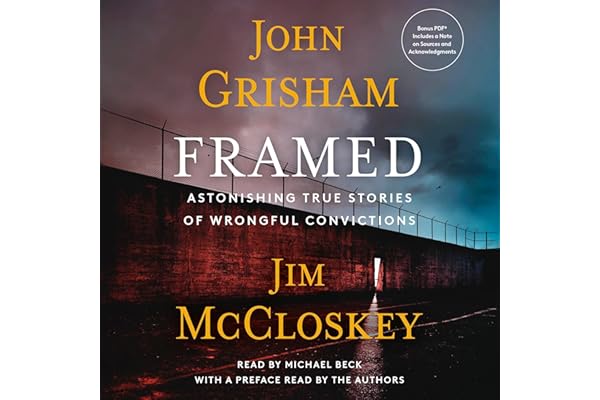
Framed: Astonishing True Stories of Wrongful Convictions

Framed: Astonishing True Stories of Wrongful Convictions


Price: $19.69
4.4/5

(6,892 reviews)

What Customers Say:

  • GRIPPING
    FRAMED – Astonishing True Stories of Wrongful Convictions by Bill McCluskey and John GrishamWell, the title says it. It is a non-fiction book that narrates ten carefully researched and selected stories about people who committed no crime and were either put on life with no possibility of parole or on death row. Were the attorney generals and state lawyers aware of this? Yes. Instead of the presumed innocent until proven guilty situation, we have a justice system establishing their own theory of the crime and finding a presupposed guilty party to fit that theory. Never mind that it is illogical, outrageous and absurd, and only fit for the ungifted fiction writer. And yet, judges accept this without even considering suspicious individuals with strong motives who are right under their nose.Why do that? For political reasons, which is to please an impatient electorate that wants a nation to be safer (when absurdly it gets only more dangerous); sometimes to feed their own egos for fear of public judgement. They sacrifice the innocents for this, bury their conscience and indirectly become murderers themselves.I had my mouth open from outrage and astonishment as I read about a thoroughly corrupt system, and people like you and me doing time, 16 years, 25 years, or being executed. Indeed it is a hard read that may not be your favorite entertainment during this Christmas season, and you may want to wait until next year until you open the book.But thanks to the prose of Jim McCluskey and Grisham’s masterful one, it is gripping and astounding. You tell yourself it’s time to read something else, but it haunts you and you come back. And it should. Whoever thinks capital punishment is fair must go through every line of FRAMED and realize that innocents are killed by a judicial system with no conscience, and that killers go free. Framed will probably become a reference in law school. For my part I am not a law student, but it is not difficult to realize that this is an important book, and I hope that it will lead to the cleansing of our justice system.December 16, 2024
  • Sad Stories
    I am impressed by the hours and hours of research it took to get to the bottom of these stories. It begs the question, if the truth can come out, why now and not before or during trial? I understand partisan judges, tunnel vision detectives and prosecutors and lackluster defense attorneys, but some of these stories are almost like reading fiction – my brain says they had to be made up!! I’m only halfway through the book but had to take a break because none of the stories have very happy endings and I wish in my own heart for true redemption for the innocent not just a pardon after serving decades in prison. It also occurs to me, though possibly just not room in the book to cover, but did any of these police officers/prosecutors/judges ever see punishment for their crimes? As always Mr. Grisham, I never regret picking up one of your books and I think I maybe I have read all of them by now! Thank you.
  • Excellent
    Grisham is,my all time favorite but this book goes beyond. At times I had to put it down over being so sick to what happened to these,people. Total must read and tbs,world needs,more,fighters like these,lawyers!!!!
  • INFURIATED
    Don’t read this book unless you really want to know how messed up our law and order system really is in this country. John Grisham and Jim McCloskey have written a best seller but I can only read small amounts of the book at a time because it infuriates me to think we have people like this who are willing to ruin peoples lives to satiate their own egos. No wonder, they’re just mimicking what they see the leaders of this “wonderful “country we live in. I hope that I never have any need to depend on seeking justice anymore with officers of the law or the judiciary that will fabricate any lie to convict someone. I know I’m referring to a very small percentage of law enforcement et al, but they tend to taint the overall message of this book. The first story in the book really hit home with me as I was born in Norfolk VA and served 20 years in the military. Four innocent sailors serving their country had their lives ruined by the aforementioned criminals serving as DAs and police detectives. If you’re in law enforcement, this book should be REQUIRED reading. And don’t think these accounts are just fabricated. I went back to the original stories This really is a MUST read.

Framed: Astonishing True Stories of Wrongful Convictions is one of the best-selling products with 6892 reviews and a 4.4/5 star rating on Amazon.

Current Price: $19.69

#2

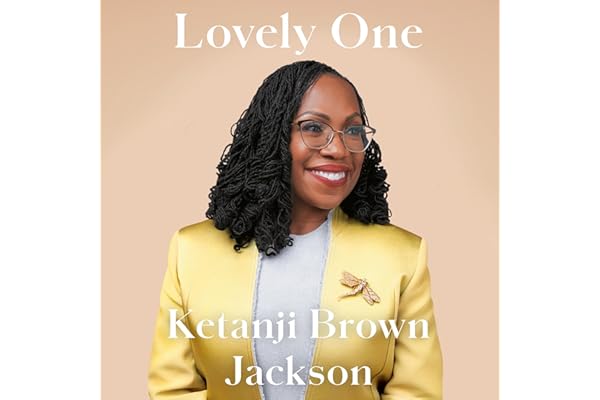
Lovely One: A Memoir

Lovely One: A Memoir


Price: $21.66
4.8/5

(1,854 reviews)

What Customers Say:

  • Inspiring memoir of resilience and possibilities
    Lovely One was so enjoyable to read. It’s a very candid memoir which reflects on determination, love, work-life balance, and most importantly perseverance. Justice Jackson shares the dynamics of her upbringing, marriage, parenting, and career with an openness that is both honest and inspiring. It makes you believe anything is possible.
  • Intimate, Inspirational, A Great Read
    There is so much to like about this very well written memoir, by a woman whose life journey is both an celebration of the American Dream and an inspiration to those who follow in her footsteps. There are the strivings of her ancestors, grandparents who began as sharecroppers, the descendants of formerly enslaved people, and whose courageous life choices made the way forward for their descendants, each generation passing that ambition on to the next. There is the way, at each stage of her life, Ketanji Brown formed friendships, and of groups of friends, friends that helped each other through life’s challenges, and that have lasted a lifetime. There is the love and appreciation for family, and the nurturing that contributed to making her what she has become. There’s the relationship with the man who became her husband, a White man from a very different background, and their two families the merged, making each other stronger, their life experiences richer.We learn of their challenges in pursuit of their goals — she, the law, he, a surgeon. Both extremely demanding, and of how they supported each other in achieving those goals. Lots of give and take, lots of love, lots of respect for the other’s needs. There are the challenges of raising their children, and how they rose to those challenges.This is the most inspirational book I’ve read in years. Strongly recommended.
  • Educated
    This is a great book. I highly recommend this book. This book is about love, romance, education, family, friends, autism, college, marriage, and law. I just got so much from this book. I was always rooting for this couple.
  • Good but flawed for me
    It was a good book in a lot of ways. I appreciated learning about her family background from early 20th century. I think she could have redone swathes of her growing up years. Maybe 2-3 pages of debate team would have been enough for me. I was surprised at how much she felt she needed to say about every award she ever got. I thought most of her discussion throughout the book on being Black was excellent and very appropriate. But she complained many times about never having a single date while she was in High School and she seemed to relate that to being Black. I’m sorry, but that’s ridiculous. I’m European American. Very White. Amazingly I never had a date either until after I graduated from High School. I don’t blame that on being white or being an Army Brat or having acne or being a total book nerd. I don’t blame it on anything. But I ended up marrying a wonderful man when I was 21. I did like reading about her romance with Patrick, her selection of positions that not only matched her interests, but also her goals. Her family life, both her and Patrick juggling the best they could working at very stressful jobs and raising two girls. So, all in all a very good book, but had some flaws.
  • SUPERIOR
    This was our book club choice. Thank goodness she wrote her own story of a decent, interesting and intelligent humanitarian. It is unlikely a future biographer can possibly best her own thorough account.
  • Phenomenal, Justice Brown-Jackson!
    An incredible read!This is very well written and although I have just begun reading this, I can tell you that this is worth it!History in the making and very inspirational for children for sure. My daughters and I are having a great timereading this together in our little own “Book Club”. Based on my own personal experience so far, I would gladly recommend this to other consumers. Outstanding!
  • Interesting and honest memoir of Justice Ketanjie Brown Jackson
    What a delight, Justice Brown Jackson was fortunate to have great parents and grandparents and the desire to make a difference. Her parents were teachers. Her mother later became a principal and her father an attorney. She was class president and excelled academically, socially and was a stand out on the debate team. Drama filled her creative side and helped with her debates and speeches. Her parents taught her to develop her own sense of self-worth, to be strong, to do her very best, and to follow her dreams. When she fell in love and married, she talked about the struggle of being the mother and having to give more in ways for the care of the children due to the nature of her job vs her husband’s who is a surgeon, a professor and is the Chief of the Division of General Surgery at MedStar Georgetown University Hospital in Washington, D.C. He chose to go there so that she could fulfill her dream.
  • Incredible Story!
    Wonderful and in depth life story of the first African American Woman to sit on The Supreme Court. Filled with details that made her rise to the top, told in such a humble way, just so interesting. Many details of behind the scenes explained in lay men’s language, this is one to excite the next generation and let them know anything is possible!

Lovely One: A Memoir is one of the best-selling products with 1854 reviews and a 4.8/5 star rating on Amazon.

Current Price: $21.66

#3

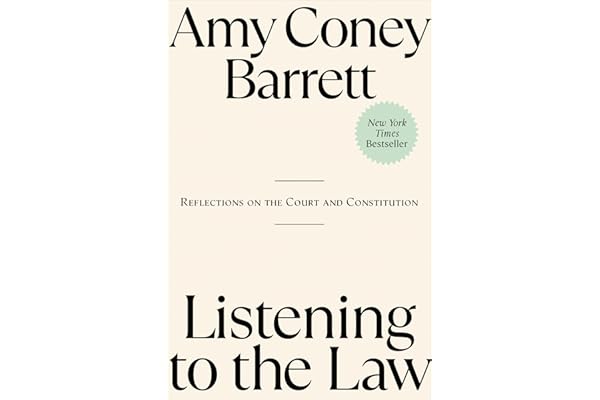
Listening to the Law: Reflections on the Court and Constitution

Listening to the Law: Reflections on the Court and Constitution


Price: $19.63
4.4/5

(553 reviews)

What Customers Say:

  • Insightful and engaging look at the Supreme Court
    I am not a lawyer, nor do I have any legal training. Even so, I have always been interested in the Supreme Court. I have respected it because of its great responsibility to interpret the Constitution, resolve important disputes, protect individual rights, and set legal precedent. I confess that the vitriol of our national politics—including Senate Judiciary hearings for Supreme Court nominees—has diminished the Court’s prestige for me.This book has helped restore my confidence in the Court. Justice Barrett has done a remarkable job weaving together her personal life, understanding of the law, operation of the Court, and judicial philosophy to create an engaging learning experience. This is not a dry legal tome but a personalized guide to the Supreme Court. I was particularly fascinated by the legal reasoning she uses to arrive at decisions.What most heartened me in the book was chapter 3, “Working Together.” In a day of so many sharp political divisions, the following words were inspiring: “Every member of the Court is a person, not a package of ideas. Knowing one another as people fosters collegiality. Toward that end, members of the Supreme Court have long observed traditions, big and small, to knit us together as persons” (p. 42). For example, the Justices regularly eat lunch together with one underlying rule: “no discussing cases” (p. 44). Brilliant!If you want to better understand the Supreme Court in a way that is personal, interesting, and insightful, this is a great book to read.
  • Worth reading, no matter which side of the political spectrum one favors.
    No matter what side of the political spectrum one is on, there is great value in understanding the thinking behind originalism and textualism, first really brought to prominence by Justice Antonin Scalia. In this book, Justice Amy Coney Barrett discusses her life, her career before the supreme courts, as well as several of the prominent cases brought during her current term in office (including Dobbs), and how she used both originalism and textualism to arrive at her decisions.She makes an interesting and clear distinction between the way the justices evaluate laws which need to be weighed against the constitution, vs statutory decisions, which textualists believe is best decided by the actual language of the law, since they can’t read the minds of various congressional interests that created the law.When Barrett was first nominated, I was intrigued, as she does seem to do her best to follow the law, and not her personal feelings, which I believe is a fault shared by both the most liberal and most conservative members of the court. Stil, the justices are human, so when there is anything even close to a tie in their minds, I’m confident they always tip towards the outcome they desire.
  • Informational about how SCOTUS functions – NOT a memoir or tell-all
    This isn’t a book I would have picked for myself, but my book club was reading it so I gave it a chance. It’s healthy listen and learn about views different from my own. I found the book to be a relatively easy read, a testament to the author’s writing style. I expected (perhaps wrongly) to learn more about Justice Barrett; but while she shares some personal anecdotes, the book is more focused on how the court works (without getting into current cases or spilling any tea about fellow justices). Justice Barrett joined our book club (via Zoom) and reinforced that her intent with the book was to educate people about how the court functions. So, if you’re looking for the inside scoop on the current justices/high profile cases or more about Justice Barrett’s life, this book won’t scratch that itch. But if you want to learn more about how the court functions, this book will teach you some things you might not already know. I was left with a better understanding of the guardrails the court works within, even if I don’t always agree with the conclusions the justices reach.
  • Excellent
    I thoroughly enjoyed this book and encourage anyone who is interested in the Supreme Court and how our state and federal governments function, according to the constitution, to read it. I didn’t know much about Amy Coney Barrett before reading this, aside from my own personal skepticism of her based on my prior political biases and views, but I feel like her personality comes through in a meaningful way in this book, and I was personally reassured to learn she is a wonderfully capable justice, a true patriot, and not someone I need to be afraid of.
  • Okay
    I have deep disagreements with this judge, but if you’ve been exposed to her academic writing, it would be disingenuous to deny her intellect.That being said, this might be a good book to read only if you know nothing about how the Supreme Court works. If you’re especially interested in Justice Barrett and already know a lot about our federal judiciary and legal history, I suppose something of herself is bound to “show” through her explanations of the basic tenets of our government despite your familiarity with them.Beyond that, I would not recommend reading this book. Interesting or thought provoking books written by members of the federal judiciary seem to be reserved (with rare exception) to those written by circuit court of appeals judges; Hand, Friendly, Posner, Wysanski, etc.SCOTUS justices are in the awkward position of not having a lot of leeway to be exactly forthcoming about their thoughts on the law while at the same time holding more public interest than other judges and, therefore, having a wider reach than them. It’s part of the gig and essential to the maintenance of the court’s reputation, but it makes for a disappointing read.I would recommend reading Justice Barrett’s academic writing or her SCOTUS opinions instead. She’s sharp during oral arguments as well.On a somewhat unrelated note, I was more interested in finding out how she and her husband have been able to manage having such successful careers while raising such a huge family. She writes about this to some extent, but more of that guidance might be more useful to the general professional than a surface level breakdown of the court’s role in a sea of comparable books.

Listening to the Law: Reflections on the Court and Constitution is one of the best-selling products with 553 reviews and a 4.4/5 star rating on Amazon.

Current Price: $19.63

#4

The LSAT Trainer: A Remarkable Self-Study Guide For The Self-Driven Student

The LSAT Trainer: A Remarkable Self-Study Guide For The Self-Driven Student


Price: $55.51
4.6/5

(5,456 reviews)

What Customers Say:

  • If you only want to splurge for only one study support this is it
    I haven’t taken my official LSAT yet, but this book has been amazing at building skills. I went from a diagnostic of 153 to consistently only getting a one or two problems wrong on drills and practice test scores in the upper 160s and haven’t even finished the whole book yet. The writing of the book is personable and has little quips that breaks up intense studying nicely. I really loved how the methodology for LR was laid out to learn, with the basis not being on question types but building overall habits that help on any question. It really helped me visualize what I needed to be doing and focusing on. I also really like how having the chapters of the book made my studying feel much more organized, rather than being spread thin over a lot of resources I was able to focus on one or two chapters a study session and do problem drills along side it.I also found that the set up of explanation to drills really works for me. A ton information consumed means nothing without practice problems and reflection, so having the drills with concise in depth explanations after each chapter or multiple during the chapter is amazing. USE IT FULLY, don’t skip its drills, and be sure to consistently work on question drills outside of the book as well through your preferred drill website like law hub, 7sage, or LSAT Demon. This together is one of the best prep methods I have found.I haven’t used any other resources to study besides this and law hub. I’m am finding I’m progressing to where I want to be quickly. If you’re looking to spend money on only one or two prepping tools like I was, I cannot recommend this book enough. It is so worth the money
  • Effective (took me from 162 to 167)
    Rather than go through an exhaustive review i’ll just post my LSAT score prior to using the trainer and my score after using it and let that speak for itselfLSAT 1 (before LSAT trainer: 162 (79th percentile)LSAT 2 (post-LSAT trainer): 167 (91st percentile)I made that improvement by following the 16 week schedule and doing the bare minimum. I am confident that someone who follows the advice in the book will improve their score.
  • Best $ spent on my LSAT prep
    This is absolutely the best book you can buy to study for the LSAT.A little background on me: I went through all 3 Powerscore bibles, a $1,500 Testmasters course, Manhattan RC, Ace the LSAT:logic games, Benchprep LSAT course, and other various online articles. All this (+ hard work) allowed me to raise my LSAT from a 149 to a 163 (June 2013)after 8 months of study.Due to my career goals, I knew a 163 would not cut it. However, after 8 months of study (9 hour days) I was reaching my mental limit. I knew I had to redefine my studying habits. A friend on TLS recommended the Trainer for me, saying it was the best book that he has come across. After doing some research, I decided to bet my LSAT score on this book and Mike Kim’s timeline.After 2 months of study reading the Trainer cover to cover twice, doing 10 practice test with the blind review method, and doing 4 Logic games a day I was able to walk away this October with a 167. This score with my GPA will most likely enable me to reach my law school goals.Why is this book so great? Let me tell you1. The content in the book is similar to what a private tutor or course instructor will tell you. In book form, you are able to go over the info again and again and really take it to heart. The info I got from paying over $1000 for a course is all included in the book and then some!2. This book is deep. The bibles go over the basics of what you need to know, in what seems like bullet point form. However, the Trainer not only explains it more deeply, but makes it simple for you to understand. The book is not concerned with “what” you need to know, but rather “why” you need to know it. Thinking this way helped me out alot.3. Written by a master. Mike talks alot about “Training your elephant” so you the rider, doesn’t have to work that hard when you are actually taking the test. This was kinda beyond me at the time, but by going through the book twice and achieving a high level of proficiency for the test, I totally get what he means. This kind of insight can only be granted by someone who has been in the field of test prep and the LSAT for many years. Therefore, the way Mike structures the book is conducive to the brain for really nailing things down in the subconscious.4. That leads to the last point: Quality. You can really gather a sense of how much time Mike has put into the book by all the “nuggets” you find. By nuggets, I mean things worth Highlighting/taking note of.The biggest fault of the book are the typos and errors that come up every 75 pages or so. They are a tad bit distracting and I actually wasted a bunch of time trying to figure out if an answer was a typo or I was just crazy. However, I have heard that this was because I got an early edition of the book and newer editions have the errors fixed.All in all, Mike says “The secret to success is to deserve it” start by getting this book. I promise, the $50 or so will be the best you spend during your LSAT prep.**This book is meant to be done in conjunction with 10 practice tests and doing so will best enable you to apply what you are learning and raise your score
  • The first book you should buy for the LSAT
    This book does an incredible job breaking down the different types of LSAT questions, how to approach them, what the question writers are looking for and the methods you should use for tackling the various sections of the exam. It’s a great guide for people who don’t like needing help with stuff and are used to figuring things out on their own. It also has REAL LSAT QUESTIONS, which is so important in a sea of lesser guides. I haven’t taken the exam yet but I’ll report back with progress.
  • basic fundamentals
    simple good

The LSAT Trainer: A Remarkable Self-Study Guide For The Self-Driven Student is one of the best-selling products with 5456 reviews and a 4.6/5 star rating on Amazon.

Current Price: $55.51

#5

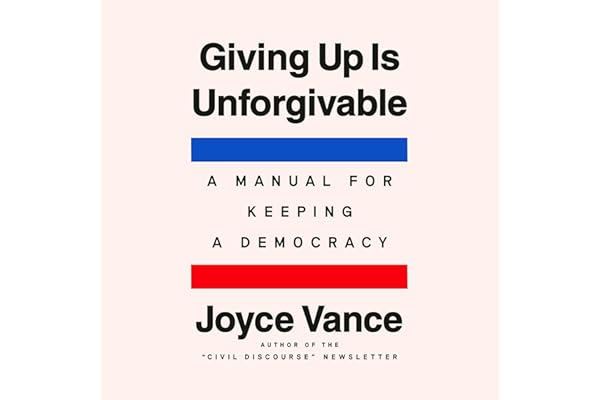
Giving Up Is Unforgivable: A Manual for Keeping a Democracy

Giving Up Is Unforgivable: A Manual for Keeping a Democracy


Price: $11.81
4.9/5

(66 reviews)

What Customers Say:

  • A Clarion Call for all Americans
    Sometimes a little book can have greater clarity and influence for our lives than even a big one would. Obviously, the Bible is one of the big ones”. For contemporary insight, I would suggest the Dalai Lama’s “Beyond Religion: Ethics for a Whole World” which present politicians should be mindful of. But a critical one, one so salient to America’s present situation; so well written, so concise in its language and so forthcoming with suggestions for our future actions. I would unreservedly seriously recommend this book. It is a clarion call to every thinking, feeling and worrying individual in this America. Please, especially before November, read and study this book.
  • Never Give Up
    Well written an very readable! Timely and inspiring; I will share with others!
  • A must read
    This is a wonderful book. As a person who truly believes there should be an amendment to the Constitution that clearly defines the Supreme Court’s role in American body politic. But as a person that feels the Supreme Court gives lawyers job security I felt Vance did not go far enough in describing the Court’s complicity in ending Democracy under Trump. She is a lawyer so her view of the Court is one that contradicts mine, but she provides the best evidence of why the Court is necessary. She also does an excellent job of describing why we can not stop fighting for democracy. Vance does a superb job of showing democracy is a fragile flower that it must be watered with our efforts and constant tending. It is one of best books written about American democracy this century. And more she is a thoughtful thinker that would agree with my right to disagree with her on finer points of American politics and Constitutional law at that makes this the best American treatise on our democracy written in our time and in my lifetime.
  • Such a great book!
    This is such a great book. Joyce is a former federal prosecutor, she’s a professor of law and a political commentator….she knows the Constitution and has intimate familiarity with our democratic institutions. This is a book for our troubled times, an important set of reflections on where we are and where we go from here. Must reading.
  • Important information
    Joyce Vance writes very clearly and gives interesting historical background to all of her premises. Thoroughly enjoyable to read, and so important in the time we are living.
  • A very informative read.
    Joyce has a gift for taking somewhat complex matters and making them more understandable. Reading this book was like taking a graduate course in Civics.I hope I passed. ????
  • If you love democracy, you will love this book
    I have always had great respect for Joyce Vance and her thoughtful explanation of the law and her observations on the state of our democracy. I started reading her book and find that it is so full of truth and thought-provoking concepts that I can only read a few scetions at a time. Her writing is clear and directed to those of us who are watching from the sidelines. Highly recommend it.
  • A must-read for American patriots.
    Part law, part political history, part strategy for co-creating a more perfect union—and all heart. This book is a must-read for anyone alarmed by the MAGA threat to the proposition that we are all created equal. The blessings of liberty aren’t foreordained; they endure only when we carry the torch. Giving Up Is Unforgivable educates, motivates, and shows how we the people turn principle into action. And Vance’s use of the “boiling frog” metaphor is flat-out brilliant. As Vance writes every day in her Substack post: “We’re in this together.

Giving Up Is Unforgivable: A Manual for Keeping a Democracy is one of the best-selling products with 66 reviews and a 4.9/5 star rating on Amazon.

Current Price: $11.81

#6

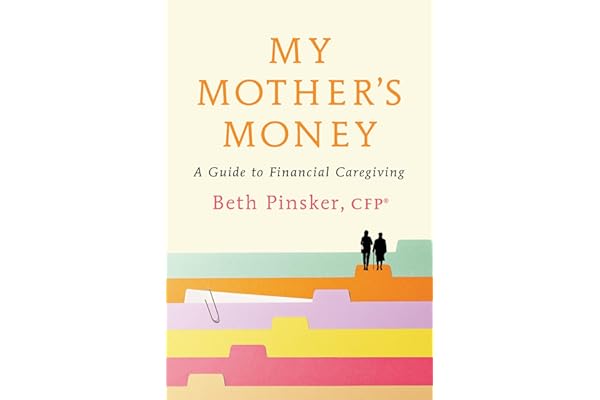
My Mother’s Money: A Guide to Financial Caregiving

My Mother


Price: $21.00
5/5

(5 reviews)

What Customers Say:

  • Be proactive about your family’s future
    This is the kind of book when you finish reading, you realize there is someone you know that you want to buy them a copy.Worth it for the workbook alone—If you’re a sandwich-generation caregiver or want to be proactive about your loved ones’ futures, this is essential reading.
  • A Heartfelt, Practical Guide to What Really Matters
    **⭐️⭐️⭐️⭐️⭐️ A Heartfelt, Practical Guide to What Really Matters***My Mother’s Money* is the rare personal finance book that strikes both the head and the heart. My former colleague from MarketWatch and Fidelity, Beth Pinsker, has written a deeply moving account of helping her mother through the end of life — and then navigating the inevitable, complex, and often emotional financial tasks that follow.What makes this book special is not simply Beth’s technical knowledge (though it’s here in abundance), but her courage in sharing a personal story that so many families will recognize — yet few prepare for. She shows, with grace and honesty, how overwhelming estate and end-of-life logistics can be, even for financially savvy families. And in the process, she turns her experience into a gift for the rest of us.This is not a dry guide or a checklist. Beth masterfully weaves in actionable personal finance guidance — wills, paperwork, beneficiary choices, caregiving logistics, final expenses — alongside reflections on love, loss, and family responsibility. She brings in expert voices throughout, but the book’s power comes from lived experience. She reminds us that planning ahead isn’t about money — it’s about dignity, clarity, and ultimately, love.If there’s one message that stays with you, it’s this: the reason to plan is never fear or obligation. It’s because we care deeply for the people who will one day walk the path behind us. As Beth puts it, spreadsheets and legal documents matter, but love is the only force strong enough to move families to act.*My Mother’s Money* is inspiring, practical, and beautifully human — a guidebook, a memoir, and a gentle nudge to have the conversations that matter while we still can. Beth continues to serve families through her journalism and personal finance leadership, and this book will help countless others face this terrain with clarity and compassion.Highly recommended. Five stars.
  • A deeply human and practical guide to one of life’s toughest transitions
    My Mother’s Money is both personal and professional in the best possible way. Beth Pinsker writes with the empathy of a daughter who has walked the path of financial caregiving—and the clear-eyed insight of a seasoned personal finance journalist who knows how to ask the right questions and spot the patterns that so many families share.What makes this book stand out is the way Pinsker weaves her own story together with those of others facing similar challenges. The result is a mosaic of real-life experiences that show how emotional, complicated, and—at times—overwhelming it can be to help aging parents manage their finances. Yet, rather than feeling heavy or hopeless, the book feels empowering. Pinsker provides practical guidance, gentle wisdom, and a sense of community for readers who may feel like they’re navigating this terrain alone.If you’re caring for an aging parent, preparing to step into that role, or simply want to understand what financial caregiving really involves, My Mother’s Money is an invaluable resource—honest, compassionate, and immensely readable.
  • Essential Knowledge for Caregiving
    As I was reading Beth’s book, I was nodding along in agreement as she recounted stories about navigating the financial, healthcare, and legal system to help her mom. She does an excellent job weaving in her own stories with practical, actionable advice you can take with your loved ones. I’m a financial planner who is very experienced with the aging process, and I picked up pieces and stories I plan on using with clients, family, and friends. Seeing loved ones age is tough to watch, and it’s even harder when you aren’t sure of the minefields you may step in. Beth takes you through what she would have done differently, common mistakes she sees, and how best to avoid them to make the process of caring for a parent easier.
  • Essential reading for financial caregivers
    If you find yourself in the difficult position of having to manage a parent’s finances, let “My Mother’s Money” by Beth Pinsker be your guide. I truly think what Beth has created with “My Mother’s Money” is the bible on financial caregiving.Beth breaks down all of the challenges that you could possibly face as a financial caregiver by sharing her own journey of managing her mom’s money after she became seriously ill from complications due to spinal surgery. Her openness, honesty and ability to explain complicated financial topics in simple terms leaves you feeling like a friend — a really smart friend — guided you through one of life’s most difficult journeys and was right there with you every step of the way.
  • A treasure trove of wisdom
    As a financial planner and someone who managed my own mother’s finances after my father died, “MyMother’s Money” spoke to both my heart and my experience. Educational, inspirational, and refreshinglyhonest, Beth Pinsker offers a treasure chest of wisdom. I especially appreciated the “Do Now” folders ineach chapter—practical and empowering. This guide also makes me feel even more confident about mydecision to move to a CCRC just short of my 79th birthday. Folks don’t want to think about this stuff, but as moreof us become caregivers or care receivers, we must. This is the book I wish I had years ago.

My Mother’s Money: A Guide to Financial Caregiving is one of the best-selling products with 5 reviews and a 5/5 star rating on Amazon.

Current Price: $21

#7

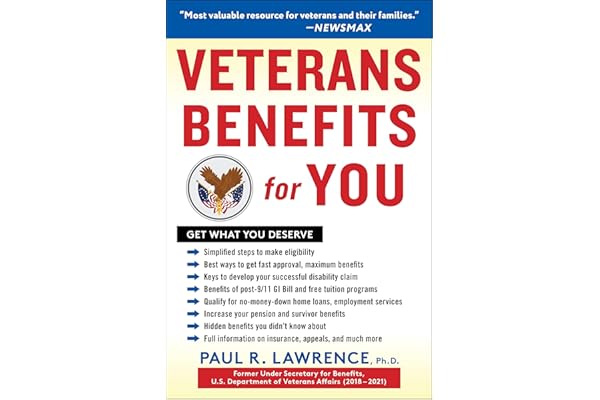
Veterans Benefits for You: Get What You Deserve

Veterans Benefits for You: Get What You Deserve


Price: $14.70
4.4/5

(646 reviews)

What Customers Say:

  • Veterans Benefits Explained in Great Detail!
    What I Learned from Paul R. Lawrence’s Book “Veterans Benefits for You” Having recently finished reading Paul R. Lawrence’s insightful book, “Veterans Benefits for You,” I was amazed by the wealth of information it provided regarding the various benefits available to our esteemed veterans. Here are a few key takeaways that I believe every veteran and their families should be aware of:1. Understanding Eligibility: The book emphasizes the importance of understanding eligibility criteria for different benefits. It not only demystifies the complex rules and regulations but also provides guidance on how to determine eligibility, ensuring that veterans can navigate the system with confidence. 2. Health and Medical Assistance: The book delves into the extensive healthcare benefits veterans are entitled to, including comprehensive medical care, mental health services, and caregiver support. It emphasizes the significance of being aware of the available resources and encourages veterans to seek the appropriate medical assistance they need. 3. Education and Career Enhancements: Paul R. Lawrence emphasizes the potential for educational and career advancements through various benefit programs such as the Post-9/11 GI Bill. The book highlights how these benefits can aid veterans in furthering their education, developing new skills, and successfully transitioning into civilian careers. 4. Housing and Home Loan Programs: One of the most valuable sections of the book explores the numerous housing assistance programs, such as VA home loans, grants, and adaptive housing options. It underscores the importance of homeownership and stability for veterans and provides practical advice on accessing these benefits. 5. Disability Compensation and Pension Benefits: From explaining the application process to outlining eligibility requirements, the book sheds light on disability compensation and pension benefits. It stresses the importance of understanding these benefits thoroughly to ensure that veterans receive the financial support they deserve. 6. Resilience and Emotional Well-being: Recognizing the significance of mental health, the book discusses the resources and programs available to support veterans struggling with emotional challenges. It highlights the importance of addressing mental health concerns and the resilience that veterans embody. I highly recommend “Veterans Benefits for You” to veterans, their families, and anyone interested in understanding and advocating for the rightful support and well-being of our veterans. This informative and well-written book serves as a valuable guide, empowering veterans to make informed decisions and fully utilize the benefits they have earned through their service to our country. Let’s continue to honor and support our veterans as they navigate these benefits meant for their well-being and security. #VeteransBenefits #EmpoweringVeterans #SupportOurHeroes
  • Good information for veterans.
    All the information my brother-in-law needed, in one place.
  • Veteran Benefits for You
    This is probably a good book for those looking for benefits for veterans who served at war. I’m a veteran but stateside, and actually found little in this book that pertained to some of the benefits I need to find out about as a senior woman veteran needing help with getting rides to VA hospitals, and help with understand how to work in the computer word and system that they have created, obviously not for older veterans.
  • arrived on time in new condition
    quality, content, as advertised.
  • Benefits reading and easy to understand
    Excellent book and easy to understand.
  • Good general source of Info for a start
    I like that it covers the broad basics for those first starting, or thinking about starting a claim. There is so much more to learn about for every single individual subject concerning the claim process. I would rent it at the library, but would not purchase it. I learned nothing new after going through the process of filing a Disability Claim for only six months. This is rudimentary at this point. I have self-taught through this period so I have all of this knowledge. For instance, I needed more comprehensive information about secondary claims that link to particular primary claims, in detail. That is one item on a list of more in-depth knowledge I was seeking. So, again, this is good if you have done nothing yet.
  • Excellent Veteran’s Guide
    I served three decades in the military, and started thinking of retirement just in the last year before calling it quits. I found out you never quit, it never leaves you. Luckily, I found this book, which helped and guide me through the maze of government bureaucracy. I knew that I had a pension, but I read in Chapter 7 about survivors pension. This was very important to me to know my wife would be taken care of if something happened to me. There are so many more benefits that this book highlights. G.I. Bill for education, home loan guarantee, and links to veterans organizations like the American Legion, Veterans of Foreign Wars, and Vietnam Veterans of America, to name a few. This book has so much more, and I recommend this to all veterans out there still trying to adjust to the civilian life.
  • A must have!
    Any Military person should read this book

Veterans Benefits for You: Get What You Deserve is one of the best-selling products with 646 reviews and a 4.4/5 star rating on Amazon.

Current Price: $14.7

#8

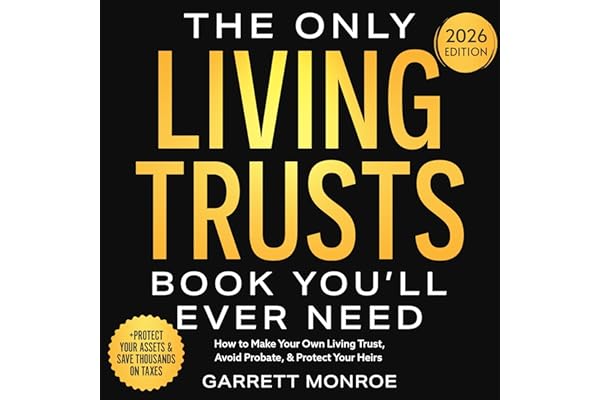
The Only Living Trusts Book You’ll Ever Need: How to Make Your Own Living Trust, Avoid Probate & Protect Your Heirs (Plus Pro

The Only Living Trusts Book You’ll Ever Need: How to Make Your Own Living Trust, Avoid Probate & Protect Your Heirs (Plus Pro


Price: $13.08
4.6/5

(1,014 reviews)

What Customers Say:

  • The Best Book I Have Read In A While
    “The Only Living Trust” by Scott C. F. McLean is an insightful and practical guide that demystifies the concept of living trusts for readers who may not have a legal background. McLean’s writing is accessible yet thorough, making complex legal concepts understandable for the average person.Key Themes and ConceptsUnderstanding Living Trusts: The book begins by breaking down what a living trust is and how it functions. McLean emphasizes its role in estate planning, particularly in avoiding probate, which can be a lengthy and costly process.Benefits of a Living Trust: The author outlines several advantages, including:Privacy: Unlike wills, living trusts do not become public records.Control: Grantors can specify terms regarding asset distribution and management during their lifetime and after death.Flexibility: Living trusts can be modified or revoked as circumstances change.Step-by-Step Guidance: McLean offers a step-by-step approach to creating a living trust, discussing the necessary components such as selecting a trustee, listing beneficiaries, and detailing asset management.Common Mistakes: He highlights frequent pitfalls people encounter when setting up trusts, such as failing to fund the trust properly or misunderstanding tax implications.Legal Considerations: The book provides a straightforward overview of the legal requirements for establishing a living trust, which varies by state. This aspect is particularly useful for readers looking to navigate their state’s specific regulations.Writing Style and AccessibilityMcLean’s tone is conversational, making the material not only informative but also engaging. He avoids legal jargon where possible and uses real-life examples to illustrate how trusts can be beneficial in various scenarios. This approach helps to demystify what can often be seen as a daunting subject.ConclusionOverall, “The Only Living Trust” is an invaluable resource for anyone considering estate planning or looking to understand living trusts better. It empowers readers with the knowledge needed to make informed decisions about their financial future.For anyone contemplating the establishment of a living trust, this book serves as both a primer and a practical manual, offering clear insights into the process, benefits, and common pitfalls.If you’re considering setting up a living trust, this book might be just the guide you need to get started.
  • If only I had this book way back when.
    This is an very well written, informative book. The author break down what can be a very complex subject into much simpler terms. I was a trustee for twelve years of my family’s estate, worst years of my life. The stress levels were incredible mainly because so much I needed to know I did not know. I did not go to law school or had an accounting back ground and I had few people I could turn to.. Looking back, I wish I had at least this book at my disposal.
  • Prepare After Retirement and Beyond
    Great book with tons of information on how to plan and strategize for your future and for the protection of your loved ones when you’re no longer here. Clear details on how to make your own living trust. Loads of information about how to avoid costly mistakes and spending money on things that are not necessary. Really great explanations of the different kinds of trusts and how to protect your self from creditors and taxes. That information was very useful to me. If you’re looking for a book that will walk you through how to get everything in order when it comes to estate planning this is the book for you.
  • Getting started before it’s too late.
    Informative so far, good for getting you started.
  • Why you need to trust is explain very well in this book.
    Everyone should read this book. Everyone’s assets should be protected in a trust. This book describes in detail how to assemble your trust and set up your legacy with an LLC within a trust. Really excellent book.
  • Very educational.
    Love this book very educational, I will recommend it to anyone. Was delivered on time.
  • Great overview
    This book is a great overview of trust building and planning. It guides the reader through the process of planning to execution. It also guides the reader through what to expect after death. I recommend f or anyone considering creating a trust to bypass probate and pass along their assets to loved ones in an efficient manner.
  • Great book!
    Great book, easy read, great info!

The Only Living Trusts Book You’ll Ever Need: How to Make Your Own Living Trust, Avoid Probate & Protect Your Heirs (Plus Pro is one of the best-selling products with 1014 reviews and a 4.6/5 star rating on Amazon.

Current Price: $13.08

#9

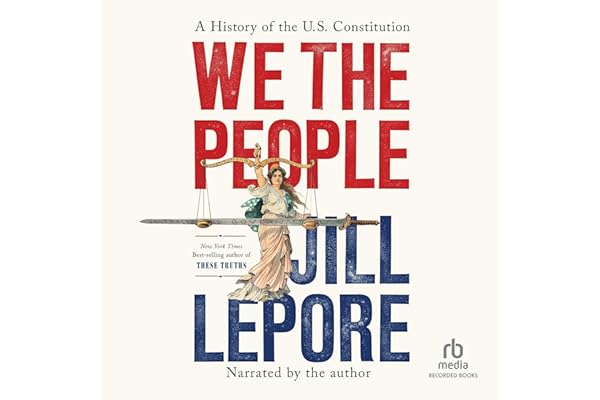
We the People: A History of the U.S. Constitution

We the People: A History of the U.S. Constitution


Price: $26.33
4.5/5

(85 reviews)

What Customers Say:

  • What a wonderful journey!
    I could not put this book down! I don’t read much, but even with all the topic-specific words, I found it amazingly interesting, learning about so many different aspects of how the government works…from the need for new laws, to the steps required to writing an amendment, to the people and situations that can come up to make it extremely difficult, if not impossible, to submit same. Each chapter covers a different snippet of the history of the United States as the writing of their constitution is brought to life. I recommend this book for anyone interested in government from any country, and especially from the United States of America. Thank you, Jill Lapore, for a wonderful journey!
  • Does not disappoint.
    The US Constitution is poorly understood, and a lynchpin to our republic. As time passes we are in danger of lynchpin becoming the dead letter. The examination shows that we seldom resolve to amend the constitution because it is difficult to come to agreement about what needs to be changed, or how to go about change. Like a good historian, she tells the story and lets us decide. We the people.
  • Article V
    Not a traditional history of the U.S. Constitution, but a thought provoking book on several individual policies debates that have bedeviled our country’s politics over the years. Everything from slavery, to gun ownership, to the ERA, to abortion rights, to environmental protections. And so forth. And the people, both obscure and famous, who led the efforts to either make or kill proposed amendments.The author, a Harvard academic, unsurprisingly is on the side of reading the Constitution as a living document and does not favor the interpretative views of the more conservative members of the court of the past few decades, such as represented by Justice Scalia. (A clue to her political leanings are book jacket blurbs by such liberals as Jamie Ruskin and Pete Buttigieg.) She favors making the complicated amendment process for the U.S. Constitution more flexible and easier to use in order to meet the needs of people within a modern state.While I do not share Jill Lepore’s despair over the current harden state of our country’s founding document, I do think her book is well written, scholarly, and helpful to all those seeking a broader understanding of the U.S. Constitution.
  • Outstanding discussion of the attempts at amending the Constitution
    A meticulous study on the Constitution by one of America’s leading historians. Detailed and yet very readable and informative. I’d highly recommend it to anyone really interested in this landmark document. I’ve yet to read anything by Jill Lepore that wasn’t superb.
  • Listen to John Stewart
    I listened to John Stewart’s conversation with Harvard professor and author Jill Lepore last night and knew I would love this tome. While the book is almost 600 pages, not counting end notes, acknowledgements, and index, and I have only had time to read a few pages, it will be a pleasant journey. Stewart raved about the clarity and style of the writer, and he’s right (as usual). I only wish this had been my constitutional law text in law school. In today’s environment where students of history are universally horrified by the utter disregard for the rule of law at the highest levels, this treatise is a beacon. I cannot wait to devour it. Now if only our leaders could read..
  • In Depth Analysis of Article V
    I was amazed at the detail contained in this historical analysis of the ups and downs of Article 5 throughout our history. The trials of the slaves, native Americans and women seeking equality is fully conveyed. At times I felt overwhelmed with the knowledge contained in the pages and intellectual battles that took place over the years to form our republic. Well written, detailed, and a great work of history. The underlying question about the amendment process is left hanging for our and future generations to answer.
  • We the people
    very interesting and informative book. received the day after ordering.
  • Is the Constitution Obsolete?
    Jill Lepore argues against the originalist version of Constitutional justice that is currently in vogue, quoting former Supreme Court Justice Anthony Scalia as saying the Constitution was not a living document, but rather “dead”, that is, it just means what it says and that is that.She details how remarkably difficult it is to amend the Constitution and much of the book is devoted to failed efforts to do so. As a result, despite Ms. Lepore’s considerable skills as a writer, the book is often a history of non events.It is very well done, but I thought the book often got bogged down in legalistic details. Her book These Truths, a history of the United States was much more enjoyable.Recommended because it does what it promises to do, but readers should go in expecting to have to push through at some points.

We the People: A History of the U.S. Constitution is one of the best-selling products with 85 reviews and a 4.5/5 star rating on Amazon.

Current Price: $26.33

#10

Just Mercy: A Story of Justice and Redemption

Just Mercy: A Story of Justice and Redemption


Price: $15.75
4.8/5

(39,927 reviews)

What Customers Say:

  • The Stonecatcher
    I heard about this book a number of times before I finally bought it. But it wasn’t the number of people who mentioned it that impressed me; it was the way they spoke of it, definitely in admiration, almost in awe, always with a tone that suggested they had been changed by the experience. What better recommendation could there be? I had to read it.The book follows Stevenson’s career first as a Harvard law student, and continuing after he received his degree, defending people (primarily in Alabama) who would otherwise have little hope of justice. Even with the efforts of Stevenson and others working to bring the ideal of equal justice closer to reality, there are aspects of a person’s life, some of which that person cannot control, that demonstrably affect his or her interaction with the massive machinery of justice in America. To summarize Stevenson’s argument: If you are poor, black, or mentally ill, your chances of receiving fair treatment in the justice system are much worse, especially if the victim is white.Of course, racial discrimination is still present in American society and still causes untold damage, but one thing that struck me while reading this book was the reminder of how recent the history of overt racial discrimination is in our country. By this I mean discrimination that doesn’t even hide itself, that isn’t even subtle, that is just right there in your face, never mind what the law might say. This history runs deep in America, and it still has the effect of denying many people the benefits of a nation that promises “liberty and justice for all.” In particular, as it relates to Stevenson’s book, African Americans who are caught up in the justice system have to carry a heavy burden of history, whether they are guilty or not.Addressing this burden is the aim of Stevenson’s Equal Justice Initiative. Stevenson and his colleagues don’t only defend African Americans who have no access to good legal representation. They have worked with white convicts as well, in addition to showing a special interest in the mentally ill and children convicted of serious crimes and thrown in together with the general prison population. But race and the history of race relations, including a history of state-sanctioned violence against African Americans, are the broad context for the work. It is a context that I think is difficult for white Americans, especially privileged white Americans, to fully understand.The frame story for Stevenson’s book, the story that encompasses all the others and provides a thread of continuity, is the saga of Walter McMillian. McMillian was convicted and sentenced to death for a murder he did not commit, based on flimsy and highly questionable evidence that was contradicted by other evidence and testimony available to police and prosecutors at the time of the original trial. Imprisoned on Alabama’s death row in 1987 before the trial even began, McMillian was eventually released in 1993 through the efforts of Stevenson and the EJI. But while McMillian’s case is described from beginning to end over the course of the book, Stevenson describes many other cases, some successful, some not, that he handled over the years.As infuriating as McMillian’s story is, though, the main point of the book is not that a man named Walter McMillian was unjustly imprisoned and prejudicially sentenced to die. Yes, his exoneration was a belated correction of a grievous error, and it saved an innocent man from death, but there are two larger messages embedded in these accounts of underfunded attempts to right past wrongs and, in the case of children, to ensure that they are not permanently damaged by being incarcerated with hardened criminals. First is that there is a real human being at the core of each of the stories Stevenson tells, and each of them deserves the fair treatment that any of us would expect, even demand, of the justice system. It is said so often that it can sound corny, but even one innocent person wrongfully convicted is too many, and if that person is put to death it is inexcusable both legally and morally (especially if the case was mishandled). Stevenson notes in a Postscript that when Anthony Ray Hinton was freed from prison in 2015, after being “locked down in solitary confinement at Holman Correctional Facility [in Alabama] for three decades in a 5×7 cell” for a crime he did not commit, he was the “152nd person in America exonerated and proved innocent after having been wrongly convicted and sentenced to death” (p. 315). One hundred and fifty-two people! How can we as a nation continue to argue that the death penalty is a useful part of a system of justice when over 150 innocent people have been condemned but had the good fortune to be proven innocent before the process could reach its culmination in their death? It is unknown how many innocent people have actually been executed, but if this many have been freed after being proven innocent, we should lose some sleep—lots of it—over that unanswerable question. It’s not good enough to say that because in the end they were exonerated, the cases of these 152 people prove that the system works. The point is that they never should have been convicted in the first place. Far too many of these people were convicted due to incompetent representation, withheld evidence, and prejudicial hearings, and were only saved because a lawyer somewhere had time to take their case (most likely for little or no pay, since those wrongfully convicted tend to be poor). For those not so lucky, the execution chamber awaits.The second message is that it does not weaken our justice system to remember that justice tempered with mercy is not a lesser form of justice. I have great faith in the American justice system, a faith that has been reinforced by living in countries that have different systems. Yes, it takes a little longer to look objectively at all the evidence. And it is difficult for all of us to look beyond our preconceptions and see the person in front of us rather than the category into which we would place them. But that is what our common humanity requires of us. And when fallible human beings, including the state’s representatives (judges, prosecutors, juries of one’s peers), are making decisions that could end a person’s life, it is incumbent upon us to ensure that we do all we can not to allow mistakes to be made that cannot be undone once the sentence is carried out. False charges can be reversed. Unjust imprisonment can end. But nothing ends the gas chamber, the electric chair, or the lethal injection until the heart and lungs stop functioning. Stevenson isn’t suggesting that killers go free, or that criminals should not be punished. His larger message about mercy is simply this: We all need it from time to time, and we may even need more than we deserve. As he puts it, “we are all broken by something. We have all hurt someone and have been hurt. We all share the condition of brokenness even if our brokenness is not equivalent” (p. 289). But it’s not just that we all have our often-hidden sources of pain. It’s that we most often need mercy when we deserve it least. “The power of just mercy is that it belongs to the undeserving. It’s when mercy is least expected that it’s most potent—strong enough to break the cycle of victimization and victimhood, retribution and suffering” (p. 294).Some would ask, but what about people who don’t deserve mercy? What about people who, by their own actions, have put themselves beyond the bounds of human decency and thereby forfeited their right to continue living among us? One response would sound a bit like a Sunday School lesson, at least if you’re a Christian. By that doctrine, none of us deserves mercy. It’s always a gift, given because of the love and grace of the Giver, not because of the merits of the one to whom it is given. But it’s hard to apply such a lesson to the criminal justice system, because the great Lawgiver isn’t dispensing justice in that system. We are. And I mean that “we” literally. We are all implicated when any decision is made in the courts, since the foundation on which those courts rest is the idea that in determining guilt and innocence, and setting punishments in the case of the former, they act as our surrogates, expressing the unacceptability of certain acts but also accepting the possibility that sometimes, the person in the dock just might be innocent. At the conclusion of his story of Walter McMillian, Stevenson concludes with a lesson he said he learned from the experience. “Mercy is most empowering, liberating, and transformative when it is directed at the undeserving. The people who haven’t earned it, who haven’t even sought it, are the most meaningful recipients of our compassion.” He’s not talking about Walter McMillian’s liberation from prison, though. He’s talking about Walter’s own forgiveness of “the people who had judged him unworthy of mercy” (p. 314).So what is required of us as citizens of a country with a legal system designed to protect us from the depredations of those who would harm us while also protecting us as much as possible from the perversions of justice that will be part of any imperfect system administered by imperfect people? We might start with this: To do justice and love mercy. In practice, the systems of state power cannot be expected to operate perfectly, but we can insist on certain things from those systems: a fair, impartial hearing; consideration of all the evidence, whether or not it supports one side’s vested interest in a particular outcome; refusal to apply the law any differently regardless of race or prior history. When those in a position to decide on our behalf decide that the ultimate penalty is to be applied, we can refuse to let the human thirst for vengeance make us callous to the tragedy that has unfolded for everyone, from the victims to the perpetrator. And when a wrongly-convicted person is freed, we can find within us a willingness to accept him or her as we would like to be accepted, as one whose failings are part of the enormous burden of our common, fallible humanity.
  • Will I?
    I’ve had time to think about mercy and justice. Considerable by some measures. Years. Recent years.And I’ve had need. Personal need. Intimate need. Intellectual curiosity, yes. And, much more. Driven to know this God Who I worship. Desirous to think and feel as He does, and to behave accordingly, which necessarily drives me to seek to understand these aspects of Him.I’m disturbed at the phenomenon of bias. Biased. “If we say we have no sin we deceive ourselves and the truth is not in us.” I believe the same is true of bias. If I say I have none I fool only myself. That am blind, troubles me deeply.I’m troubled by distance. Relationship distance. I’ve not been ignorant of some of the effects of distance. The notion was first suggested to me in an H.S. world history class. Unconcerned as I was, the thought has stayed with me now 50 years. Even so, I’ve not applied it in a pro-active sense. I’ve not sought proximity strictly speaking.Question: Will I accept the truths manifest in the works described herein and the invitation implicit in this work, to be proximate? “The closer we get to mass incarceration and extreme levels of punishment the more I believe it’s necessary to recognize that we all need mercy, we all need justice, and—perhaps—we all need some measure of unmerited grace.”
  • Please Read
    Once you begin, you won’t be able to quit reading. This book is wonderfully written and I encourage everyone to read it in order to become aware/more aware of the grave injustices that arise when individuals are basically disregarded. Also, towitness the extreme good in those who dedicate their lives to doing everything within their power to advocate for those who do not have a voice. Please read this book!
  • Gazing into the prison and justice system.
    Bryon Stephenson writes of his long career as a lawyer defending some of the poorest and poorly represented in our nations Leal system. OpenS the readers eyes to the way our system is broken and how many ate unfairly reated.

Just Mercy: A Story of Justice and Redemption is one of the best-selling products with 39927 reviews and a 4.8/5 star rating on Amazon.

Current Price: $15.75

Updated: Nov 26, 2025
Data from Amazon.com
10 products

Customer Reviews

5 star
70%
4 star
20%
3 star
7%
2 star
2%
1 star
1%
John D.
★★★★★
March 15, 2024
"Great product! Exactly as described. Fast shipping and excellent quality."

Product Specifications

Brand Amazon Brand
Material High Quality
Dimensions See product details
Weight See product details