Top 6 Best-Selling History for November 2025

Price: $14.99

Key Features:

  • High Quality Materials
  • Fast Shipping
  • Customer Support
  • Money Back Guarantee

Top 6 Best-Selling History for November 2025

$14.99

Category:
Secure Purchase
Free Shipping
Easy Returns

Product Description

Danh sách Top 10 History bán chạy nhất tháng November 2025 được tổng hợp dựa trên dữ liệu thực tế từ Amazon.com. Các sản phẩm được đánh giá cao bởi hàng nghìn người dùng, với điểm rating trung bình từ 4.5 đến 4.8 sao. Hãy tham khảo danh sách dưới đây để chọn sản phẩm phù hợp với nhu cầu của bạn.

#1

1929: Inside the Greatest Crash in Wall Street History–and How It Shattered a Nation
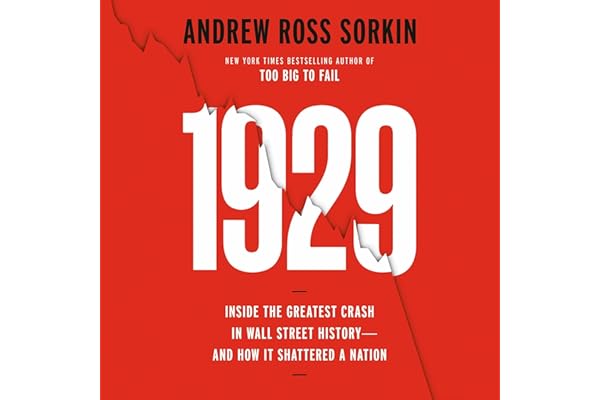
1929: Inside the Greatest Crash in Wall Street History--and How It Shattered a Nation


Price: $20.48
4.6/5

(1,697 reviews)

What Customers Say:

  • “History That Feels Strikingly Current”
    1929 by Andrew Ross Sorkin is a brilliantly written, highly readable account of the events leading up to the Great Crash. Sorkin brings the era to life with sharp storytelling, clear explanations, and impressive research. Despite knowing the outcome, the narrative feels gripping and surprisingly suspenseful.What makes the book truly stand out is its relevance—many of the themes he highlights, from speculation to overconfidence, echo in today’s markets. It’s a powerful reminder that the past still has lessons to teach.A smart, engaging, and insightful read. Highly recommended.
  • Not In Our Stars, but in Ourselves
    Andrew Sorkin’s book on the Crash of 1929 is a delight to read. The praise that has been showered upon it is well deserved. It is well researched and so well organized and so well written that it reads more easily than the morning paper. Sorkin’s interest is not so much in the details of stock trading and margin calls but in gaining some purchase on the dark heart of human greed that drives all market bubbles. For Sorkin the Crash is not something that is best understood through the application of macroeconomic analysis– thank goodness– but through the story of human ambition darkened by human avarice. This story is necessarily one of tragedy. The Crash is not so much to be explained as to be narrated. This narrative requires our sympathy more than our judgement. We cannot understand market bubbles, he implies, unless we understand human nature and how we are all susceptible to enticements that make little sense as well as the need to assign blame and identify virtue. We know we are reading a very different approach to the Crash when the story opens with “Sunshine” Charlie Mitchell bounding up the “steps of 55 Wall Street” where he will exert his usual “confidence and certitude” on what was the “crushing afternoon” of October 28, 1929. Apparently, the key to understanding that fateful afternoon lies not in complications of stock trading but in understanding the temperaments of the men who made the trades, launched the schemes, and reaped the benefits. Sorkin is careful, however, to keep his story from becoming a morality play. He shows us the characters and asks us to find a connection with them, an affinity, so that when the tragic moment comes, we do not so much as judge them as identify with them. This is no small achievement. In this book Sorkin becomes Eric Larson and the Crash of 1929 becomes our story as well as the story of Sunshine Charlie, Tom Lamont, Will Durant, George Whitney and all the others. This is high praise. When George Whitney comes to beg a personal loan from fellow Morgan Partner Tom Lamont after discovering that his brother Richard Whitney had been stealing money from clients in his bond trading firm, we feel deep sadness for how people can fail, pity for one brother trying to help another brother, admiration for a partner bailing out a colleague, and a sense of head shaking disgust for how we all lie to ourselves in such moments. It is here we realize again that Sorkin is giving us a history more akin to Greek tragedy rather than an analysis of how markets fail or of how banks and investment firms need to be regulated. Sorkin does this at every moment in his story of the history of the Crash. And he does it masterfully. The story of the Crash becomes something of a Vanity Fair. Sorkin does not lecture the reader, he simply invites our sympathies to understand, or better, he implies that understanding requires our sympathies. Before reviewing the final tragic act in the life of stock shorting master Jesse Livermore, Sorkin poses a rhetorical question for the reader: “What did it feel like to move through the world of money and power with complete confidence, only to see it all vanish, as if you were no less expendable that those living in Hoovervilles?” This is another masterful move– he asks us in the end to see Livermore, the avaricious short-seller who made a hundred million dollars shorting stocks in the Crash, who sits at a table in the Stork Club bereft of his fortune, as one of the inhabitants sitting in the shanty of a Hooverville. Then he adds one of the best lines in the entire book: “The make ego certainly took a beating in the aftermath of the crash.” What?! Was it aggressive male greed that brought this all about? Yes, he implies, and in fact he is certain of it. Masterful. Then just a few short lines later he offhandedly notes that Livermore is his wife Harriet’s fifth husband.Sorkin has given us something new. A new way of understanding financial markets, bubbles, crashes, government reactions to such things, and why they happen. He has given us nothing less than a new set of questions to ask about these moments of economic disaster. Why, he asks, is the project of constructing the Empire State Building launched in the midst of the market run up to the Crash? Is it just coincidence that the phallus of American commerce was erected when it was, or is there some portent here? Mercifully Sorkin does not explore this question more than simply imply it. He lets us do the work, draw the connection (or not), and wonder about the role of male ego in all of this.Even President Hoover gets a softer, gentler review. Long the punch line and scapegoat for what went wrong, Sorkin cautions us to slow down and look again. Hoover is portrayed as trying his best. Isn’t that all any of us can ever do? Roosevelt, long celebrated as the savior in our darkest hour, is presented as woefully cheery and optimistic and lacking in knowledge of banking and economics. Somehow Sorkin makes this portrayal refreshing.Sorkin knows that the explanation he works to reveal does not lie within the kind of analysis published in academic economics journals, but within the mystery of dark hearts and pitiable human foibles. To this end John Maynard Keynes is hardly mentioned, nor is Friedrich Hayek. Irving Fisher and Roger Babson are granted entry into the drama but only to show that one of them got it right (Babson) and the other, the most famous economist in America at the time, Fisher, got it wrong. Perhaps wisely, Sorkin refrains from drawing easy parallels to the overvalued markets of today. Again, he leaves that to the reader and to his comments on television as he promotes this fine book. That is as it should be, but make no mistake, this story of the Great Crash of 1929 and the Great Depression that followed, is completely relevant to today. This is a great book.
  • Stock Market Story
    Interesting period. The author does a good job of bringing some key characters to life. The audiobook was well read. Entirely focused on the stock market and large brokerage houses. A broader perspective would have made the book more interesting.
  • This is a Compelling, Informative Read
    If you’ve ever wanted to know what went on behind the scenes during the epic stock market boom and bust of the 1920’s, this book’s for you. It’s all about bankers and banks, especially New York City’s big investment banks. But don’t just yawn and push it away.The author meticulously researched the topic, from private letters, public and private collections, government files, personal interviews, and newspaper and press files. His story exposes an intimate view of the lives and families of the principal players. At the front, he gives a cast of characters in the story, along with their professional affiliations—very useful for keeping the reader on track. The book is over 400 pages, but its page design and typeface allow for easy reading, even late at night. The author builds the tension with each chapter, and you will want to start the next.The author explains how excessive borrowing of money for speculation on the New York stock exchange led to a meteoric run up of the Dow-Jones average. He describes the quasi-legal, but immoral schemes the banking executives used to manipulate the market and create profits for themselves—to the disadvantage of smaller investors. Deep-pocketed investors pooled massive amounts of money to buy or sell huge blocks of stock to force the stock price up or down, as needed.The over-rich banking executives formed an aristocracy in New York and around the world, living luxurious lives in multiple palatial homes. The bankers placed big, leveraged bets on the markets, making or losing outrageous sums of money on a single trade. Small investors across the country borrowed money to join in the speculative orgy, hoping to get rich quick.When the bubble popped, banks throughout the country did not have the money—all loaned out—to pay frantic depositors clamoring to get their life savings back. Thousands of banks failed. The resulting Great Depression led to massive, long-term unemployment and breadlines. The Dow-Jones did not recover its pre-crash high until 25 years later.President Herbert Hoover—a believer in keeping the government out of the financial markets—started a widely publicized Senate hearing on the cause of the crisis, which struck a favorable chord with the public. Franklin Roosevelt, the incoming president, temporarily closed the nation’s banks, took the dollar off the gold standard, and increased the money supply. He sensed the public’s mood for banking reform and instituted banking protections we enjoy today: separation of investment and commercial banking, federal deposit insurance (FDIC), and securities and exchange commission (SEC). I believe the author was a little soft on Hoover, often cast as the villain, and pressed a bit hard on Roosevelt.Will it happen again? Probably. Will it be as bad? Not likely, unless our current government continues to chip away at banking regulations. In the concluding words of the author:“… the forces that drove the market to such stratospheric levels—optimism, ambition, and the belief that the future could be endlessly brighter—did not disappear forever. They never do. … we need to remember how easily we forget … The greater the heights of our certainty, the longer and harder we fall.”As they might say in New Orleans, “Laissez les bons temps roulez!”
  • Insightful accounting of the 1929 market crash
    An engrossing look into the main characters and institutions in the 1929 crash, with a focus on the human toll as well as the financial . Perhaps most fascinating, is the striking similarities between the thinking and miscalculations between 1929 and today. This book is well written and reads fast it covers the financial details in a manner that makes them easily understandable. A thoroughly enjoyable must read!

1929: Inside the Greatest Crash in Wall Street History–and How It Shattered a Nation is one of the best-selling products with 1697 reviews and a 4.6/5 star rating on Amazon.

Current Price: $20.48

#2

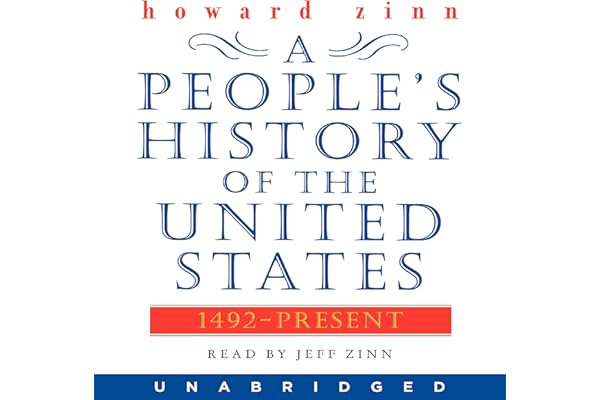
A People’s History of the United States

A People


Price: $38.58
4.7/5

(16,549 reviews)

What Customers Say:

  • “This country is not in good condition.” Calvin Coolidge, 1931. (p. 387).
    Apart from his unique view of American history and of his treatment of many of the landmark events of that history, Howard Zinn gives us any number of interesting and noteworthy observations in the course of this 700-page text. I beg your indulgence while we look at just a few….On p. 73, “(t)o say that the Declaration of Independence, even by its own language, was limited to life, liberty and happiness for white males is not to denounce the makers and signers of the Declaration for holding the ideas expected of privileged males of the eighteenth century. Reformers and radicals, looking discontentedly at history, are often accused of expecting too much from a past political epoch – and sometimes they do. But the point of noting those outside the arc of human rights in the Declaration is not, centuries late and pointlessly, to lay impossible moral burdens on that time. It is to try to understand the way in which the Declaration functioned to mobilize certain groups of Americans, ignoring others. Surely, inspirational language to create a secure consensus is still used, in our time, to cover up serious conflicts of interest in that consensus, and to cover up, also, the omission of large parts of the human race.”And then, on p. 96: “(t)he problem of democracy in the post-Revolutionary society was not, however, the Constitutional limitations on voting. It lay deeper, beyond the Constitution, in the division of society into rich and poor. For if some people had great wealth and great influence; if they had the land, the money, the newspapers, the church, the educational system – how could voting, however broad, cut into such power? There was still another problem: wasn’t it the nature of representative government, even when most broadly based, to be conservative, to prevent tumultuous change?”For the answer to that last question, we can, of course, always turn to the pleasantly incendiary words of no less than Thomas Jefferson, which Mr. Zinn naturally and deftly does: “‘I hold it that a little rebellion now and then is a good thing…. It is a medicine necessary for the sound health of government…. God forbid that we should ever be twenty years without such a rebellion…. The Tree of liberty must be refreshed from time to time with the blood of patriots and tyrants. It is its natural manure.’”One can only imagine how Jefferson would’ve reacted to the following open letter penned by Ralph Waldo Emerson to President Van Buren in 1838 as the still young nation hung its head in shame for the Trail of Tears it had just blazed: “(t)he soul of man, the justice, the mercy that is the heart’s heart in all men, from Maine to Georgia, does abhor this business…a crime is projected that confounds our understanding by its magnitude, a crime that really deprives us as well as the Cherokees of a country for how could we call the conspiracy that should crush these poor Indians our government, or the land that was cursed by their parting and dying imprecations our country any more? You, sir, will bring down that renowned chair in which you sit into infamy if your seal is set to this instrument of perfidy; and the name of this nation, hitherto the sweet omen of religion and liberty, will stink to the world” (p. 147).Was the very noble Van Buren at all distressed by the death of thousands of Cherokee Indians along this Trail of Tears when, at the end of the same year, he spoke to Congress? “It affords sincere pleasure to apprise the Congress of the entire removal of the Cherokee Nation of Indians to their new homes west of the Mississippi. The measures authorized by Congress at its last session have had the happiest effects” (p. 148). (Emphasis is mine.)And if you think that all of the wars the U. S. participated in right up to Vietnam were “good” wars (as I did until now), consider what we have in the way of a diary entry from a certain Colonel Hitchcock: “I have said from the first that the United States are the aggressors…. We have not one particle of right to be here…. It looks as if the government sent a small force on purpose to bring on a war, so as to have a pretext for taking California and as much of this country as it chooses, for, whatever becomes of this army, there is no doubt of a war between the United States and Mexico…. My heart is not in this business … but, as a military man, I am bound to execute orders” (p. 151).As I’ve already said, Zinn has a singular way of characterizing some of history’s more significant events. As yet another example, I give you the following from p. 171 (on the first page of Chapter 9, titled “Slavery without Submission, Emancipation without Freedom”: “…it was Abraham Lincoln who freed the slaves, not John Brown. In 1859, John Brown was hanged, with federal complicity, for attempting to do by small-scale violence what Lincoln would do by large-scale violence several years later – end slavery.”And lest there still be any doubt about Abraham Lincoln’s position on American blacks and the issue of slavery, Zinn gives us these two very telltale quotes:“I will say, then, that I am not, nor ever have been, in favor of bringing about in any way the social and political equality of the white and black races; that I am not, nor ever have been, in favor of making voters or jurors of negroes, nor of qualifying them to hold office, nor to intermarry with white people….And inasmuch as they cannot so live, while they do remain together there must be the position of superior and inferior, and I as much as any other man am in favor of having the superior position assigned to the white race” (p. 188).Moreover, and in direct response to the Editor of the New York Tribune, Horace Greeley, we find this (on p. 191): “Dear Sir: … I have not meant to leave any one in doubt…. My paramount object in this struggle is to save the Union, and is not either to save or destroy Slavery. If I could save the Union without freeing any slave, I would do it; and if I could save it by freeing all the slaves, I would do it; and if I could do it by freeing some and leaving others alone, I would also do that. What I do about Slavery and the colored race, I do because it helps to save this Union; and what I forbear, I forbear because I do not believe it would help to save the Union…. I have here stated my purpose according to my view of official duty, and I intend no modification of my oft-expressed personal wish that all men, everywhere, could be free. Yours, A. Lincoln.”But history (and human “progress”) moves on – and so, we have this: “(i)n 1877, (the year, according to David Burbank, in his book REIGN OF THE RABBLE, ‘no American city has come so close to being ruled by a workers’ soviet, as we would now call it, as St. Louis, Missouri’ – p. 250), the same year blacks learned they did not have enough strength to make real the promise of equality in the Civil War, working people learned they were not united enough, not powerful enough, to defeat the combination of private capital and government power” (p. 251).And Zinn then opens Chapter 11 (“Robber Barons and Rebels”) with this: “(i)n the year 1877, the signals were given for the rest of the century: the black would be put back; the strikes of white workers would not be tolerated; the industrial and political elites of North and South would take hold of the country and organize the greatest march of economic growth in human history. They would do it with the aid of, and at the expense of, black labor, white labor, Chinese labor, European immigrant labor, female labor, rewarding them differently by race, sex, national origin, and social class, in such a way as to create separate levels of oppression – a skillful terracing to stabilize the pyramid of wealth” (p. 253).For those who think the “Occupy Wall Street” movement of the new millennium was a singular invention of the millennial generation, you might want to consider what Mary Ellen Lease, of the newly formed People’s Party, had to tell those assembled at that party’s first convention in 1890 in Topeka, KS: “Wall Street owns the country. It is no longer a government of the people, by the people, and for the people, but a government of Wall Street, by Wall Street and for Wall Street…. Our laws are the output of a system which clothes rascals in robes and honesty in rags…. The politicians said we suffered from overproduction. Overproduction, when 10,000 little children … starve to death every year in the U. S. and over 100,000 shop girls in New York are forced to sell their virtue for bread….“There are thirty men in the United States whose aggregate wealth is over one and one-half billion dollars. There are half a million looking for work…. We want money, land and transportation. We want the abolition of the National Banks, and we want the power to make loans direct from the government. We want the accursed foreclosure system wiped out…. We will stand by our homes and stay by our firesides by force if necessary, and we will not pay our debts to the loan-shark companies until the Government pays its debts to us.“The people are at bay, let the bloodhounds of money who have dogged us thus far beware” (p. 288).For those (like me until now) who’ve always thought only the best of Teddy Roosevelt, the following two direct quotes – not to mention William James’s rejoinder – might be a bit of a news-breaker: “(i)n strict confidence…I should welcome almost any war, for I think this country needs one” (p. 297). And in his address to the Naval War College, he has this to say: “(a)ll the great masterful races have been fighting races…. No triumph of peace is quite so great as the supreme triumph of war” (p. 300). Thankfully – and from James – comes the sobering suggestion that he (Roosevelt) “gushes over war as the ideal condition of human society, for the manly strenuousness which it involves, and treats peace as a condition of blubberlike and swollen ignobility, fit only for huckstering weaklings, dwelling in gray twilight and heedless of the higher life…” (p. 300).For those who think Obama’s recent initiative at a rapprochement with Cuba bodes well for that impoverished Caribbean island, you might want to consider what another historian, Philip Foner, writes about the last time (towards the end of the nineteenth century) this country took a keen interest in Old Havana: “(e)ven before the Spanish flag was down in Cuba, U. S. business interests set out to make their influence felt. Merchants, real estate agents, stock speculators, reckless adventurers, and promoters of all kinds of get-rich schemes flocked to Cuba by the thousands. Seven syndicates battled each other for control of the franchises for the Havana Street Railway, which were finally won by Percival Farquhar, representing the Wall Street interests of New York. Thus, simultaneously with the military occupation began … commercial occupation” (p. 310).But it gets even better on the other side of the planet, and the same William James who pronounced upon the clearly bellicose character of Teddy Roosevelt has the last word on American behavior in the Pacific: “God dam* the U. S. for its vile conduct in the Philippine Isles” (p. 315).And on that same subject, consider what none other than Mark Twain has to say: “(w)e have pacified some thousands of the islanders and buried them; destroyed their fields; burned their villages, and turned their widows and orphans out-of-doors; furnished heartbreak by exile to some dozens of disagreeable patriots; subjugated the remaining ten millions by Benevolent Assimilation, which is the pious new name of the musket; we have acquired property in the three hundred concubines and other slaves of our business partner, the Sultan of Sulu, and hoisted our protecting flag over that sway.“And so, by these Providences of God – and the phrase is the government’s, not mine – we are a World Power” (p. 316).Where, by the way, was all of this war-mongering and industrial development at breakneck speed headed? Zinn’s choice of a quote from Sinclair Lewis’s BABBITT couldn’t be more appropriate: “(i)t was the best of nationally advertised and quantitatively produced alarm-clocks, with all modern attachments, including cathedral chime, intermittent alarm, and a phosphorescent dial. Babbitt was proud of being awakened by such a rich device. Socially it was almost as creditable as buying expensive cord tires.“He sulkily admitted now that there was no more escape, but he lay and detested the grind of the real-estate business, and disliked his family, and disliked himself for disliking them” (pp. 383-384).Two more brief quotes from Howard Zinn himself, and then I’ll conclude. On p. 636, “(w)e may, in the coming years, be in a race for the mobilization of middle-class discontent.” And almost immediately following, on p. 637, “(c)apitalism has always been a failure for the lower classes. It is now beginning to fail for the middle classes.”I suggested, at the beginning of this review, that Howard Zinn had a “unique view of American history.” That suggestion was in no sense ironic or tongue-in-cheek. After a couple of weeks and 700+ pages, I can only say that this is some of the most valuable reading time I’ve ever spent.I’m humbled – and yes, also somewhat ashamed – that I’ve discovered this historian and his work at the very ripe old age of 64. I obviously wish it could’ve been sooner. But as it was not, the next best thing I could do was give my copy of A PEOPLE’S HISTORY OF THE UNITED STATES, still slightly warm to the touch, to my daughter on the occasion of her 21st birthday.God willing, she’ll grow up better informed than I – at the very least, about the country whose passport she carries.RRB06/08/15Brooklyn, NY
  • is the US a liberal democracy or an oligarchic power structure?
    History is subjective. It is written and recorded by both regular people and historians, all of whom have their own personal biases, interpretations of events, and beliefs, regardless of how conscious they are of trying to be objective. No account of history escapes this phenomenon.This brings an important question to light: Whose account of history have we been taught? For many of us, especially those of us taught in public schools, it is the version approved by people in positions of power. In A People’s History of the United States, our author Howard Zinn does the opposite, telling history from the point of view of the powerless.It starts with Columbus meeting the Native Americans in the late 1400’s. Many textbooks teach that he discovered new lands and new people and became economic partners with them. Through a European lens, this is true. If we consider this initial meeting through the eyes of the native people, however, we might interpret events differently. Columbus could not have discover America, the continent was already inhabited by millions of indigenous people. Did they trade peacefully? Perhaps at times, but Columbus’ men also enslaved many of the natives and treated them with extreme hostility. This same trend played out repeatedly as more Europeans sailed west and encountered the Native Americans. The Spanish and Portuguese subjugated the people of South and Central America, whilst the English subjugated those in the North.Perhaps we know a bit of this history, and recognize that European-Native American relations were more antagonistic than harmonious. This, again, is only a partial truth, as “more than half the colonists who came to the North American shores in the colonial period came as servants.” Subjugation was not only reserved for the Native Americans, even many white men and women were oppressed by their own European elites. It was a society in favor of the few at the expense of the many. This, more than anything, is the theme of this book.Zinn proposes that the history of The United States is a history of dominance by the elite classes over Native Americans, Blacks, Latinos, Asians, women, those living in poverty, and pretty much anyone without the ability to resist. Not only was this dominance financial, with the elite class keeping the wealth created by the labor class for themselves, but it was often physical and emotional as well. When movements of poor and working class people coalesced and petitioned for more rights and better working conditions, they were often met with imprisonment, violence, and death. The following are statistics from this book that illuminate these trends:In 1770, in Boston, the top 1 percent of property owners owned 44 percent of the wealth.In 1820, 120,000 Indians lived east of the Mississippi. By 1844, fewer than 30,000 were left.Between 1790 and 1860, the number of slaves grew from 500,000 to 4,000,000.In 1877, 100,000 workers went on strike against the railroad companies.In 1886 there were over 1,400 strikes, involving 500,000 workers.In 1914, the income of 44 families making $1 million or more equaled the total income of 100,000 families earning $500 a year.During World War Two, there were 14,000 strikes involving 6,770,000 workers.In 1950, the military had a budget of about $12 billion out of a total US budget of about $40 billion. In 1960, the military budget was $45.8 billion—49.7 percent of the total budget.In 1961, about 200 giant corporations out of 200,000 corporations—one-tenth of 1 percent of all corporations—controlled about 60 percent of the manufacturing wealth of the nation.In 1977, the top 10 percent of the American population had an income thirty times that of the bottom tenth; the top 1 percent of the nation owned 33 percent of the wealth.On June 12, 1982, 1,000,000 people gathered in Central Park, New York City, to express their determination to bring an end to the arms race.In 1990, the average pay of the chief executive officers of the 500 largest corporations was 64 times that of the average worker. By 1999, it was 475 times the average worker’s pay.In 1998, one of every three working people in the United States had jobs paying at or below the federal poverty level (from the Bureau of Labor Statistics of the U.S. Census Bureau).Zinn asserts that the history of The United States is a history of control by the elite class. Consider the founding fathers: They were nearly all lawyers by profession and were “men of wealth, in land, slaves, manufacturing, or shipping.” Forty of the fifty-five men held government bonds, according to the records of the Treasury Department. These men were obviously from the elite class, which begs the question: If they were truly determined to compose a Constitution that ensured equally for all, why were no slaves, women, servants, or men without property allowed to be a part of the writing process?Consider a recent presidential election: In 1980, Ronald Reagan received 51.6 percent of the popular vote while Jimmy Carter received 41.7 percent. These numbers look good until you factor in the reality that “only 54 percent of the voting-age population voted, so that—of the total eligible to vote—27 percent voted for Reagan.” A democracy is supposed to be a system of government in which the people govern themselves by electing representatives from amongst their ranks. However, if half of eligible voters don’t bother to participate and don’t believe in the system, is it really a democracy? The country was thus presided over by a man who was selected by just over one-quarter of the citizenry. In his first term in office, Reagan cut $140 billion dollars in social programs while simultaneously increasing the ‘defense’ budget by $181 billion. He clearly cared more about allocating money for the military industrial complex than for the poor.A People’s History of the United States is a long and methodical book—it covers events from colonial times up to the 2000 presidential election and the “war on terror.” It is a necessary alternative to the versions of history proposed to many of us in school and should be taught in conjunction with them. The question that came to my mind when I finished reading it was this: Is the story of The United States a story about liberal democracy or a story about elite power?

A People’s History of the United States is one of the best-selling products with 16549 reviews and a 4.7/5 star rating on Amazon.

Current Price: $38.58

#3

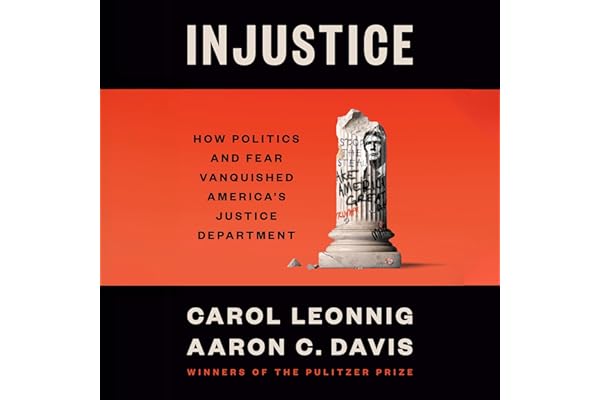
Injustice: How Politics and Fear Vanquished America’s Justice Department

Injustice: How Politics and Fear Vanquished America


Price: $19.50
4.8/5

(38 reviews)

What Customers Say:

  • Great investigative journalism
    This is an amazing book that is well researched and well sourced. The authors do a great job outlining how a Republican and a Democratic administrations vanquished the Justice Department and the rule of law. The Republican administration did it through intimidation, threats, and lawlessness. The Democratic administration either chose not to pursue justice or delayed the pursuit of justice because they did not want to be perceived as bias. This is how investigative journalism is done.
  • As a student of Democracy, this is a must read.
    Classic must read for all people in this country. Helps open one’s eyes to what is occurring in OUR government.
  • Excellent, Infuriating Reporting
    I can only read a few pages of this excellent work at a time because I get agitated by the facts presented. It pulls a lot of previously inexplicable things together into a coherent narrative and brings into view facts that were previously hidden or not publicized. Important work by two top-notch journalists.
  • Great Important Read!
    Great New Book! Very Informative reading.
  • An excellent blow-by-blow account of the failure of the DOJ.
    An excellent overview of how the DOJ was compromised during the Trump administration and how that damage continued to fester after Biden took office, “Injustice” looks at the Mueller investigation, why it failed and how its results were compromised by ‘faith in the system’ to do the right thing (including Barr’s misleading summary of the report). It begins with $10 million given by the President of Egypt to help Trump with his election. That ultimately paid off as an investment (or bribe in this case) as we see later in Trump’s dealings with that regime. The book doesn’t stop there. It also documents a systemic failure of the DOJ over time.It also documents the failure of Garland. For all of Garland’s good intentions, he prevented justice from being served. The failure of the DOJ as it became more and more politically compromised is well documented here. As a result, we ended up with a DOJ that now goes after political enemies rather than the facts around cases involved with those who broke the law. Also cover Jack Smith’s investigation, the authors demonstrate that their race against time to try and hold the former and current President accountable for his actions.If the DOJ had behaved this way during Watergate, Nixon would never have resigned and we would have continued to see corruption reign.
  • A record of truth
    Immaculately written. More than a book – it is a record. One which will serve as a reliable account of what truly occurred.
  • Critical review of current administration.
    What is going on with this administration, what it’s doing, & the literal rape of democracy. The creation of a fifedom, with it’s own little small minded individual who thinks he’s king.
  • All Americans should read
    This will be a history book someday. Reads like a script but unfortunately is reality. Highly recommend

Injustice: How Politics and Fear Vanquished America’s Justice Department is one of the best-selling products with 38 reviews and a 4.8/5 star rating on Amazon.

Current Price: $19.5

#4

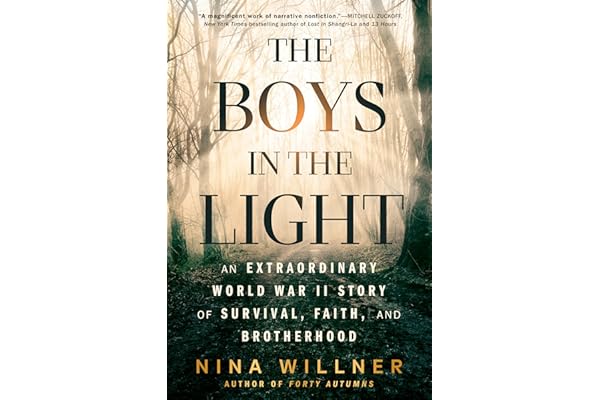
The Boys in the Light: An Extraordinary World War II Story of Survival, Faith, and Brotherhood

The Boys in the Light: An Extraordinary World War II Story of Survival, Faith, and Brotherhood


Price: $26.33
4.7/5

(309 reviews)

What Customers Say:

  • Incredible!!
    Don’t pass this up just because you’ve read lots of WWII books and/or Holocaust survivor books! This non-fiction book is deeply personal with narrative that had me incredulous about what cruelty a human being could live through (Eddie) and, at the same time, how other “normal” human beings could make such an impact while living through their own hell (Company D and LT Hovland in particular). I couldn’t put it down! Very well researched and written…imminently readable!
  • Unbelievable, beautiful story
    This was an unbelievable story of humanity, suffering and war. The intensity with which experiences were described, was overwhelming, and would bring any reader to tears. It was the continuing warmth Of the storytelling that kept the book moving along beautifully.
  • Great story, beautifully written
    Fabulous book. Beautifully written and moving. I am someone who gets bored easily with books, but this one draws you in and tells such a story!
  • A must read! So important to keep history alive.
    What an incredible story and so well told. This is a must read. One of the best war stories and holocaust descriptives ever. Wake up Hollywood. This true story has the potential to be a box office smash.
  • I cannot Forgive
    Having read over a hundred books on the Holocaust I can only say that I cannot forgive. Despicable people the Germans and collaborators in this book. And despite having read all this other books here is but one more story to be read.
  • Profound journey of courage, reliance and heroism!!
    I have to say, The Boys in the Light is one the most moving World War II books I’ve ever read. Some other five stars being Spearhead: An American Tank Gunner, Unbroken and Beneath the Scarlett Sky. Right from the start, it pulls you in emotionally. The author alternates between the heartbreaking story of a Jewish family in Europe as Hitler comes to power and the rise of American boys who end up forming D Company.What really stands out is how the author describes Germany’s descent—the slow, terrifying way ordinary Germans are turned against their Jewish neighbors. In the middle of the book, you get some seriously vivid, gut-punching descriptions of what went on in the labor and concentration camps. The visceral description’s of what Eddie, his father and friend Mike endured is not easy to read, but it’s powerful and important.Then, on the American side, you see how these young ordinary boys grow up during the Great Depression, and after Pearl Harbor, the drive to join the service and fight for America is galvanizing! My father-in-law actually fought at D-Day—the Allied invasion of Normandy—and the Battle of the Bulge, so reading about their experiences hit close to home.Above all, what really sticks with me is the lasting human connection these men formed. Decades after the war, their bond endured—through reunions, letters, and memories. That sense of brotherhood and survival is what makes this book rise to the top for me, out of all the World War II stories I’ve read. It’s not just a history lesson—it’s about friendship, resilience, and the best of humanity even in the worst times.
  • A Fine Book, Despite a Few Flaws
    This is an absorbing, emotionally compelling story, written by the daughter of one of the main figures. It involves people swept up in the Holocaust, and a small group of American tankers whose missions carry them into the ugliest side of the war.Overall, Willner does a fine job of explaining the unlikely intersections of the main figures’ lives, including aspects of the battles the tankers fought, and the sheer chance that governed who lived or died.Willner has clearly done a largely sloid job of understanding tank warfare, German and American, although she seems to have been taken in by the more dramatic claims of some of the alarmists about the adequacy or lack thereof of American AFVs. She uncritcally accepts the term popularized by Belton Cooper’s wildly inaccurate book, “Death Traps,” that portrayed the M4 Sherman as totally outclassed by Panthers and Tigers, which simply wasn’t the case.And tankers in fact had much lower odds of being wounded or killed than infantry. As amateur historian Nicholas Moran writes, “if you want a deathtrap, carry an M1 Garand” – a rifle.Even the battle she cites at Freynaux, Belgium, between Panthers and Shermans, was essentially a draw, as Steven Zaloga points out. And she clearly exaggerates in suggesting this battle determined the ourcome of the Battle of the Bulge. No, not even close.Despite these flaws, it’s still a fine book, well worth a read. You’ll meet people whom we all should look up to, as well as many who should be condemned to the lowest circles of Hell.
  • A Dazzling Triumph of Courage and Humanity
    The Boys in the Light is more than a book — it’s a beacon. In this extraordinary work of narrative nonfiction, Nina Willner brings to life one of the most powerful and unsung stories of World War II: the daring rescue of two escaped Jewish teenagers by a handful of young American soldiers deep inside Nazi Germany. With the pacing of a thriller and the emotional force of a requiem, Willner blends impeccable research with luminous storytelling to deliver a tale that is both harrowing and uplifting.The D Company soldiers aren’t just names in a history book — under Willner’s masterful pen, they become fully realized young men: raw, flawed, brave beyond comprehension. And the teenagers they save? Their story will leave you breathless. This isn’t just a war story; it’s a love letter to decency, to risk, and to what it means to choose humanity in the face of evil.Willner writes with the authority of a historian and the soul of a novelist. Every page pulses with urgency, empathy, and purpose. This is history at its most intimate and alive.The Boys in the Light is Nina Willner’s gift to the world — a reminder that light exists even in the darkest of places, and that the actions of a few can change the fate of many. I will be pressing this book into the hands of everyone I know. It belongs on every shelf — and in every heart.

The Boys in the Light: An Extraordinary World War II Story of Survival, Faith, and Brotherhood is one of the best-selling products with 309 reviews and a 4.7/5 star rating on Amazon.

Current Price: $26.33

#5

Confronting Evil: Assessing the Worst of the Worst

Confronting Evil: Assessing the Worst of the Worst


Price: $17.71
4.5/5

(881 reviews)

What Customers Say:

  • Powerful and Thought-Provoking Read
    This book dives deep into the lives and legacies of some of history’s most infamous figures, offering both historical detail and moral reflection. It’s engaging, sobering, and hard to put down.???? Well-Researched & CaptivatingBill O’Reilly and Josh Hammer deliver a clear, compelling narrative that examines evil in its most destructive forms (page 1 – book description summary). The writing is straightforward but layered with enough context to keep readers both informed and engaged.???? Important LessonsThe book doesn’t just recount atrocities; it challenges readers to think about the nature of evil and how society should confront it (page 2 – publisher’s quote: “As long as human beings have walked, evil has been close by.”). It’s as much about learning from history as it is about reflecting on the present.✅ Pros:Fascinating exploration of some of history’s darkest figuresClear, direct, and well-researched writingMix of history and moral perspectiveThought-provoking quotes and lessonsHigh-quality hardcover edition❌ Cons:Heavy subject matter may be overwhelming for some readersOverall:A gripping, well-written book that sheds light on humanity’s darkest chapters while encouraging reflection and awareness. Highly recommended for those interested in history, ethics, or the study of human nature.
  • Good Read
    Great book. Rich in history and truth. I learned about things I didn’t know happened. Great author and very informative book. Captivating as well.
  • Excellent history book.
    Another great, captivating history book from O’Reilly. I listen to the audio version while on long trips.Thoroughly researched and well written.O’Reilly’s books are not political.
  • Easy to read. Would make a good high school book. For Adults too, interested in history.
    Just started reading it. Interesting book. Written in very short but complete sentences. Good book for young and older teens.
  • Warning. You will not want to put this book down.
    This book is absolutely great. The author writes in a manner that is easy to follow and understand. O’Reilly provides historical background in each chapter of the various characters he is talking about. This book is not only interesting but very suspenseful. You really just don’t want to put the book down. I am kind of sad that I have finished, however the book makes for a nice coffee table book and a conversational piece when you have visitors.
  • Awesome Job…
    How can anyone not love Bill O’Reilly’s Books? He is the very best Historical writer of out time.I can’t really pick just one of the characters in the book as they were all written about so you could get to really know them.I picked this title as Bill O’Reilly always gives us the very best Historical books ever. I have read everything he has written.Joyce Reppenhagen
  • Far-right?
    A concise read. I must, however, throw the BS flag at, on Page 141, calling those who worship Hitler as “far-right”. They may be politically right of the Communists, but any Marxist is a Leftist. So even “far right” people of the time are left-of-center. Come on, Mr. O’Reilly, you know this!
  • Well Researched and Well Written
    As with all of the O’Reilly books this is well researched and well written. It contains a lot of facts that I was not aware of. The sources of the information are footnoted and well documented. Very entertaining.

Confronting Evil: Assessing the Worst of the Worst is one of the best-selling products with 881 reviews and a 4.5/5 star rating on Amazon.

Current Price: $17.71

#6

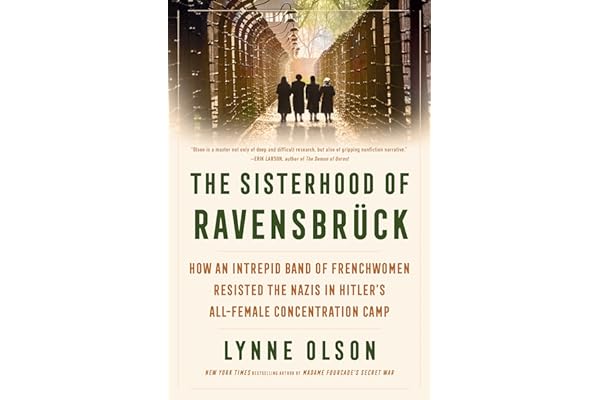
The Sisterhood of Ravensbrück: How an Intrepid Band of Frenchwomen Resisted the Nazis in Hitler’s All-Female Concentration Ca

The Sisterhood of Ravensbrück: How an Intrepid Band of Frenchwomen Resisted the Nazis in Hitler


Price: $14.99
4.6/5

(195 reviews)

What Customers Say:

  • Unknown History
    At this point in my life, I have a good overview of world history in my mind. But an overview leaves out a lot. The Sisterhood of Ravensbrück filled in a gaping hole that I never knew existed. Yes, I knew that Ravensbrück was one of the Nazi concentration camps, but I didn’t know how the inmates banded together to make their own lives better and to make the guards’ lives harder. I didn’t know about the Polish rabbits. I even looked them up on the internet while I was reading the book, to make sure the author didn’t add in some fiction. Nope. All historical, with a large set of notes and bibliography for proof!A wonderfully written book that could have been dry and ghastly, given the setting, but was not because of the Sisterhood and the author’s treatment.
  • Another great book by Lynn Olson!
    Spellbinding!
  • I was really interested in this book as I had visited Ravensbruck in the past.
    The Sisterhood of Ravensbrück How an Intrepid Band of Frenchwomen Resisted the Nazis in Hitler’s All-Female Concentration Camp by Lynne Olson was received directly from the publisher and I chose to review it. I had never read this author but I was really interested in this book as I had visited Ravensbruck in the past, shortly after the Berlin Wall fell. The author does a real good job of telling the tale of the Nazi atrocities at the site. Since it was so long ago I am uncertain how much is speculative fact and how much is real fact. I did read the entire book without skimming, which is a good thing for me nowadays. If you, or someone you buy gifts for is interested in these type materials, certainly give this book a read.
  • Highly Recommend!
    THE SISTERHOOD OF RAVENSBRUCK by Lynn Olson is an amazing testament to the lives of the featured French women who survived the infamous women’s concentration camp of Ravensbruck which was in Germany during WWII. I knew nothing about this camp which ended up in the Soviet controlled portion of Germany which is why I feel this book is so important. The infamous camps that are remembered, like Auschwitz and Buchenwald, are important, but there were many others, and they all deserved to be remembered.This well researched non-fiction book tells the story of many women, but the focus is on a small group of French women who leaned on each other to survive at Ravensbruck after being arrested for their resistance work during WWII. The story tells of their lives before the war, how they became involved in the resistance and were arrested, and then their time in a French jail in Paris before being shipped like cattle to Ravensbruck. Arriving at different times, they were still able to form a bond to help each other survive and even help other women of many nationalities and religions. The liberation of the camp did not occur all at once and the story goes on to tell of the friends varying recuperations and reunions.The women’s lives after the war are followed as they build families and work to help all survivors of the camp. The work they did to get healthcare and reparations from the French and German governments was inspiring. I also was in awe of the Polish lapins “rabbits” that were experimented on in the camp and the ladies’ determination to help them get reparations.All non-fiction history books that tell the stories of the WWII concentration camps are heartbreaking and leave you questioning humanity and this one was no different, but it also gave you the ladies’ lives after and demonstrated the resilience and strength they had after the horror. The research is evident. The author immerses you in these women’s journey, avoiding a dry historical account. I will definitly be picking up other history books written by this author.I highly recommend this incredible non-fiction story of the women of Ravensbruck!
  • French Resistance in WW ll – heroic role of women.
    Excellent writing, heroic characters. Can’t put it down.
  • Stunningly Powerful… Such a Tribute To These Women
    The research, organization and dedication needed to create the masterful book is one-of-a-kind. Thank you Lynne Olson for making it your priority, offering such a gift to all who read it. I truly couldn’t put it down, and now will check the sources to continue to go deeper to learn more about these remarkable women. Again, thank you!
  • Another typical Lynne Olson read!
    Lynne Olson’s ability to describe main characters in her books so well, that you slowly begin to feel you know them personally. In this book , which describes women caught by the Germans and placed in a concentration camp called Ravensbruck, you can feel their pain. Another typical Lynne Olsen read.
  • Good read
    Gripping book

The Sisterhood of Ravensbrück: How an Intrepid Band of Frenchwomen Resisted the Nazis in Hitler’s All-Female Concentration Ca is one of the best-selling products with 195 reviews and a 4.6/5 star rating on Amazon.

Current Price: $14.99

Updated: Nov 26, 2025
Data from Amazon.com
6 products

Customer Reviews

5 star
70%
4 star
20%
3 star
7%
2 star
2%
1 star
1%
John D.
★★★★★
March 15, 2024
"Great product! Exactly as described. Fast shipping and excellent quality."

Product Specifications

Brand Amazon Brand
Material High Quality
Dimensions See product details
Weight See product details